


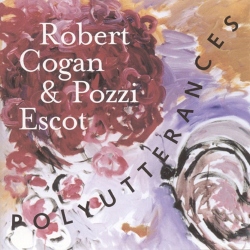
Robert Cogan
Artist Info
Role:ComposerPeriod:ContemporaryModernGenre:Avant-GardeChamberChoralVocalRobert Cogan was an American composer, music theorist, and educator who made significant contributions to the field of contemporary classical music. He was born on August 27, 1930, in Brooklyn, New York, and grew up in a family of musicians. His father was a violinist, and his mother was a pianist, so he was exposed to music from an early age. Cogan began his formal music education at the age of six, studying piano with his mother. He later studied composition with Otto Luening and Jack Beeson at Columbia University, where he earned his Bachelor of Arts degree in 1952. He continued his studies at the New England Conservatory of Music, where he earned his Master of Music degree in 1954. After completing his studies, Cogan began his career as a composer and music theorist. He was a member of the faculty at the New England Conservatory of Music from 1954 to 1960, where he taught composition and music theory. He then joined the faculty at the University of California, Berkeley, where he taught from 1960 to 1995. During his tenure at Berkeley, he served as the chair of the music department from 1970 to 1973 and again from 1980 to 1983. Cogan's compositions are characterized by their use of serialism and other contemporary compositional techniques. His early works, such as his String Quartet No. 1 (1953) and his Piano Sonata No. 1 (1954), were influenced by the music of Arnold Schoenberg and other members of the Second Viennese School. However, as he continued to develop his own style, his music became more experimental and abstract. One of Cogan's most significant works is his opera, The Conference of the Birds (1972). The opera is based on a Persian poem of the same name and tells the story of a group of birds who embark on a journey to find their king, the Simorgh. The opera features a large ensemble cast and incorporates elements of traditional Persian music, as well as contemporary compositional techniques. Another notable work by Cogan is his String Quartet No. 2 (1960). The quartet is a twelve-tone work that explores the possibilities of the serial technique. The work is characterized by its use of complex rhythms and textures, as well as its exploration of the timbral possibilities of the string quartet. In addition to his work as a composer, Cogan was also a respected music theorist. He wrote several influential books on music theory, including New Images of Musical Sound (1984) and Sonic Design: The Nature of Sound and Music (1991). His work in music theory focused on the relationship between sound and meaning, and he was particularly interested in the ways in which composers use sound to convey emotion and other abstract concepts. Cogan was also a dedicated educator, and he mentored many young composers and music theorists during his career. He was known for his rigorous teaching style and his commitment to helping his students develop their own unique voices as composers. Robert Cogan passed away on May 28, 2020, at the age of 89. His contributions to the field of contemporary classical music and music theory continue to be celebrated and studied by musicians and scholars around the world.More....
Recent Artist Music
4
5:2
Copyright Ⓒ 2013 Davinci Finger. All rights reseved
Service Terms & Policy