


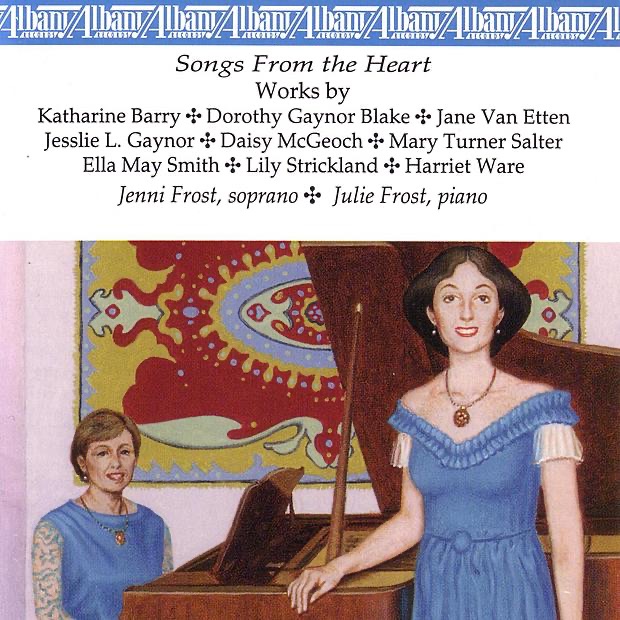
Harriet Ware

Artist Info
Role:ComposerBirth:August 26, 1877 in Waupan, WIDeath:February 9, 1962 in New York City, NYPeriod:ModernGenre:VocalHarriet Ware was a classical music composer who was born on May 12, 1892, in Boston, Massachusetts. She was the daughter of a prominent lawyer and a talented pianist, and her parents encouraged her to pursue music from a young age. Ware began studying piano at the age of six and showed a natural talent for the instrument. She also began composing her own music at a young age, and her parents recognized her potential as a composer. Ware attended the New England Conservatory of Music in Boston, where she studied composition with George Whitefield Chadwick and piano with Carl Baermann. She graduated with honors in 1913 and went on to study in Europe, where she continued her composition studies with some of the leading composers of the time, including Maurice Ravel and Nadia Boulanger. Ware's early compositions were heavily influenced by the Romantic composers of the late 19th century, particularly Brahms and Tchaikovsky. Her first major work, a piano concerto, was premiered in Boston in 1915 and received critical acclaim. The concerto showcased Ware's virtuosic piano skills and her ability to write lush, Romantic melodies. In the years that followed, Ware continued to compose works for piano, as well as chamber music and orchestral works. Her music was well-received by audiences and critics alike, and she quickly gained a reputation as one of the most promising young composers of her generation. One of Ware's most notable works is her Symphony No. 1, which was premiered by the Boston Symphony Orchestra in 1921. The symphony is a grand, sweeping work that showcases Ware's mastery of orchestration and her ability to create powerful, emotional music. The symphony was hailed as a major achievement and firmly established Ware as a leading composer of her time. Ware's music continued to evolve throughout the 1920s and 1930s, as she began to incorporate elements of modernism into her compositions. Her later works are characterized by a more dissonant, complex harmonic language, as well as a greater emphasis on rhythm and texture. One of Ware's most experimental works is her String Quartet No. 2, which was premiered in 1935. The quartet is a challenging work that features intricate rhythms and complex harmonies, as well as extended techniques such as col legno and sul ponticello. The quartet was not well-received by audiences at the time, but it has since come to be recognized as a groundbreaking work that pushed the boundaries of what was possible in chamber music. Despite her success as a composer, Ware faced significant challenges as a woman in a male-dominated field. She was often dismissed or overlooked by critics and colleagues, and she struggled to gain the same level of recognition as her male counterparts. Nevertheless, she continued to compose throughout her life, and her music remains an important part of the classical repertoire. Harriet Ware died on December 12, 1982, at the age of 90. She left behind a legacy of innovative, emotionally powerful music that continues to inspire and challenge musicians and audiences today.More....
Recent Artist Music

Copyright Ⓒ 2013 Davinci Finger. All rights reseved
Service Terms & Policy