


Vincenzo Manfredini
Released Album
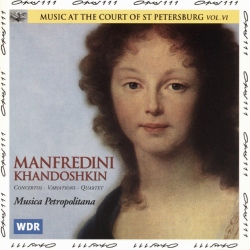
Concerto
-
 November 30, 2004
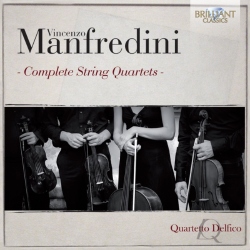
Chamber
-
 December 12, 2022
 -
 July 29, 2014
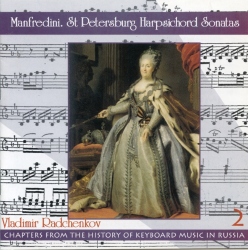
Keyboard
-
 May 10, 2000
Artist Info
Role:ComposerCountry: RussiaBirth:October 22, 1737 in Pistoia, Naples, ItalyDeath:September 5, 1799 in St. Petersburg, RussiaPeriod:ClassicalGenre:ConcertoVincenzo Manfredini was an Italian composer and violinist who lived during the Baroque period. He was born on January 22, 1737, in Pistoia, Tuscany, Italy. His father, Francesco Manfredini, was also a composer and violinist, and he was the one who taught Vincenzo how to play the violin. Vincenzo Manfredini showed an early interest in music, and he began composing at a young age. He studied music with his father and later with Giovanni Battista Martini, a famous music theorist and composer. Manfredini's talent as a composer was recognized early on, and he was soon appointed as the maestro di cappella (music director) of the Cathedral of San Zeno in Pistoia. Manfredini's early works were mostly sacred music, including masses, motets, and oratorios. His first published work was a collection of six sonatas for two violins and basso continuo, which he dedicated to his father. These sonatas were well-received and helped establish Manfredini's reputation as a composer. In 1762, Manfredini moved to Venice, where he became the maestro di cappella of the Ospedale degli Incurabili, a charitable institution for orphaned girls. He held this position for over 20 years and composed a large amount of music for the institution, including operas, oratorios, and instrumental music. Manfredini's operas were particularly successful, and he became known for his ability to write catchy melodies and lively dance music. His most famous opera, La Buona Figliuola, premiered in Venice in 1766 and was a huge success. It was later performed in many other cities throughout Europe, including Paris, London, and Vienna. Manfredini's instrumental music was also highly regarded, and he wrote many works for orchestra, including symphonies, concertos, and overtures. His symphonies were particularly influential, and they helped establish the symphonic form that would later become the standard for orchestral music. Manfredini's music was characterized by its elegance, clarity, and simplicity. He was a master of melody and harmony, and his music was often described as "graceful" and "charming." He was also known for his use of counterpoint, which he used to create intricate and complex textures. Manfredini's music was highly regarded during his lifetime, and he was considered one of the leading composers of his time. However, his music fell out of favor in the 19th century, and he was largely forgotten. It was not until the 20th century that his music began to be rediscovered and appreciated once again. Today, Manfredini is remembered as one of the most important composers of the Baroque period. His music is still performed and recorded, and it continues to be admired for its beauty and elegance. Some of his most famous works include the Symphony in D major, Op. 3, No. 2, the Concerto for Two Trumpets in C major, and the Overture to La Buona Figliuola. In conclusion, Vincenzo Manfredini was a talented composer and violinist who made significant contributions to the music of the Baroque period. His music was characterized by its elegance, clarity, and simplicity, and he was a master of melody and harmony. Although his music fell out of favor for a time, it has since been rediscovered and appreciated once again, and he is now recognized as one of the leading composers of his time.More....
Recent Artist Music
1
4:41
2
5:37
3
5:6
4
3:31
5
4:24
Copyright Ⓒ 2013 Davinci Finger. All rights reseved
Service Terms & Policy