


Kuldar Sink
Artist Info
Role:ComposerKuldar Sink was a renowned Estonian composer, pianist, and music educator. He was born on October 19, 1942, in Tallinn, Estonia. His father, Harri Sink, was a well-known composer and music teacher, and his mother, Helmi Sink, was a pianist. Kuldar grew up in a musical family and started playing the piano at a young age. He showed exceptional talent and was soon recognized as a prodigy. Kuldar received his early music education at the Tallinn Music High School, where he studied piano and composition. He continued his studies at the Estonian Academy of Music and Theatre, where he studied composition under the guidance of Heino Eller, one of Estonia's most prominent composers. Kuldar also studied piano with Bruno Lukk, a renowned Estonian pianist. In 1965, Kuldar graduated from the Estonian Academy of Music and Theatre with a degree in composition. He then started working as a music teacher at the Tallinn Music High School, where he taught composition and music theory. He also worked as a pianist and accompanist, performing in various concerts and recitals. Kuldar's early compositions were influenced by the neoclassical style, which was popular in Estonia at the time. However, he soon developed his own unique style, which was characterized by a blend of traditional and modern elements. His music was often described as lyrical, expressive, and emotionally charged. Kuldar's breakthrough as a composer came in 1971 when he won the first prize at the All-Union Young Composers' Competition in Moscow for his orchestral work "Symphony No. 1." The piece was well-received by both the audience and the critics and established Kuldar as one of Estonia's leading composers. Over the next few decades, Kuldar continued to compose prolifically, producing a wide range of works in various genres, including orchestral, chamber, vocal, and choral music. Some of his most notable works include "Symphony No. 2," "Concerto for Violin and Orchestra," "Concerto for Piano and Orchestra," "String Quartet No. 2," and "Requiem." Kuldar's music was performed by many leading orchestras and ensembles in Estonia and abroad, including the Estonian National Symphony Orchestra, the Tallinn Chamber Orchestra, the Moscow Philharmonic Orchestra, and the London Symphony Orchestra. His works were also featured in many international music festivals, including the Warsaw Autumn Festival, the Helsinki Festival, and the Edinburgh Festival. In addition to his work as a composer, Kuldar was also a respected music educator. He taught composition and music theory at the Estonian Academy of Music and Theatre from 1975 to 1992 and served as the head of the composition department from 1987 to 1992. He also taught at the Tallinn Music High School and the Tallinn Conservatory. Kuldar received many awards and honors for his contributions to Estonian music, including the Estonian State Cultural Award in 1995 and the Order of the White Star, 4th Class, in 2002. He was also a member of the Estonian Academy of Sciences and the Estonian Composers' Union. Kuldar Sink passed away on December 28, 1995, at the age of 53. His legacy as one of Estonia's most important composers continues to be celebrated today, and his music remains an important part of the Estonian classical music repertoire.More....
Recent Artist Music
2
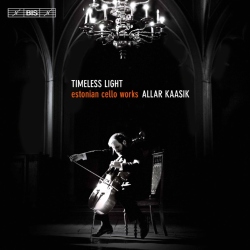
Gospodi, Pomilui Nas (Lord, Have Mercy on Us)
Gospodi, Pomilui Nas (Lord, Have Mercy on Us) for cello solo
11:8
Copyright Ⓒ 2013 Davinci Finger. All rights reseved
Service Terms & Policy