


Sigismund Thalberg
Released Album
Keyboard
-
 July 11, 2024
 -
 June 1, 2024
 -
 August 26, 2022
 -
 April 2, 2022
 -
-
 April 21, 2021
Concerto
-
 January 1, 2016
 -
 June 2, 2015
 -
 October 29, 2012
 -
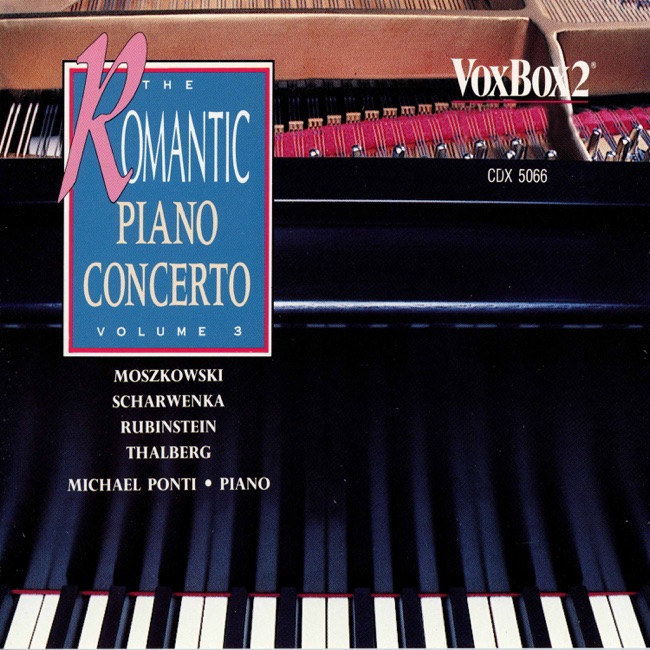 November 4, 1992
Vocal
-
-
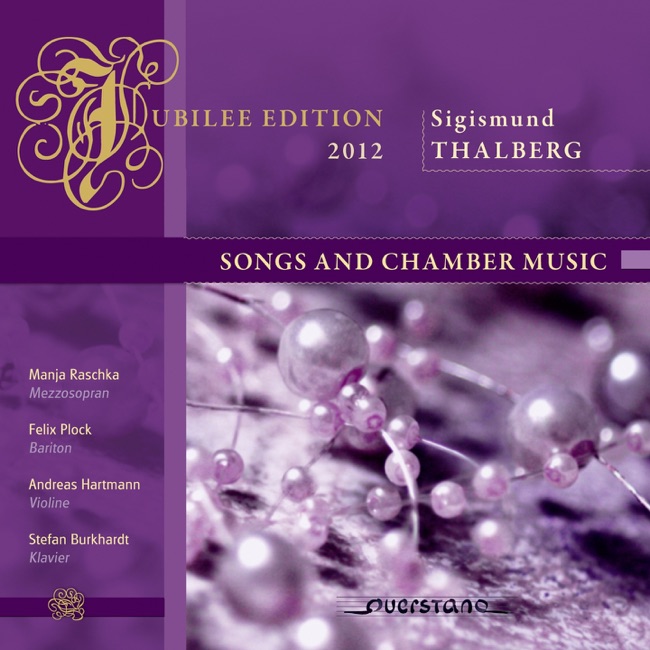 May 8, 2012
 -
 February 15, 2005
Artist Info
Role:ComposerCountry: AustriaBirth:January 8, 1812 in Paquis, SwitzerlandDeath:April 27, 1871 in Posillipo, ItalyPeriod:RomanticGenre:KeyboardSigismund Thalberg was a prominent classical music composer and pianist of the 19th century. He was born on January 8, 1812, in Geneva, Switzerland, to a family of musicians. His father, Joseph Thalberg, was a violinist and composer, and his mother, Fortunée Stein, was a singer. Thalberg showed an early interest in music and began playing the piano at the age of four. Thalberg's family moved to Vienna when he was six years old, and he began studying music with Ignaz Moscheles and Simon Sechter. He made his public debut as a pianist at the age of nine and soon gained a reputation as a child prodigy. Thalberg's father managed his career and arranged for him to perform in concerts throughout Europe. Thalberg's early compositions were influenced by the works of Mozart, Beethoven, and Chopin. He developed a unique style of piano playing that emphasized the use of the right hand and the creation of a singing tone. Thalberg's technique was characterized by rapid finger work, delicate phrasing, and a virtuosic use of arpeggios. In 1830, Thalberg moved to Paris, where he became a sensation in the music scene. He performed in concerts alongside other famous pianists of the time, such as Franz Liszt and Frédéric Chopin. Thalberg's popularity grew, and he became known as the "Emperor of the Piano." Thalberg's compositions during this period included a series of operatic fantasies, which were arrangements of popular operas of the time. These works showcased Thalberg's virtuosic piano playing and his ability to create complex and intricate arrangements of well-known melodies. Thalberg's operatic fantasies were highly popular and were performed in concerts throughout Europe. In 1836, Thalberg married the singer Sabine Heinefetter, and the couple had two children. Thalberg continued to compose and perform throughout Europe, but his popularity began to wane in the 1850s. He moved to Naples, Italy, in 1858, where he became the court pianist to King Ferdinand II. Thalberg's compositions during this period included a series of works for piano and orchestra, which showcased his virtuosic piano playing and his ability to create complex and intricate arrangements of well-known melodies. Thalberg's works for piano and orchestra were highly popular and were performed in concerts throughout Europe. Thalberg's most famous work is his Piano Concerto No. 1 in F minor, Op. 5, which he composed in 1830. The concerto is characterized by its virtuosic piano writing and its use of the right hand to create a singing tone. The concerto was highly popular during Thalberg's lifetime and was performed in concerts throughout Europe. Thalberg's other notable works include his Grand Sonata in C minor, Op. 33, which he composed in 1836. The sonata is characterized by its complex and intricate piano writing and its use of the right hand to create a singing tone. The sonata was highly popular during Thalberg's lifetime and was performed in concerts throughout Europe. Thalberg's music was highly influential in the development of piano technique and composition during the 19th century. His use of the right hand to create a singing tone and his virtuosic piano writing influenced many other composers of the time, including Franz Liszt and Frédéric Chopin. Thalberg died on April 27, 1871, in Posillipo, Italy, at the age of 59. His legacy as a composer and pianist continues to be celebrated today, and his works are still performed in concerts and recitals around the world.More....
Recent Artist Music
2
A te, o cara, transcription for piano (from Bellini's opera "I puritani")
A te, o cara (from Bellini's I Puritani)
5:38
4
Fantasia on themes from "Moïse" Op. 33 (Rosini)
Fantasia, Op. 33 (on a theme from Rossini's Mosè in Egitto)
14:31
6
Fantasia on themes from "Moïse" Op. 33 (Rosini)
Fantaisie sur des thèmes de l'opéra Moïse de G. Rossini Op. 33
15:19
8
3:35
13
Fantasy on Casta Diva (From Bellini's Opera Norma), Op.70
Bellini's Opera Norma Op. 70: Fantasy on Casta Diva
6:35
14
Hexamaron, variation 1 on a marche from Bellini's I Puritani
Hexaméron. Variaion 1: Ben marcato
56
Recommend Playlist









Copyright Ⓒ 2013 Davinci Finger. All rights reseved
Service Terms & Policy