


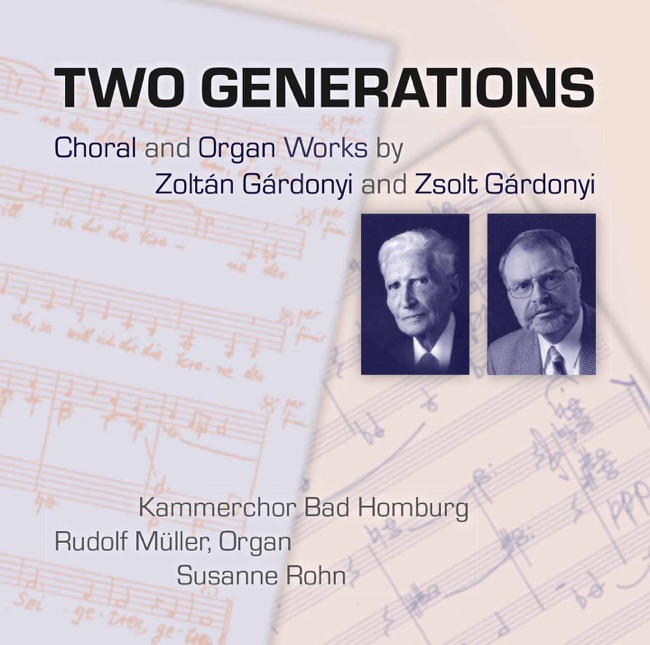
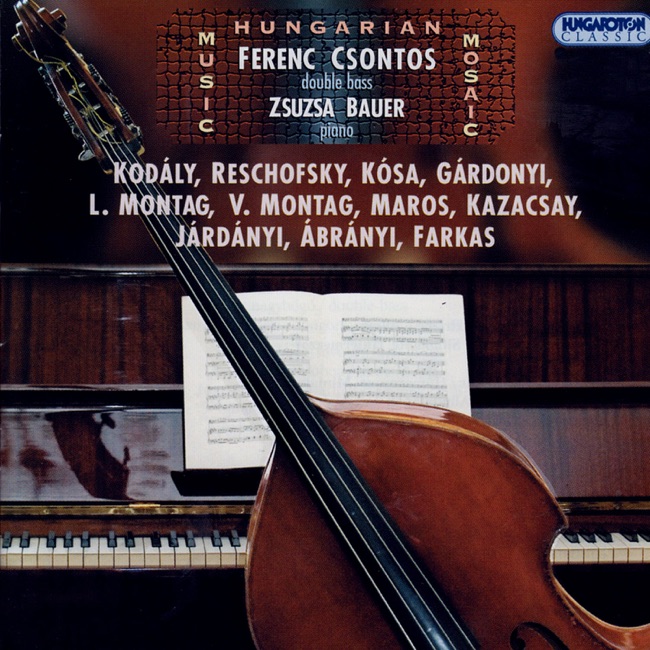
Zoltán Gárdonyi
Released Album
Keyboard
Chamber
-
 October 27, 2005
Artist Info
Role:ComposerCountry: HungaryBirth:April 25, 1906Death:April 27, 1986Zoltán Gárdonyi was a Hungarian composer, organist, and music educator who made significant contributions to the world of classical music. He was born on August 25, 1906, in Budapest, Hungary, and grew up in a family of musicians. His father, Lajos Gárdonyi, was a composer and music teacher, and his mother, Ilona Vajda, was a pianist. Zoltán showed an early interest in music and began studying the piano and composition at a young age. Gárdonyi's musical education continued at the Franz Liszt Academy of Music in Budapest, where he studied composition with Zoltán Kodály and piano with Béla Bartók. He graduated from the academy in 1930 and began his career as a composer and music educator. He taught at several music schools in Hungary, including the Budapest Conservatory and the Franz Liszt Academy of Music. Gárdonyi's compositions are characterized by their lyrical melodies, rich harmonies, and use of Hungarian folk music. He wrote music for a variety of genres, including orchestral works, chamber music, choral music, and solo piano pieces. Some of his most famous works include the Suite for Orchestra, the Sonata for Violin and Piano, and the Choral Suite on Hungarian Folk Songs. One of Gárdonyi's most significant contributions to the world of classical music was his work as an organist. He was a renowned performer and recorded several albums of organ music, including works by Bach, Liszt, and his own compositions. He also wrote several pieces specifically for the organ, including the Prelude and Fugue on B-A-C-H and the Toccata and Fugue in D minor. Gárdonyi's career as a composer and music educator was interrupted by World War II. He was drafted into the Hungarian army and served on the Eastern Front. After the war, he returned to Hungary and resumed his career. However, the political climate in Hungary had changed, and Gárdonyi found himself facing increasing pressure from the communist government. In 1949, he was forced to resign from his position at the Franz Liszt Academy of Music and was blacklisted by the government. Despite these challenges, Gárdonyi continued to compose and perform. He wrote several works during this period, including the Sonata for Cello and Piano and the Concerto for Piano and Orchestra. He also performed as an organist and gave concerts throughout Europe. In 1956, the Hungarian Revolution broke out, and Gárdonyi found himself caught up in the turmoil. He was arrested by the communist government and imprisoned for several months. After his release, he fled Hungary and settled in West Germany. He continued to compose and perform, and his music was well-received by audiences and critics alike. Gárdonyi's later works reflect his experiences as a refugee and his longing for his homeland. He wrote several pieces for solo piano, including the Hungarian Rhapsody and the Suite for Piano, which incorporate Hungarian folk melodies and rhythms. He also wrote several choral works, including the Cantata for the 1956 Hungarian Revolution and the Requiem for the Victims of War and Oppression. Gárdonyi's contributions to the world of classical music were recognized with several awards and honors. He was awarded the Kossuth Prize, Hungary's highest cultural honor, in 1950 and 1955. He was also awarded the Order of Merit of the Federal Republic of Germany in 1976. Zoltán Gárdonyi died on June 25, 1986, in Munich, Germany, at the age of 79.More....
Copyright Ⓒ 2013 Davinci Finger. All rights reseved
Service Terms & Policy