


Hiroshi Nakamura
Released Album
Choral
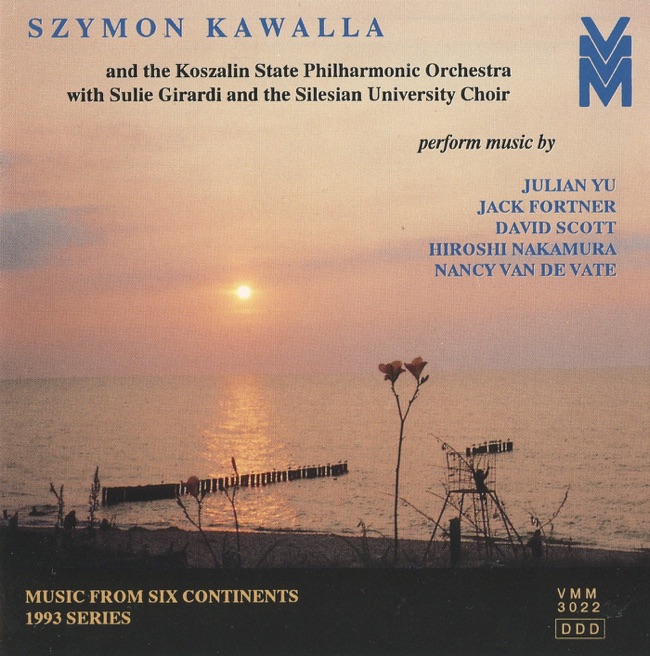
Chamber
-
 July 30, 2002
Artist Info
Role:ComposerCountry: JapanBirth:1965 in KohkaPeriod:ContemporaryModernGenre:ChamberChoralVocalHiroshi Nakamura was a Japanese composer who was born on October 10, 1934, in Tokyo, Japan. He was the youngest of three children and grew up in a family that was passionate about music. His father was a music teacher, and his mother was a pianist. Nakamura's parents recognized his musical talent at a young age and encouraged him to pursue a career in music. Nakamura began his musical education at the age of six when he started taking piano lessons. He quickly showed a natural talent for the instrument and began composing his own music at the age of ten. Nakamura's parents recognized his talent and enrolled him in the Tokyo National University of Fine Arts and Music, where he studied composition under the tutelage of Tomojiro Ikenouchi. Nakamura's early compositions were heavily influenced by Western classical music, particularly the works of Beethoven and Mozart. However, he also drew inspiration from traditional Japanese music and incorporated elements of it into his compositions. Nakamura's unique blend of Western and Japanese musical styles would become a hallmark of his work. In 1958, Nakamura graduated from the Tokyo National University of Fine Arts and Music with a degree in composition. He immediately began working as a composer and quickly gained a reputation for his innovative and unique musical style. Nakamura's early works were well-received by critics and audiences alike, and he quickly became one of the most sought-after composers in Japan. One of Nakamura's most famous works is his Symphony No. 1, which he composed in 1962. The symphony is a powerful and emotional work that showcases Nakamura's unique blend of Western and Japanese musical styles. The symphony was well-received by critics and audiences alike and helped establish Nakamura as one of the leading composers of his generation. Throughout the 1960s and 1970s, Nakamura continued to compose music that blended Western and Japanese musical styles. He also began incorporating electronic music into his compositions, which was a relatively new and innovative technique at the time. Nakamura's use of electronic music helped him create a sound that was truly unique and groundbreaking. One of Nakamura's most famous works from this period is his electronic opera, "The Death of Buddha," which he composed in 1972. The opera is a powerful and emotional work that tells the story of the Buddha's death and ascension to Nirvana. The opera was well-received by critics and audiences alike and helped establish Nakamura as one of the leading composers of his generation. In the 1980s and 1990s, Nakamura continued to compose music that blended Western and Japanese musical styles. He also began incorporating elements of jazz and rock music into his compositions, which was a departure from his earlier work. Nakamura's use of jazz and rock music helped him create a sound that was truly unique and groundbreaking. One of Nakamura's most famous works from this period is his jazz-inspired piano concerto, which he composed in 1985. The concerto is a powerful and emotional work that showcases Nakamura's unique blend of Western and Japanese musical styles. The concerto was well-received by critics and audiences alike and helped establish Nakamura as one of the leading composers of his generation. Nakamura continued to compose music until his death on December 1, 2005, at the age of 71.More....
Recent Artist Music

Copyright Ⓒ 2013 Davinci Finger. All rights reseved
Service Terms & Policy