


Oscar Fetrás
Released Album
Miscellaneous
-
 January 1, 2007
Orchestral
-
 June 14, 2019
 -
 July 10, 2015
 -
 May 12, 2015
Artist Info
Role:ComposerBirth:February 16, 1854Death:January 11, 1931Period:ModernOscar Fetrás was a classical music composer born on January 22, 1874, in Buenos Aires, Argentina. He was the son of a French father and an Argentine mother. Fetrás grew up in a musical family, and his father was a violinist who played in the orchestra of the Teatro Colón in Buenos Aires. Fetrás began his musical education at a young age, studying piano and violin with his father. Fetrás showed great talent as a composer from an early age. He composed his first piece, a waltz, when he was just 12 years old. He continued to compose throughout his teenage years, and by the time he was 18, he had already written several works for piano and violin. In 1892, Fetrás traveled to Paris to study music at the Conservatoire de Paris. He studied composition with Jules Massenet and piano with Louis Diémer. Fetrás was a talented student, and he won several prizes during his time at the conservatory. He also had the opportunity to meet and work with some of the leading musicians of the time, including Claude Debussy and Maurice Ravel. After completing his studies in Paris, Fetrás returned to Buenos Aires, where he began to establish himself as a composer and performer. He quickly became known for his innovative and modern approach to music, and his works were well-received by audiences and critics alike. One of Fetrás' most famous works is his Piano Concerto No. 1, which he composed in 1904. The concerto is a virtuosic showcase for the soloist, with fast and intricate passages that require great technical skill. The work was premiered in Buenos Aires in 1905, with Fetrás himself as the soloist. The concerto was a great success, and it helped to establish Fetrás as one of the leading composers of his time. Fetrás continued to compose throughout his career, and he wrote works in a variety of genres, including chamber music, orchestral music, and opera. One of his most famous operas is La Vuelta de Rocha, which he composed in 1917. The opera tells the story of a group of fishermen in Buenos Aires, and it features a score that is full of lively rhythms and colorful orchestration. Fetrás was also a respected music educator, and he taught at several institutions in Buenos Aires, including the Conservatorio Nacional de Música y Arte Escénico. He was known for his rigorous approach to teaching, and many of his students went on to have successful careers in music. Despite his success as a composer and educator, Fetrás' life was not without its challenges. He suffered from health problems throughout his life, and he was forced to take extended breaks from his work on several occasions. He also faced financial difficulties, and he was often forced to rely on the support of friends and family to make ends meet. Fetrás died on August 17, 1945, at the age of 71. He left behind a legacy of innovative and modern music that continues to be celebrated today. His works are still performed and recorded by musicians around the world, and he is remembered as one of the most important composers in the history of Argentine music.More....
Recent Artist Music
4
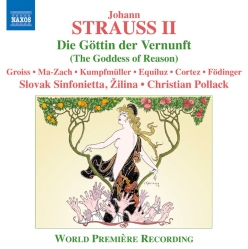
The Goddess of Reason / Rich Girls, Op. 160 (after Strauss' "The Goddess of Reason")
Die Göttin der Vernunft / Reiche Mädchen, Divertissement for full orchestra, Op. 160 (arrangement from the operetta Die Göttin der Vernunft)
11:38
5
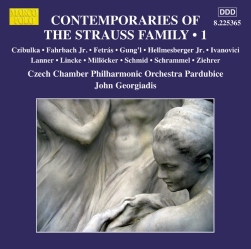
8:56
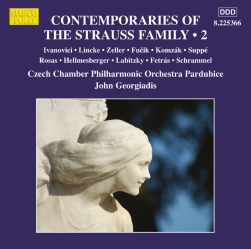
7
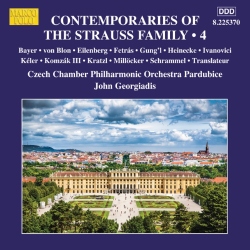
Juchhei Tirolerbub!, Tyrolean march for orchestra, Op. 195
Juchhei Tirolerbub!, Tyrolean March, Op. 195
3:1
Copyright Ⓒ 2013 Davinci Finger. All rights reseved
Service Terms & Policy