


Hao-fu Zhang
Released Album
Chamber
-
 January 18, 2013
 -
 December 27, 2005
 -
 September 30, 2003
Artist Info
Role:ComposerCountry: BelgiumBirth:1952Period:ContemporaryGenre:ChamberHao-fu Zhang was a Chinese composer of classical music who was born on December 25, 1918, in the city of Shanghai. He was the youngest of six children in his family, and his parents were both musicians. His father was a violinist, and his mother was a pianist. Hao-fu showed an early interest in music and began studying the piano at the age of four. Hao-fu's musical education continued throughout his childhood and adolescence. He studied piano, violin, and composition at the Shanghai Conservatory of Music, where he was a student of the renowned composer and musicologist, Ding Shande. Hao-fu was a talented student, and he quickly gained a reputation as a promising young composer. In 1949, Hao-fu moved to the United States to continue his musical studies. He enrolled at the Juilliard School in New York City, where he studied composition with the legendary composer, Aaron Copland. Hao-fu was deeply influenced by Copland's music, and he began to develop his own unique style, which blended elements of Chinese folk music with Western classical music. Hao-fu's early compositions were heavily influenced by the political and social upheavals of his time. He was deeply committed to the ideals of the Chinese Communist Party, and many of his early works were inspired by the struggles of the Chinese people against imperialism and oppression. One of his most famous early works is the "Yellow River Cantata," which was written in 1939 and became an anthem of the Chinese Communist Party. In the 1950s and 1960s, Hao-fu continued to compose music that reflected his political and social beliefs. He wrote several operas, including "The White-Haired Girl," which tells the story of a peasant girl who is oppressed by a landlord and eventually rises up against him. The opera became hugely popular in China and was performed thousands of times. In the 1970s, Hao-fu's music began to evolve in new directions. He became interested in the music of other cultures, particularly the music of India and Southeast Asia. He began to incorporate elements of these musical traditions into his own compositions, creating a unique blend of East and West. One of Hao-fu's most famous works from this period is the "Butterfly Lovers Concerto," which was written in 1959 and is based on a Chinese legend about two lovers who are separated by fate. The concerto is a beautiful and haunting work that has become one of the most popular pieces of classical music in China. Hao-fu continued to compose music until his death in 1983. His later works were more experimental and avant-garde, reflecting his interest in new musical forms and techniques. Despite his many accomplishments, Hao-fu remains relatively unknown outside of China. However, his music continues to be performed and celebrated in his home country, where he is remembered as one of the greatest composers of the 20th century.More....
Recent Artist Music
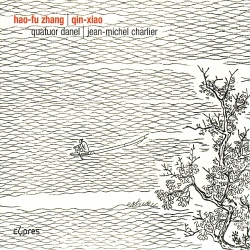
3
Luo Gujing
1. Prélude (Extrait) / 3. Nocturne pour claviers (Extrait) / 4. Fugue pour vingt blocks (Extrait)
16:51
Copyright Ⓒ 2013 Davinci Finger. All rights reseved
Service Terms & Policy