


Maurice Johnstone
Artist Info
Role:ComposerBirth:1900Death:1976Period:RomanticModernGenre:BandVocalMaurice Johnstone was a British composer and pianist who lived from 1891 to 1977. He was born in London, England, and showed an early interest in music. His parents were both amateur musicians, and they encouraged him to pursue his passion for music. Johnstone began his formal music education at the Royal Academy of Music in London, where he studied piano and composition. He was a talented pianist, and he won several awards and prizes for his performances. However, it was his compositions that would ultimately make him famous. Johnstone's early works were heavily influenced by the Romantic composers of the late 19th and early 20th centuries, such as Brahms, Tchaikovsky, and Rachmaninoff. His music was characterized by lush harmonies, sweeping melodies, and a strong sense of drama and emotion. One of Johnstone's early successes was his Piano Concerto No. 1, which he composed in 1915. The concerto was premiered by the London Symphony Orchestra, with Johnstone himself as the soloist. The piece was well-received by audiences and critics alike, and it helped establish Johnstone as a rising star in the classical music world. During World War I, Johnstone served in the British Army as a musician. He played the piano for troops in France and Belgium, and he also composed several patriotic songs and marches. After the war, he returned to London and resumed his career as a composer and pianist. In the 1920s and 1930s, Johnstone's music began to evolve. He became interested in the emerging modernist movement in music, which emphasized dissonance, atonality, and unconventional forms. Johnstone's own music became more experimental and avant-garde, although he never completely abandoned his Romantic roots. One of Johnstone's most famous works from this period is his Symphony No. 2, which he composed in 1932. The symphony is a complex and challenging piece, with intricate rhythms, unconventional harmonies, and a wide range of moods and emotions. It was premiered by the BBC Symphony Orchestra, and it received mixed reviews from critics. Some praised its originality and daring, while others found it too difficult and inaccessible. Despite the mixed reception to his modernist works, Johnstone continued to experiment with new forms and techniques throughout his career. He composed several operas, including The Tempest (1948) and The Trojan Women (1955), which were both based on plays by Shakespeare. He also wrote several ballets, including The Rake's Progress (1951) and The Firebird (1960), which were choreographed by the renowned dancer and choreographer George Balanchine. In addition to his compositions, Johnstone was also a respected music educator. He taught at several universities and conservatories, including the Royal Academy of Music and the University of Cambridge. He was known for his rigorous and demanding teaching style, and many of his students went on to become successful composers and performers in their own right. Johnstone's music has been performed and recorded by many of the world's leading orchestras and musicians. His legacy as a composer and pianist continues to be celebrated today, and his influence can be heard in the works of many contemporary composers.More....
Recent Artist Music
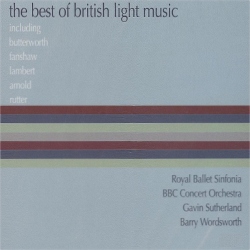
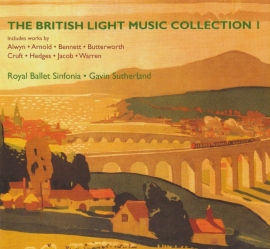
Copyright Ⓒ 2013 Davinci Finger. All rights reseved
Service Terms & Policy