


Marchetto da Padova
Artist Info
Role:ComposerBirth:ca. 1274Death:ca. 1330Genre:ChoralMarchetto da Padova was a prominent composer and music theorist of the 14th century. He was born in Padua, Italy, around 1274, and little is known about his early life and education. However, it is believed that he received his musical training in Padua, which was a thriving center of music and culture during the Middle Ages. Marchetto da Padova is best known for his contributions to music theory, particularly his treatise "Pomerium in quo continetur musica mensurabilis," which was written around 1318. This treatise is considered one of the most important works on music theory from the 14th century and provides valuable insights into the development of musical notation and rhythm during this period. In his treatise, Marchetto da Padova discusses the use of mensural notation, which was a system of musical notation that allowed composers to indicate the duration of notes more precisely than the earlier system of neumatic notation. He also discusses the use of rhythmic modes, which were patterns of long and short notes that were used to create rhythmic variety in music. Marchetto da Padova's treatise was widely influential and was used as a textbook for music students for many years. It was also cited by later music theorists, including Johannes de Muris and Philippe de Vitry. In addition to his contributions to music theory, Marchetto da Padova was also a prolific composer. Unfortunately, only a small number of his works have survived, and most of these are fragments or incomplete pieces. However, these surviving works provide valuable insights into his musical style and the musical practices of the 14th century. One of Marchetto da Padova's most famous works is the "Missa Veterem hominem," which is a setting of the Mass Ordinary. This work is notable for its use of isorhythm, which is a technique that involves repeating a rhythmic pattern throughout a piece of music. The "Missa Veterem hominem" also features complex polyphonic textures and intricate melodic lines, which are characteristic of the Ars Nova style of music that was popular in the 14th century. Another notable work by Marchetto da Padova is the "Motet de Passione," which is a setting of the Passion story from the Bible. This work is notable for its use of chromaticism, which is a technique that involves using notes outside of the traditional diatonic scale. The "Motet de Passione" also features complex polyphonic textures and intricate melodic lines, which are characteristic of Marchetto da Padova's musical style. Marchetto da Padova's music was highly regarded during his lifetime, and he was considered one of the leading composers of his time. His music was performed in churches and courts throughout Italy and was influential in the development of the Ars Nova style of music. In addition to his musical and theoretical contributions, Marchetto da Padova was also a respected teacher. He taught music at the University of Padua and was known for his expertise in music theory and composition. Many of his students went on to become prominent composers and music theorists in their own right. Marchetto da Padova died in Padua in 1319, leaving behind a legacy of musical and theoretical contributions that continue to be studied and admired to this day.More....
Recent Artist Music
1
3:14
2
Ave Regina/Mater Innocence
In honour of the Blessed Virgin Mary: Ave Regina - Mater Innocencie
3:24
5
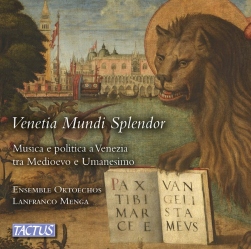
Hail Corpus Sanctum
Ave corpus sanctum / Adolescens protomartyr (Mottetto a 4 v. per il Doge Francesco Dandolo 1329-1339)
4:49
Copyright Ⓒ 2013 Davinci Finger. All rights reseved
Service Terms & Policy