


Johann Christian Rinck
Released Album
Keyboard
-
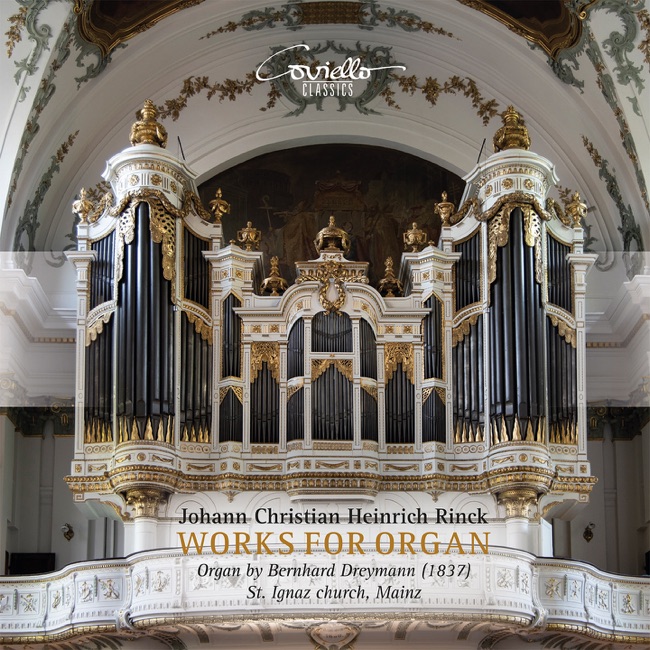 February 5, 2021
 -
 May 3, 2019
 -
-
 June 10, 2014
 -
-
 August 1, 2010
Artist Info
Role:ComposerCountry: GermanyBirth:February 18, 1770Death:August 7, 1846Period:RomanticGenre:KeyboardJohann Christian Heinrich Rinck was a German composer and organist who lived during the late 18th and early 19th centuries. He was born on February 18, 1770, in Elgersburg, a small town in the Thuringian Forest region of Germany. Rinck was the son of a schoolteacher, and he showed an early aptitude for music. He began playing the organ at the age of six and was soon recognized as a prodigy. Rinck's musical education began in earnest when he was sent to study with Johann Christian Kittel, a former student of Johann Sebastian Bach. Kittel was a renowned organist and composer, and he recognized Rinck's talent immediately. Rinck studied with Kittel for several years, learning the intricacies of counterpoint and composition. In 1787, Rinck moved to Leipzig to study with Johann Adam Hiller, the director of the Leipzig Opera. Hiller was a prominent figure in the German music scene, and he introduced Rinck to many of the leading musicians of the day. Rinck continued to study with Hiller for several years, honing his skills as a composer and performer. In 1790, Rinck was appointed as the organist at the St. Peter and Paul Church in Weimar. This was a prestigious position, and it allowed Rinck to showcase his talents as a composer and performer. Rinck quickly became known for his virtuosic organ playing and his innovative compositions. Rinck's music was heavily influenced by the works of Bach and Handel, but he also incorporated elements of the emerging classical style into his compositions. His music was characterized by its technical complexity and its emotional depth. Rinck was particularly skilled at writing fugues, and his fugues are considered some of the finest examples of the form. Rinck's most famous work is his "Organ Sonata No. 8 in E minor," which is also known as the "Eroica Sonata." This piece is a tour de force of organ music, featuring complex counterpoint and virtuosic passages. The "Eroica Sonata" is considered one of the greatest works of the organ repertoire, and it has been performed by some of the world's greatest organists. In addition to his organ music, Rinck also wrote a number of vocal works, including cantatas, motets, and hymns. His vocal music is characterized by its lyrical beauty and its emotional depth. Rinck was particularly skilled at setting texts to music, and his vocal works are considered some of the finest examples of the genre. Rinck's career as a composer and performer was cut short by his untimely death in 1846. However, his legacy lives on through his music, which continues to be performed and admired by musicians and music lovers around the world. Rinck's contributions to the organ repertoire are particularly significant, and his music remains an important part of the organ repertoire to this day. In conclusion, Johann Christian Rinck was a talented composer and organist who made significant contributions to the music of his time. His music was characterized by its technical complexity and emotional depth, and his works continue to be admired and performed by musicians and music lovers around the world. Rinck's legacy as a composer and performer is secure, and his music remains an important part of the classical music canon.More....
Recent Artist Music
3
7:5
4
14:53
6
4:19
7
13:41
11
10:14
Copyright Ⓒ 2013 Davinci Finger. All rights reseved
Service Terms & Policy