


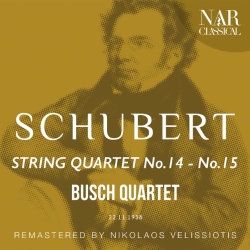
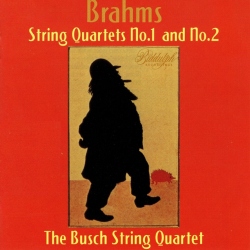
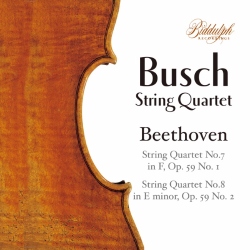
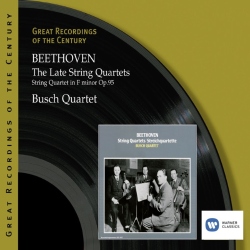
Busch String Quartet
Released Album
Chamber
Artist Info
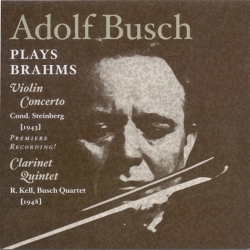
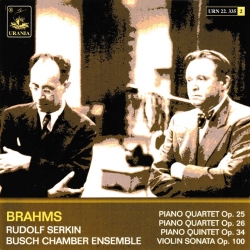
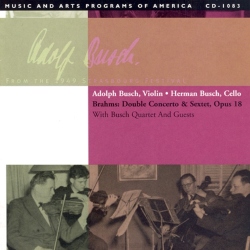
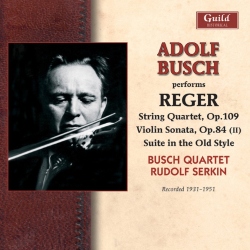
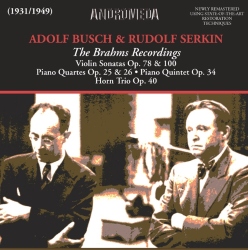
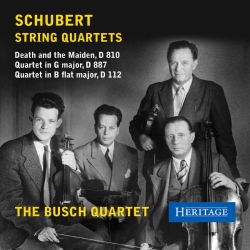
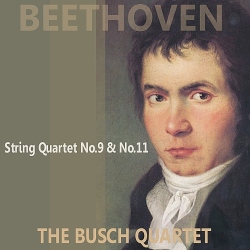
Period:RomanticGenre:ChamberThe Busch String Quartet was a renowned classical music ensemble that was active from 1912 to 1951. The quartet was named after its founder, the violinist Adolf Busch, who was also the group's leader and driving force. The quartet was known for its exceptional musicianship, technical precision, and interpretive depth, and it was widely regarded as one of the finest string quartets of the 20th century. Adolf Busch was born in Germany in 1891 and began playing the violin at a young age. He studied with some of the leading violinists of his time, including Willy Hess and Carl Flesch, and quickly established himself as a virtuoso performer. In 1912, Busch founded the Busch String Quartet with three other musicians: the violinist Karl Klingler, the violist Hermann Busch (Adolf's brother), and the cellist Paul Grümmer. The quartet made its debut in Berlin in 1913 and quickly gained a reputation for its exceptional musicianship and innovative interpretations. Over the next several decades, the Busch String Quartet became one of the most celebrated ensembles in the world of classical music. The quartet's members were known for their technical precision, their ability to blend their individual voices into a seamless whole, and their deep understanding of the music they played. They were particularly renowned for their performances of the works of Beethoven, Mozart, and Brahms, and they were widely regarded as the leading interpreters of these composers' music. One of the highlights of the Busch String Quartet's career was their performance of Beethoven's complete string quartets in London in 1935. This was a landmark event in the history of classical music, and it cemented the quartet's reputation as one of the greatest ensembles of its time. The quartet also made numerous recordings throughout its career, including several acclaimed recordings of the Beethoven quartets. In addition to their performances and recordings, the Busch String Quartet was also known for its commitment to new music. The quartet premiered works by a number of contemporary composers, including Béla Bartók, Arnold Schoenberg, and Alban Berg. They were particularly supportive of the music of Schoenberg, and they played a key role in the development of the composer's string quartets. The Busch String Quartet's career was interrupted by the outbreak of World War II. Adolf Busch, who was Jewish, was forced to flee Germany in 1933, and the quartet disbanded in 1939. However, the members of the quartet continued to perform together in various configurations throughout the war years, and they reunited as a quartet in 1945. They continued to perform and record together until 1951, when Adolf Busch retired from performing due to health reasons. Throughout its career, the Busch String Quartet received numerous awards and accolades for its exceptional musicianship. The quartet was awarded the Grand Prix du Disque in 1950 for its recording of Beethoven's Op. 131 quartet, and it was also awarded the Légion d'honneur by the French government. The quartet's members were also recognized individually for their contributions to the world of classical music. Adolf Busch was awarded the Order of Merit of the Federal Republic of Germany in 1951, and Karl Klingler was awarded the Order of Merit of Baden-Württemberg in 1971. Today, the Busch String Quartet is remembered as one of the greatest ensembles in the history of classical music.More....
Recent Artist Music
3
11:49
4
7:15
5
11:24
10
11:33

Copyright Ⓒ 2013 Davinci Finger. All rights reseved
Service Terms & Policy