


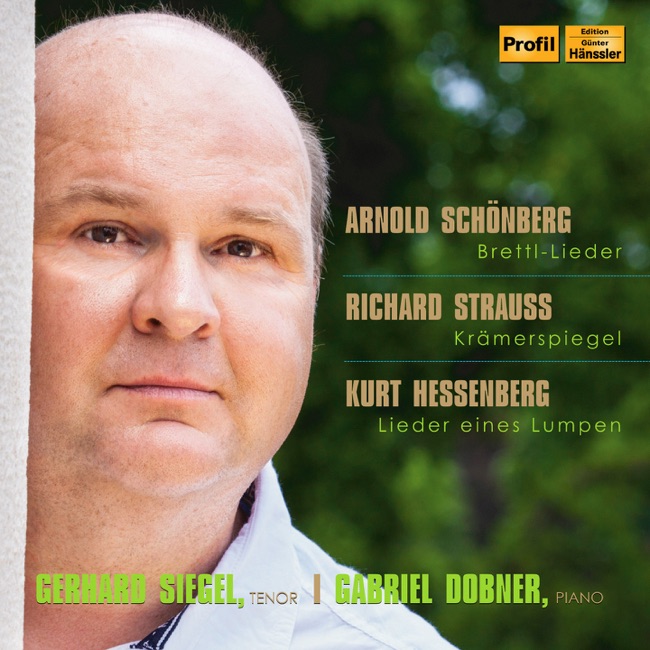
Kurt Hessenberg
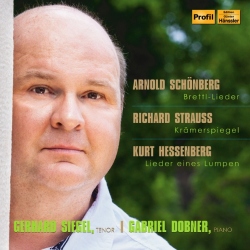
Released Album
Keyboard
-
 August 7, 2015
 -
 January 2, 2007
Artist Info
Role:ComposerBirth:August 17, 1908Kurt Hessenberg was a German composer and pianist who was born on August 17, 1908, in Frankfurt am Main, Germany. He was the son of a music teacher and grew up in a musical family. His father, Heinrich Hessenberg, was a composer and conductor, and his mother, Margarete Hessenberg, was a pianist. Kurt Hessenberg showed an early interest in music and began playing the piano at the age of six. Hessenberg studied music at the Frankfurt Conservatory, where he was a student of Bernhard Sekles, a composer and conductor. He also studied piano with Edwin Fischer, a renowned pianist and conductor. Hessenberg graduated from the conservatory in 1929 and began his career as a composer and pianist. Hessenberg's early works were influenced by the music of Bach, Mozart, and Beethoven. He wrote a number of piano pieces, chamber music, and songs. In 1933, Hessenberg's music was banned by the Nazi regime because he was considered a "degenerate" artist. He was forced to stop performing and composing, and he was not allowed to teach music. During World War II, Hessenberg served in the German army as a medic. After the war, he resumed his career as a composer and pianist. He became a professor of composition at the Frankfurt Conservatory in 1946, and he held that position until his retirement in 1973. Hessenberg's music is characterized by its clarity, simplicity, and elegance. He was a master of counterpoint and wrote many works for choir and orchestra. His music is often compared to that of Bach and Mozart, and he was known for his use of traditional forms and structures. One of Hessenberg's most famous works is his Symphony No. 2, which he composed in 1951. The symphony is in four movements and is scored for a large orchestra. It is a powerful and emotional work that reflects Hessenberg's experiences during World War II. The symphony has been performed by many orchestras around the world and is considered one of Hessenberg's greatest achievements. Hessenberg also wrote a number of works for choir and orchestra, including his Requiem, which he composed in 1963. The Requiem is a powerful and moving work that reflects Hessenberg's deep religious faith. It has been performed by many choirs and orchestras around the world and is considered one of Hessenberg's most important works. In addition to his compositions, Hessenberg was also a respected pianist. He performed his own works as well as the works of other composers. He was known for his technical skill and his ability to bring out the emotional depth of the music. Hessenberg received many awards and honors during his lifetime. He was awarded the Order of Merit of the Federal Republic of Germany in 1968, and he was made an honorary citizen of Frankfurt in 1973. He was also a member of the Bavarian Academy of Fine Arts and the Academy of Arts, Berlin. Kurt Hessenberg died on December 14, 1994, in Frankfurt am Main, Germany. He was 86 years old. His music continues to be performed and admired by musicians and audiences around the world. Hessenberg's legacy as a composer and pianist is a testament to his talent, dedication, and love of music.More....
Copyright Ⓒ 2013 Davinci Finger. All rights reseved
Service Terms & Policy