


Edmund von Borck
Released Album
Chamber
-
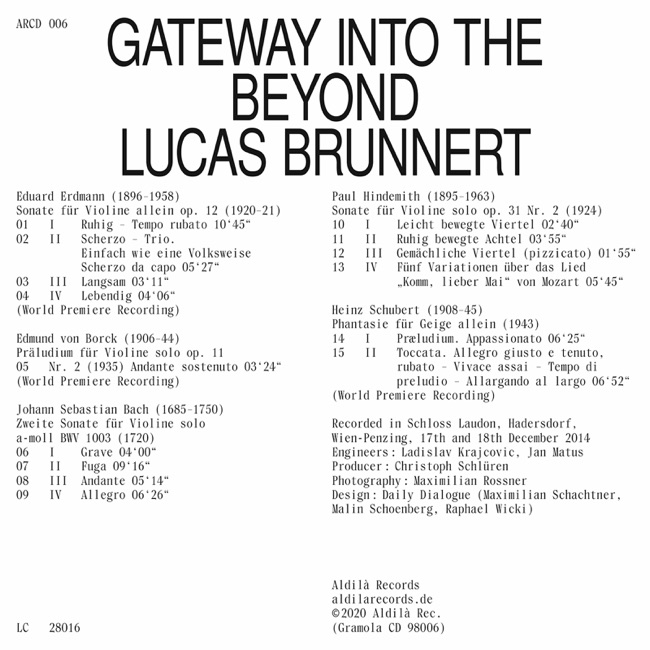 July 17, 2020
 -
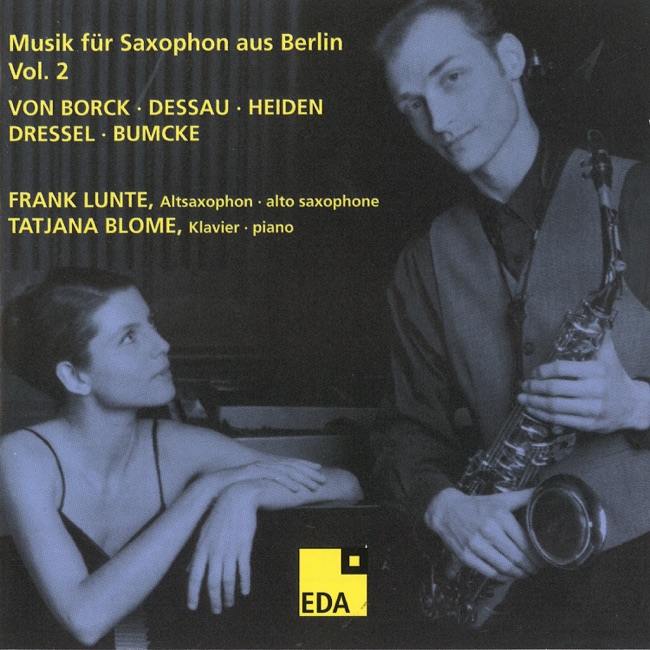 December, 2003
Artist Info
Role:ComposerCountry: GermanyBirth:February 22, 1906 in Breslau, GermanyDeath:February 16, 1944 in Nettuno, ItalyPeriod:ModernGenre:ConcertoEdmund von Borck was a German composer and pianist who lived from 1815 to 1877. He was born in the city of Berlin, where he spent most of his life. Borck was born into a family of musicians, and his father was a well-known composer and conductor. From a young age, Borck showed a great talent for music, and he began studying the piano and composition at an early age. Borck's musical education began at the Berlin Conservatory, where he studied under the tutelage of some of the most prominent musicians of the time. He quickly distinguished himself as a talented pianist and composer, and he began to gain recognition for his work. In 1835, he made his debut as a pianist, performing his own compositions in a concert in Berlin. Over the next few years, Borck continued to compose and perform, and he began to gain a reputation as one of the most promising young musicians in Germany. In 1840, he was appointed as the court pianist to the King of Prussia, and he began to compose music for the royal court. This appointment gave him the opportunity to work with some of the most talented musicians of the time, and he began to develop his own unique style of composition. Borck's music was characterized by its romanticism and its use of rich harmonies and complex melodies. He was heavily influenced by the works of Beethoven and Schumann, and his music often reflected their style and themes. His compositions were also notable for their technical complexity, and they required a high level of skill and virtuosity to perform. One of Borck's most famous works is his Piano Concerto No. 1 in E-flat major, which he composed in 1845. The concerto is a virtuosic work that showcases Borck's technical skill as a pianist and composer. It is characterized by its sweeping melodies and rich harmonies, and it has become one of the most popular piano concertos of the Romantic era. Another notable work by Borck is his Symphony No. 1 in C minor, which he composed in 1850. The symphony is a powerful and dramatic work that reflects Borck's interest in the darker side of human emotion. It is characterized by its use of complex harmonies and its sweeping melodies, and it has become one of the most popular symphonies of the Romantic era. Borck's music was also notable for its use of programmatic elements. He often composed music that was inspired by literature or other art forms, and his works often had a narrative or descriptive quality. For example, his Piano Sonata No. 2 in A minor, which he composed in 1848, was inspired by the works of the German poet Heinrich Heine. The sonata is a dark and brooding work that reflects the themes of Heine's poetry. Despite his success as a composer and pianist, Borck's personal life was marked by tragedy. In 1852, his wife died in childbirth, and he was left to raise their two children alone. This event had a profound impact on Borck, and it is reflected in his later works, which often have a melancholic or introspective quality. In the years that followed, Borck continued to compose and perform, but his output slowed down considerably. He suffered from poor health, and he struggled to balance his responsibilities as a single parent with his musical career. He died in 1877 at the age of 62, leaving behind a legacy as one of the most talented and influential composers of the Romantic era. Today, Borck's music is still performed and admired by musicians and music lovers around the world.More....
Copyright Ⓒ 2013 Davinci Finger. All rights reseved
Service Terms & Policy