


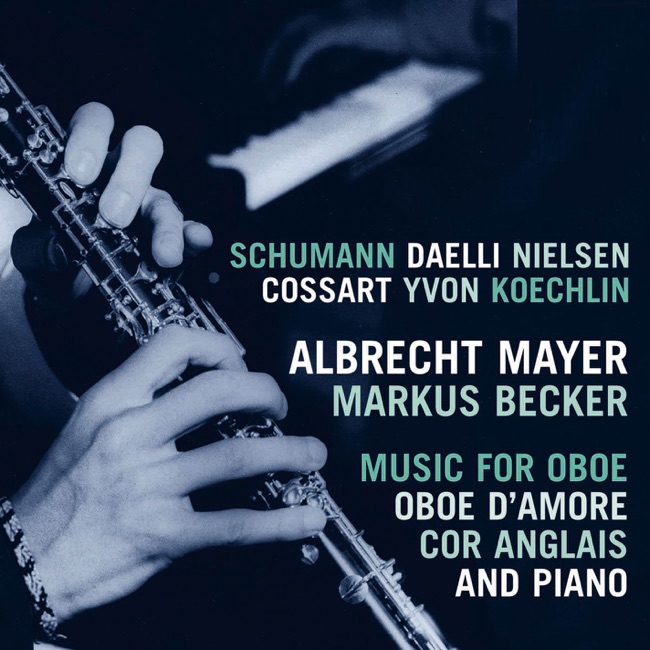
Leland Albert Cossart
Released Album
Chamber
-
 August 19, 2008
 -
Artist Info
Role:ComposerBirth:1877Genre:ChamberLeland Albert Cossart was an American composer of classical music who was born on May 22, 1926, in the city of San Francisco, California. He was the son of a music teacher and grew up in a family that was deeply involved in music. His father, Albert Cossart, was a violinist and conductor, and his mother, Edith Cossart, was a pianist and music teacher. From a young age, Leland showed a great interest in music and began studying the piano and violin at the age of six. Cossart's musical education began at the San Francisco Conservatory of Music, where he studied piano, violin, and composition. He later continued his studies at the University of California, Berkeley, where he earned a Bachelor of Arts degree in music in 1948. He then went on to study composition with Darius Milhaud at Mills College in Oakland, California, where he earned a Master of Arts degree in music in 1950. Cossart's early compositions were influenced by the neoclassical style of Milhaud, as well as the music of Stravinsky and Bartok. His first major work, the String Quartet No. 1, was written in 1951 and premiered at the San Francisco Conservatory of Music. The piece was well-received and established Cossart as a promising young composer. In 1952, Cossart was awarded a Fulbright Scholarship to study composition in Paris, France. While in Paris, he studied with Olivier Messiaen and attended the classes of Nadia Boulanger. He also had the opportunity to attend concerts and meet other composers, including Pierre Boulez and Karlheinz Stockhausen. Cossart's time in Paris had a significant impact on his music, and he began to incorporate elements of serialism and atonality into his compositions. His works from this period include the Piano Sonata No. 1, the String Quartet No. 2, and the Symphony No. 1. After returning to the United States in 1954, Cossart began teaching at the San Francisco Conservatory of Music. He also continued to compose, and his works from this period include the Piano Sonata No. 2, the String Quartet No. 3, and the Symphony No. 2. In the 1960s, Cossart's music became more experimental, and he began to incorporate electronic music into his compositions. His works from this period include the Electronic Music for Tape, the String Quartet No. 4, and the Symphony No. 3. Cossart's music was well-received by critics and audiences alike, and he received numerous awards and honors throughout his career. In 1962, he was awarded a Guggenheim Fellowship, which allowed him to travel to Europe and study the music of the avant-garde. In 1970, he was awarded the Prix de Rome, which allowed him to spend a year in Rome, Italy, studying and composing. Cossart continued to compose throughout the 1970s and 1980s, and his works from this period include the String Quartet No. 5, the Symphony No. 4, and the Piano Sonata No. 3. He also continued to teach at the San Francisco Conservatory of Music, where he was a beloved and respected member of the faculty. Cossart passed away on December 31, 1998, at the age of 72. He left behind a legacy of innovative and influential music, and his works continue to be performed and studied by musicians and music lovers around the world.More....
Recent Artist Music

Copyright Ⓒ 2013 Davinci Finger. All rights reseved
Service Terms & Policy