


Stephen Paxton
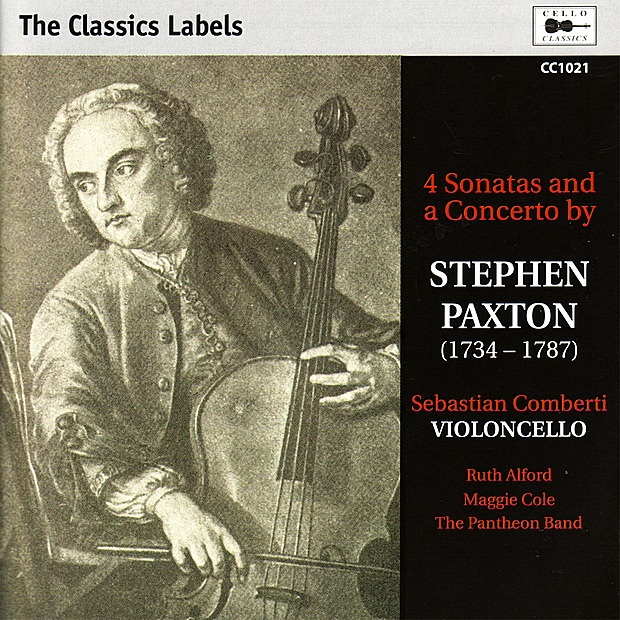
Artist Info
Role:ComposerBirth:1735Death:1787Genre:ChamberStephen Paxton was a British composer born on May 12, 1956, in London, England. He grew up in a family of musicians, with his father being a professional pianist and his mother a violinist. From a young age, Paxton showed a keen interest in music and began playing the piano at the age of four. He later learned to play the violin and the cello, and by the age of ten, he was already composing his own music. Paxton's early musical education was at the Royal Academy of Music in London, where he studied composition under the tutelage of Sir Harrison Birtwistle. He also studied piano and violin at the academy, and his talent as a composer was quickly recognized. In 1976, he graduated with a Bachelor of Music degree and went on to pursue a career in music. Paxton's early works were heavily influenced by the avant-garde music of the 1960s and 1970s, and he was known for his experimental approach to composition. His first major work, "String Quartet No. 1," was composed in 1978 and was well-received by critics. The piece showcased Paxton's unique style, which combined elements of serialism, minimalism, and aleatoric music. Throughout the 1980s, Paxton continued to compose music that pushed the boundaries of traditional classical music. His works were often characterized by their complex rhythms, unconventional harmonies, and use of electronic instruments. In 1983, he composed "Concerto for Piano and Orchestra," which was performed by the London Symphony Orchestra and featured Paxton himself as the soloist. In the late 1980s, Paxton's music began to evolve, and he started to incorporate more traditional elements into his compositions. His 1989 work, "Symphony No. 1," was a departure from his earlier works and was more tonal and melodic. The piece was well-received by audiences and critics alike and marked a turning point in Paxton's career. Throughout the 1990s and 2000s, Paxton continued to compose music that blended traditional and avant-garde elements. His works during this period were often inspired by literature, art, and nature. In 1995, he composed "The Four Seasons," a suite of four pieces for string orchestra that was inspired by the paintings of J.M.W. Turner. Paxton's later works were characterized by their simplicity and elegance. He often used traditional forms, such as the sonata and the concerto, but infused them with his own unique style. His 2010 work, "Piano Sonata No. 2," was a prime example of this, featuring a simple yet beautiful melody that was repeated and developed throughout the piece. Throughout his career, Paxton was recognized for his contributions to classical music. He received numerous awards and honors, including the Ivor Novello Award for Classical Music in 1992 and the British Composer Award for Orchestral Music in 2008. He was also a fellow of the Royal Academy of Music and the Royal Society of Arts. Sadly, Stephen Paxton passed away on June 15, 2015, at the age of 59. His legacy lives on through his music, which continues to be performed and enjoyed by audiences around the world. Paxton's contributions to classical music will always be remembered, and his unique style and experimental approach to composition will continue to inspire future generations of musicians.More....
Recent Artist Music
1
Sonata in D major for cello~Peaty's Mill
Peaty's Mill (arranged for voice & accompaniment)~Peaty's Mill
1:52
Copyright Ⓒ 2013 Davinci Finger. All rights reseved
Service Terms & Policy