


Vladas Jakubenas
Released Album
Chamber
-
 May 27, 2016
 -
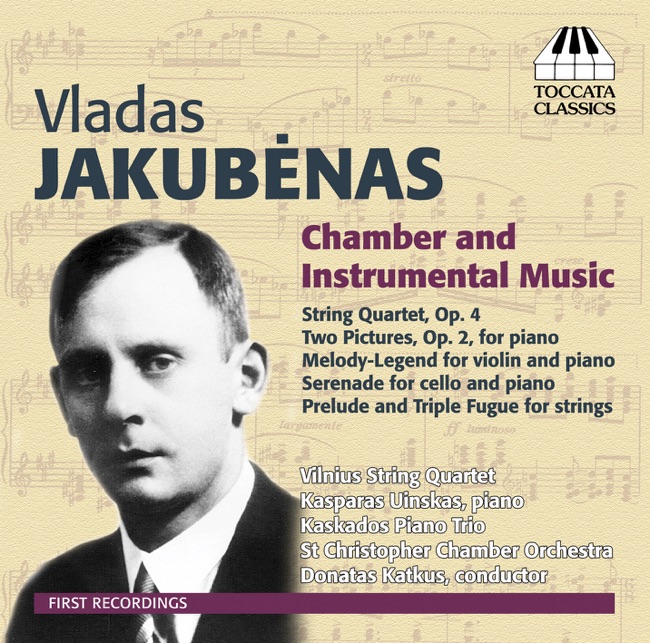 October 1, 2012
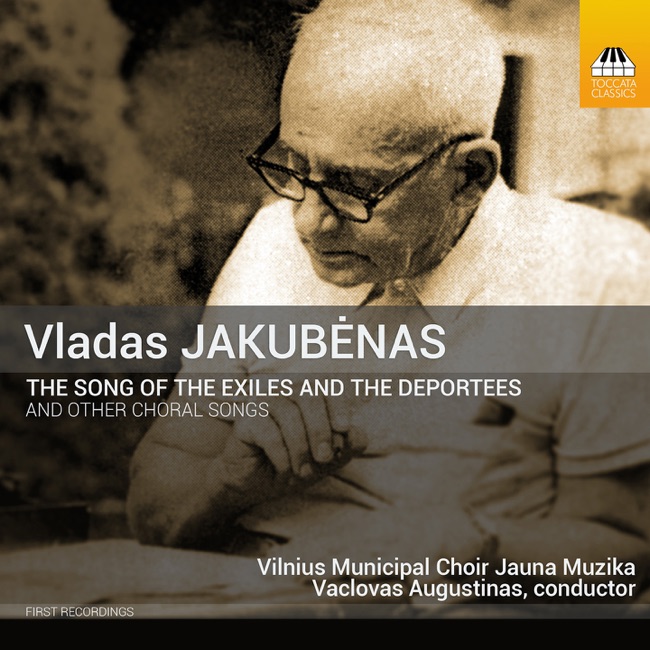
Choral
Artist Info
Role:ComposerCountry: LithuaniaBirth:November 29, 1903 in Birzai, LithuaniaDeath:December 13, 1976 in Chicago, ILVladas Jakubenas was a Lithuanian composer who was born on January 1, 1904, in the small town of Kavarskas. He was the youngest of six children in a family of modest means. His father was a blacksmith, and his mother was a homemaker. Despite their limited resources, his parents recognized their son's musical talent and encouraged him to pursue his passion. Jakubenas began his musical education at the age of six when he started taking piano lessons. He showed remarkable progress and was soon able to play complex pieces by Chopin and Liszt. At the age of ten, he started composing his own music, and by the time he was a teenager, he had already written several pieces for piano and chamber ensembles. In 1922, Jakubenas moved to Kaunas, the second-largest city in Lithuania, to study at the Lithuanian Conservatory. He studied composition with Juozas Gruodis, a prominent Lithuanian composer, and piano with Feliksas Bajoras, a renowned pianist. During his studies, Jakubenas became interested in Lithuanian folk music and started incorporating elements of it into his compositions. After graduating from the conservatory in 1927, Jakubenas worked as a music teacher and a freelance composer. He wrote music for theater productions, films, and radio broadcasts. In 1930, he won the first prize in a national competition for his orchestral work "Lithuanian Rhapsody." In 1932, Jakubenas moved to Paris to study at the École Normale de Musique. He studied composition with Nadia Boulanger, a legendary teacher who had taught many famous composers, including Aaron Copland and Philip Glass. Jakubenas also attended concerts and met with other composers, including Igor Stravinsky and Sergei Prokofiev. During his time in Paris, Jakubenas continued to explore Lithuanian folk music and incorporated it into his compositions. He wrote several works for chamber ensembles, including "Lithuanian Suite" and "Three Lithuanian Dances." He also wrote a ballet, "The Magic Bird," which was based on a Lithuanian folk tale. In 1936, Jakubenas returned to Lithuania and became a professor of composition at the Lithuanian Conservatory. He continued to compose and wrote several works for orchestra, including "Symphony No. 1" and "Symphony No. 2." He also wrote music for choir, including "Lithuanian Mass" and "Cantata for the 20th Anniversary of the Lithuanian Republic." During World War II, Jakubenas was forced to flee Lithuania and spent several years in Germany and Austria. He continued to compose and wrote several works for chamber ensembles, including "String Quartet No. 1" and "Wind Quintet." He also wrote a piano concerto, which he dedicated to his wife, who was a pianist. In 1949, Jakubenas emigrated to the United States and settled in New York City. He continued to compose and wrote several works for orchestra, including "Symphony No. 3" and "Symphony No. 4." He also wrote music for choir, including "Lithuanian Songs" and "Cantata for the 50th Anniversary of the Lithuanian Republic." Jakubenas was a prolific composer who wrote over 200 works in various genres, including orchestral, chamber, vocal, and piano music. His music is characterized by its lyricism, harmonic richness, and use of Lithuanian folk elements. He was also a respected teacher who influenced several generations of Lithuanian composers. Jakubenas died on December 31, 1976, in New York City.More....

Copyright Ⓒ 2013 Davinci Finger. All rights reseved
Service Terms & Policy