


Hisato Ohzawa
Released Album
Symphony
Artist Info
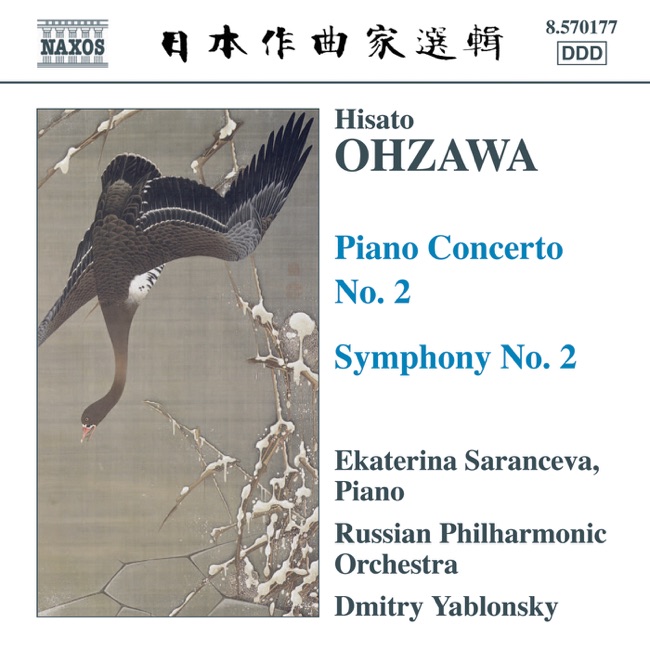
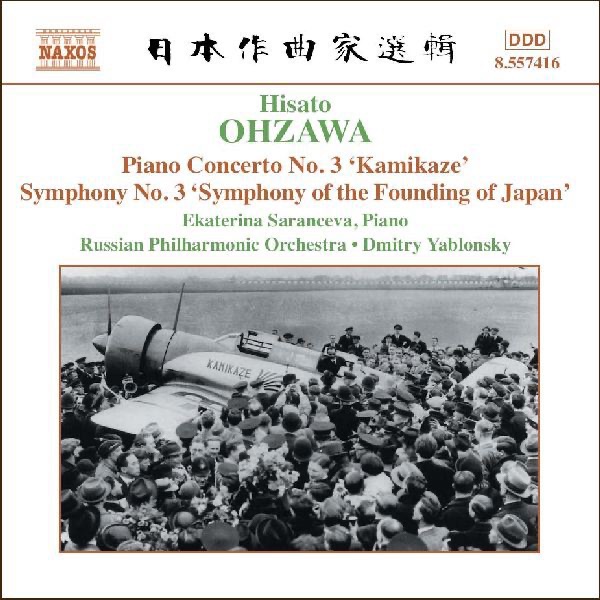
Role:ComposerBirth:1907Death:1953Hisato Ohzawa was a Japanese composer who was born on December 18, 1907, in Tokyo, Japan. He was the son of a wealthy businessman and was raised in a family that valued education and culture. His father was a lover of classical music and often took his son to concerts and operas. This early exposure to music sparked Ohzawa's interest in the art form, and he began studying piano at a young age. Ohzawa's musical education continued at the Tokyo Music School, where he studied composition under the tutelage of Kozaburo Hirai. He also studied piano with Kiyoshi Nobutoki and conducting with Hidemaro Konoye. Ohzawa was a talented student and quickly gained recognition for his musical abilities. In 1929, he won first prize in the school's composition competition for his work, "Symphony No. 1." After graduating from the Tokyo Music School, Ohzawa continued his studies in Europe. He spent time in Paris, where he studied with Nadia Boulanger, a renowned composition teacher who had taught many of the great composers of the 20th century. Ohzawa also studied with Paul Dukas and Maurice Ravel, two of the most influential composers of the time. Ohzawa's time in Europe was a formative period in his musical development. He was exposed to new styles and techniques, and he began to develop his own unique voice as a composer. He was particularly influenced by the French impressionist composers, and his music often featured lush harmonies and colorful orchestration. Ohzawa returned to Japan in 1933 and began a successful career as a composer and conductor. He was appointed the conductor of the Tokyo Symphony Orchestra in 1936, a position he held for over 20 years. He also served as the director of the Tokyo Music School from 1944 to 1947. Ohzawa's music was well-received in Japan, and he became one of the country's most prominent composers. His works were often performed by the leading orchestras and ensembles, and he received numerous awards and honors for his contributions to music. One of Ohzawa's most famous works is his "Japanese Rhapsody," which was composed in 1935. The piece is a tribute to traditional Japanese music and features elements of folk songs and dances. The work is scored for a large orchestra and includes a prominent role for the koto, a traditional Japanese stringed instrument. The "Japanese Rhapsody" is considered one of Ohzawa's masterpieces and is still performed frequently today. Another notable work by Ohzawa is his "Symphony No. 2," which was composed in 1941. The piece is a reflection of the turbulent times in which it was written, as Japan was on the brink of entering World War II. The symphony is a powerful and emotional work that reflects the uncertainty and anxiety of the time. Despite its somber tone, the symphony is also a testament to the resilience and strength of the Japanese people. Ohzawa continued to compose throughout his life, and his later works reflect his continued growth and development as a composer. He was particularly interested in incorporating elements of traditional Japanese music into his compositions, and many of his later works feature a fusion of Western and Japanese styles. Hisato Ohzawa passed away on April 17, 1953, at the age of 45. Despite his relatively short life, he left behind a rich legacy of music that continues to be celebrated and performed today.More....
Recent Artist Music
Copyright Ⓒ 2013 Davinci Finger. All rights reseved
Service Terms & Policy