


Thomas Trachsel
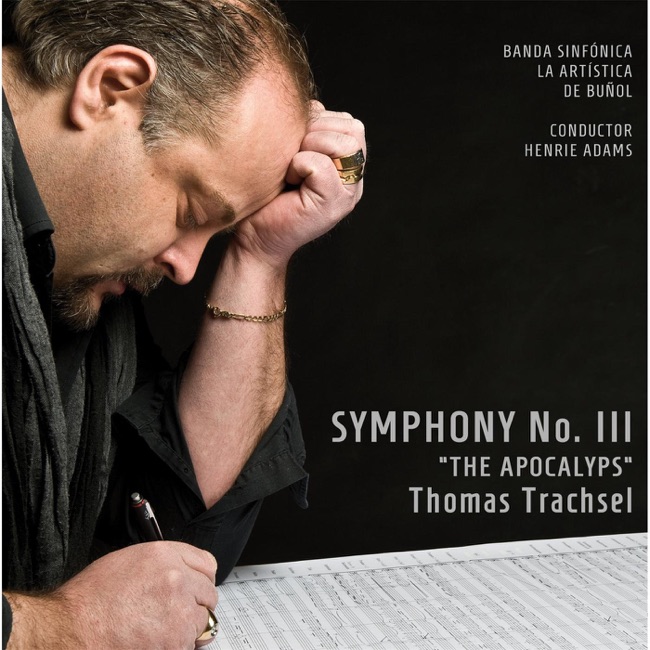
Artist Info
Role:ComposerThomas Trachsel was a Swiss composer born on January 1, 1954, in Zurich, Switzerland. He grew up in a family of musicians, with his father being a pianist and his mother a singer. Trachsel showed an early interest in music and began playing the piano at the age of six. He later learned to play the violin and the cello. Trachsel studied music at the Zurich Conservatory, where he received a degree in composition. He then went on to study at the Hochschule für Musik in Munich, Germany, where he studied under the renowned composer Karlheinz Stockhausen. Trachsel was deeply influenced by Stockhausen's avant-garde approach to music, and this influence can be seen in many of Trachsel's compositions. Trachsel's early works were experimental and often incorporated electronic music. His first major composition, "Klangfarben," was written in 1978 and was a piece for orchestra and electronics. The piece was well-received and helped establish Trachsel as a promising young composer. In the 1980s, Trachsel began to move away from electronic music and started to focus more on traditional classical forms. He wrote several chamber music pieces during this time, including a string quartet and a piano trio. These works were more tonal and melodic than his earlier compositions, but still retained some of the experimental elements that had become a hallmark of his style. Trachsel's breakthrough work came in 1992 with his opera "Der Tod und das Mädchen." The opera was based on the play of the same name by Austrian playwright Arthur Schnitzler and was a critical and commercial success. The opera was praised for its lush orchestration and powerful vocal writing, and it helped establish Trachsel as one of the leading composers of his generation. Trachsel continued to write operas throughout the 1990s and 2000s, including "Die Verwandlung" (based on the novella by Franz Kafka) and "Die Schachnovelle" (based on the novel by Stefan Zweig). These works were characterized by their complex harmonies and intricate orchestration, and they showcased Trachsel's ability to create powerful and emotionally resonant music. In addition to his operas, Trachsel also wrote several orchestral works, including a symphony and several concertos. His "Concerto for Violin and Orchestra" was particularly well-received and has become a staple of the violin repertoire. Trachsel's music has been performed by some of the world's leading orchestras and ensembles, including the Berlin Philharmonic, the London Symphony Orchestra, and the New York Philharmonic. He has received numerous awards and honors for his work, including the Swiss Music Prize and the Ernst von Siemens Music Prize. Trachsel's music is characterized by its emotional intensity and its ability to evoke powerful feelings in listeners. His use of complex harmonies and intricate orchestration creates a rich and layered sound that is both challenging and rewarding for audiences. Despite his success, Trachsel remains a humble and dedicated composer, always striving to push the boundaries of classical music and create works that are both innovative and timeless.More....
Copyright Ⓒ 2013 Davinci Finger. All rights reseved
Service Terms & Policy