


Harvey Grace
Released Album
Keyboard
-
 November 13, 2018
 -
 June 16, 2017
 -
 March 8, 2005
Artist Info
Role:ComposerCountry: United KingdomBirth:1874Death:1944Harvey Grace was a British composer and musicologist who lived from 1874 to 1944. He was born in London and grew up in a family of musicians. His father, William Grace, was a well-known organist and composer, and his mother, Mary Grace, was a singer. Harvey showed an early interest in music and began studying the piano and violin at a young age. In 1892, Harvey entered the Royal Academy of Music in London, where he studied composition with Frederick Corder and piano with Tobias Matthay. He was a talented student and won several prizes for his compositions. After graduating in 1896, he continued his studies in Berlin with the composer Max Bruch. Upon returning to England, Grace began a career as a composer and musicologist. He wrote music in a variety of genres, including orchestral works, chamber music, songs, and choral music. His music was influenced by the Romantic composers of the 19th century, particularly Brahms and Wagner. One of Grace's early successes was his String Quartet No. 1, which was premiered in 1900 by the London String Quartet. The piece was well-received and established Grace as a promising young composer. He went on to write several more string quartets, including the String Quartet No. 2, which was dedicated to the memory of his father. In addition to his work as a composer, Grace was also a respected musicologist. He wrote several books on music theory and history, including "The Art of Counterpoint" and "The Influence of Music on History and Morals." He was also a frequent contributor to music journals and magazines. Grace's most famous work is his Symphony in E minor, which was premiered in 1911 by the Hallé Orchestra under the direction of Sir Thomas Beecham. The symphony is a large-scale work in four movements and is notable for its lush harmonies and sweeping melodies. It was well-received by audiences and critics alike and established Grace as one of the leading composers of his time. In addition to his symphony, Grace wrote several other orchestral works, including the tone poem "The Song of Life" and the suite "In the Highlands." He also wrote several works for choir and orchestra, including the cantata "The Vision of Dante" and the oratorio "The Resurrection." Grace's music was performed frequently during his lifetime, but after his death in 1944, his music fell out of favor and was largely forgotten. However, in recent years, there has been a renewed interest in his music, and several of his works have been recorded and performed by modern orchestras and ensembles. In addition to his work as a composer and musicologist, Grace was also a respected teacher. He taught composition and music theory at the Royal Academy of Music and the Royal College of Music, and his students included several notable composers, including Benjamin Britten and Lennox Berkeley. Overall, Harvey Grace was a talented and versatile composer who made significant contributions to the world of classical music. His music is notable for its lush harmonies, sweeping melodies, and Romantic sensibility, and his work as a musicologist helped to advance the study and understanding of music theory and history. While his music may have been overlooked for many years, it is now being rediscovered and appreciated by a new generation of music lovers.More....
Recent Artist Music
2
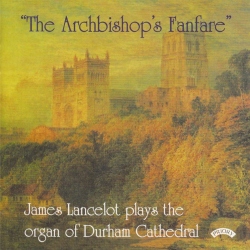
3:18
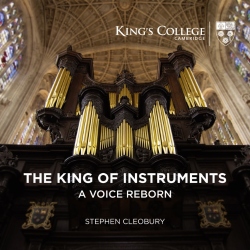
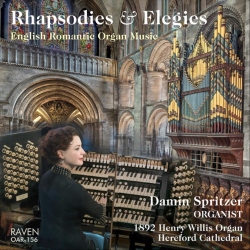
Copyright Ⓒ 2013 Davinci Finger. All rights reseved
Service Terms & Policy