


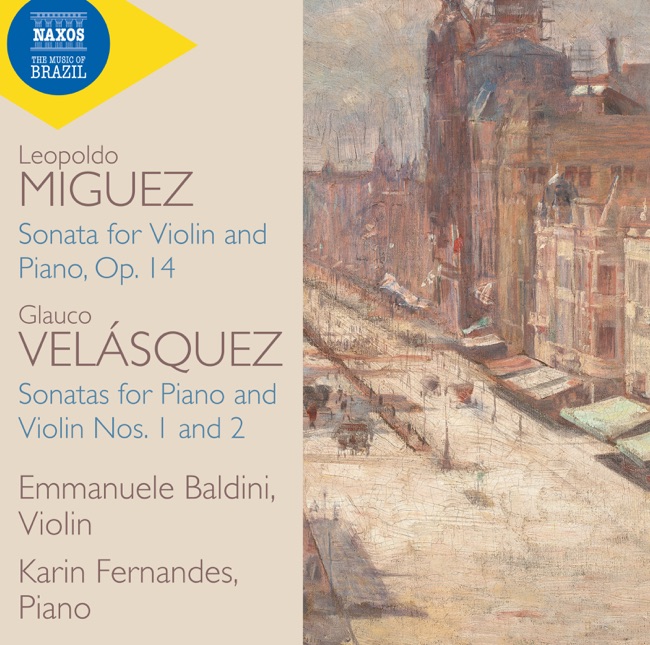
Glauco Velasquez
Released Album
Keyboard
-
 June 3, 1994
Chamber
Artist Info
Role:ComposerCountry: BrazilGenre:KeyboardGlauco Velasquez was a classical music composer born on May 5, 1928, in Rio de Janeiro, Brazil. He was the son of a pianist and a composer, and his parents recognized his musical talent at a young age. Velasquez began studying piano and composition at the age of six, and by the time he was a teenager, he was already performing in public concerts. Velasquez's early compositions were heavily influenced by Brazilian folk music and the works of Heitor Villa-Lobos, a prominent Brazilian composer. However, he also drew inspiration from European classical music, particularly the works of Bach, Mozart, and Beethoven. In 1950, Velasquez moved to Paris to study composition with Nadia Boulanger, a renowned teacher who had also taught Aaron Copland, Philip Glass, and many other notable composers. Under Boulanger's guidance, Velasquez developed a more sophisticated and nuanced approach to composition, incorporating elements of serialism and atonality into his work. Velasquez's early compositions were well-received in Europe, and he quickly gained a reputation as a rising star in the classical music world. In 1953, he won the Prix de Rome, a prestigious award that allowed him to study at the French Academy in Rome for two years. During his time in Rome, Velasquez continued to refine his style, experimenting with new forms and techniques. He also began to incorporate elements of jazz and popular music into his work, creating a unique fusion of classical and contemporary styles. In 1955, Velasquez returned to Brazil, where he became a professor of composition at the Federal University of Rio de Janeiro. He continued to compose prolifically, producing a wide range of works for orchestra, chamber ensembles, and solo instruments. One of Velasquez's most famous works is his Piano Concerto No. 1, which he composed in 1960. The concerto is a virtuosic showcase for the soloist, with complex rhythms and intricate harmonies that reflect Velasquez's eclectic musical influences. The piece has been performed by many of the world's leading pianists, including Martha Argerich and Maurizio Pollini. Another notable work by Velasquez is his String Quartet No. 1, which he composed in 1965. The quartet is a haunting and introspective work, with a sense of melancholy that reflects Velasquez's personal struggles with depression and anxiety. The piece has been praised for its emotional depth and expressive power. Throughout his career, Velasquez remained committed to exploring new musical ideas and pushing the boundaries of classical music. He continued to compose and perform until his death in 1999, leaving behind a rich legacy of innovative and influential works.More....
Recent Artist Music
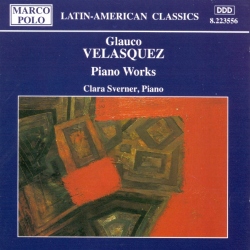
Recommend Playlist


Copyright Ⓒ 2013 Davinci Finger. All rights reseved
Service Terms & Policy