


Gerard Beljon
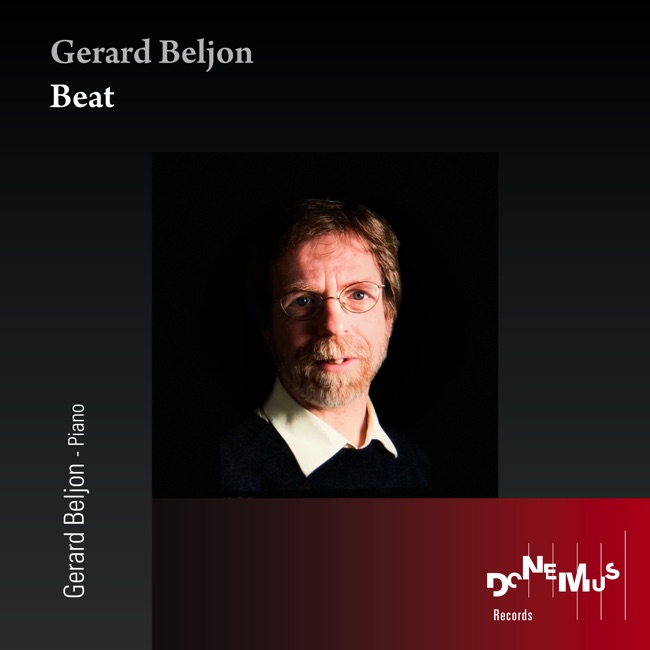

Artist Info
Role:ComposerGerard Beljon is a Dutch composer who was born on May 22, 1952, in Amsterdam, Netherlands. He grew up in a family of musicians, with his father being a conductor and his mother a pianist. Beljon started playing the piano at a young age and later learned to play the violin and viola. He studied composition at the Sweelinck Conservatory in Amsterdam, where he was taught by Ton de Leeuw and Theo Loevendie. Beljon's early works were influenced by the avant-garde music of the 1960s and 1970s, but he later developed a more personal style that combined elements of minimalism, post-modernism, and traditional classical music. His music is characterized by its rhythmic vitality, harmonic richness, and emotional depth. Beljon's first major work was his String Quartet No. 1, which was premiered in 1980 by the Schoenberg Quartet. The piece is a complex and challenging work that showcases Beljon's mastery of counterpoint and his ability to create intricate textures and harmonies. The quartet was well-received by critics and established Beljon as a promising young composer. In the following years, Beljon continued to compose chamber music, including several works for string quartet, piano trio, and wind ensemble. His music was performed by leading ensembles such as the Amsterdam Sinfonietta, the Nederlands Blazers Ensemble, and the Asko/Schönberg Ensemble. Beljon's breakthrough came in 1992 with the premiere of his orchestral work "The Garden of Earthly Delights," which was commissioned by the Rotterdam Philharmonic Orchestra. The piece is inspired by the famous triptych painting by Hieronymus Bosch and is divided into three movements, each representing one panel of the painting. The music is colorful, imaginative, and full of surprises, reflecting the surreal and grotesque imagery of Bosch's art. "The Garden of Earthly Delights" was a critical and commercial success and established Beljon as one of the leading composers of his generation. The piece has been performed by many orchestras around the world and has become a staple of the contemporary orchestral repertoire. Beljon's later works include several operas, including "The Tempest" (2000), "The Death of Pythagoras" (2005), and "The Last Days of Socrates" (2012). These operas are characterized by their lyrical melodies, dramatic intensity, and philosophical themes. Beljon's music is often inspired by literature, mythology, and history, and he has collaborated with many writers and poets to create works that combine music and text. Beljon has received numerous awards and honors for his music, including the Matthijs Vermeulen Prize, the most prestigious award for Dutch composers. He has also been a guest lecturer and composer-in-residence at many universities and festivals around the world. In conclusion, Gerard Beljon is a highly respected and influential composer whose music combines innovation and tradition, complexity and accessibility, and emotion and intellect. His works have been performed and recorded by many leading musicians and ensembles, and his contribution to the contemporary classical music scene is significant and enduring.More....
Recent Artist Music

Copyright Ⓒ 2013 Davinci Finger. All rights reseved
Service Terms & Policy