


Christoph Demantius
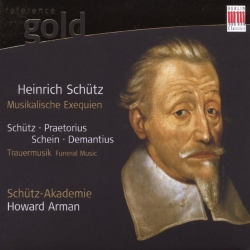
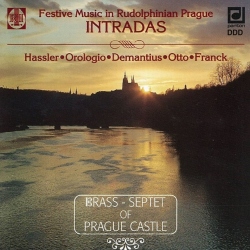
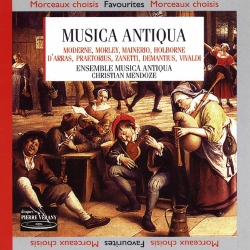
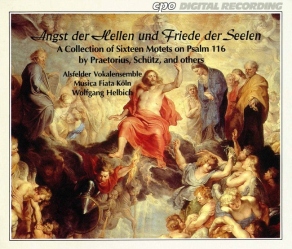
Released Album
Miscellaneous
-
 January 11, 2011
 -
 July 30, 2001
 -
 March 15, 1993
Choral
-
 January 2, 2012
 -
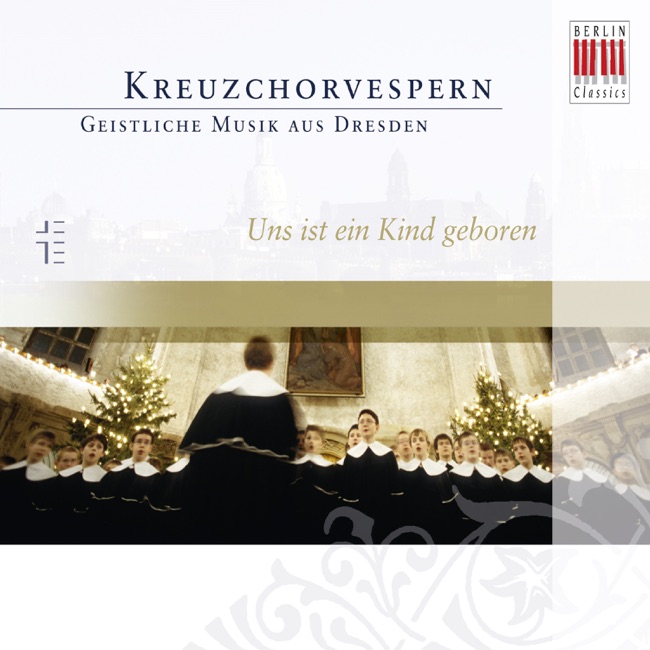 November 20, 2009
 -
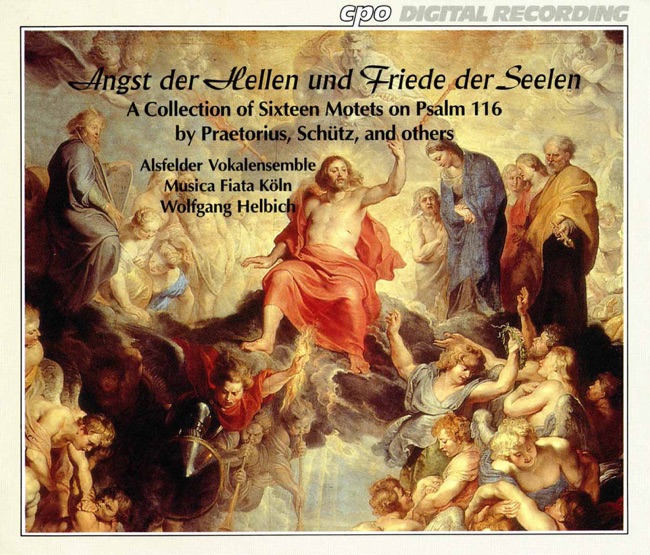 March, 1996
Artist Info
Role:ComposerCountry: GermanyBirth:December 15, 1567 in Lieberec, Czech RepublicDeath:April 20, 1643 in Freiburg, GermanyPeriod:BaroqueGenre:ChoralChristoph Demantius was a German composer and music theorist who lived during the late Renaissance and early Baroque periods. He was born in Reichenberg, Saxony, in 1567, and little is known about his early life and musical training. However, it is believed that he received a thorough education in music theory and composition, as well as in Latin and other academic subjects. Demantius began his career as a musician and composer in the early 1590s, when he was appointed as the cantor and music director at the St. Nicholas Church in Leipzig. He held this position for several years, during which time he composed a number of sacred works, including motets, hymns, and chorales. He also wrote several treatises on music theory and composition, which were highly regarded by his contemporaries. In 1602, Demantius left Leipzig and moved to Dresden, where he was appointed as the court composer and music director for the Elector of Saxony. He held this position for the rest of his life, and during this time he composed a large number of secular and sacred works, including madrigals, chansons, and instrumental music. He also continued to write treatises on music theory and composition, which were widely read and influential. One of Demantius's most famous works is his collection of 100 sacred madrigals, which he published in 1603 under the title "Geistliche Concerte." These madrigals are notable for their expressive harmonies and intricate counterpoint, and they were highly regarded by Demantius's contemporaries. Another important work is his collection of 50 secular madrigals, which he published in 1609 under the title "Teutsche Lieder." In addition to his madrigals, Demantius composed a number of other important works, including several motets and hymns, as well as instrumental music for various ensembles. He was particularly skilled at writing for the viola da gamba, and his music for this instrument is considered some of the finest of the early Baroque period. Demantius's music is characterized by its expressive harmonies, intricate counterpoint, and careful attention to text setting. He was particularly skilled at setting German texts, and his music is notable for its clear and direct expression of the text. He was also known for his use of chromaticism and dissonance, which were unusual for the time but which he used to great effect in his music. Despite his many accomplishments as a composer and music theorist, Demantius is not as well-known today as some of his contemporaries, such as Johann Sebastian Bach and Heinrich Schütz. However, his music is still performed and studied by scholars and musicians, and his contributions to the development of early Baroque music are widely recognized. In conclusion, Christoph Demantius was a highly skilled composer and music theorist who made important contributions to the development of early Baroque music. His music is characterized by its expressive harmonies, intricate counterpoint, and careful attention to text setting, and he was particularly skilled at setting German texts. Although he is not as well-known today as some of his contemporaries, his music is still performed and studied by scholars and musicians, and his legacy as a composer and music theorist continues to be celebrated.More....
Copyright Ⓒ 2013 Davinci Finger. All rights reseved
Service Terms & Policy