


Michael Oesterle
Released Album
Chamber
Vocal
-
 May 3, 2011
Opera
-
 March 1, 2019
Artist Info
Role:Composer ConductorMichael Oesterle is a Canadian composer who was born in 1968 in Ottawa, Ontario. He grew up in a musical family, with his father being a professional violinist and his mother a pianist. Oesterle began playing the piano at a young age and later learned to play the violin and viola. He attended the University of Toronto, where he earned a Bachelor of Music degree in composition and a Master of Music degree in composition and theory. Oesterle's early works were influenced by the minimalist and post-minimalist movements of the 1970s and 1980s. His compositions often feature repetitive patterns and simple harmonies, but also incorporate elements of jazz, rock, and other popular music genres. Oesterle's music is known for its rhythmic complexity and use of unconventional instrumentation. One of Oesterle's early works, "The Book of Hours," was written for string quartet and premiered in 1995. The piece is divided into seven movements, each of which is named after a different hour of the day. The music is characterized by its use of repetitive patterns and shifting rhythms, and the piece has been described as "hypnotic" and "mesmerizing." In 1998, Oesterle composed "Theatre of Cruelty," a work for chamber ensemble that was inspired by the writings of Antonin Artaud. The piece features a wide range of instruments, including saxophone, accordion, and percussion, and incorporates elements of improvisation. "Theatre of Cruelty" has been praised for its "raw energy" and "unpredictable twists and turns." Oesterle's music continued to evolve in the early 2000s, with works such as "Daydream Mechanics" and "Theatre of the World." "Daydream Mechanics," which was written for string quartet and electronics, explores the relationship between live performance and recorded sound. The piece features a pre-recorded soundtrack that is played back through speakers, while the musicians perform live. "Theatre of the World," which was commissioned by the Toronto Symphony Orchestra, is a large-scale work for orchestra and choir that draws on a variety of musical styles and influences. In recent years, Oesterle has continued to push the boundaries of contemporary classical music with works such as "Vorfreude," "The Rule of Three," and "The Nymph of the River." "Vorfreude," which was written for solo cello and electronics, explores the concept of anticipation and features a complex interplay between the live cello and pre-recorded sounds. "The Rule of Three," which was commissioned by the National Arts Centre Orchestra, is a work for orchestra and three soloists that explores the idea of threes in music and mathematics. "The Nymph of the River," which was commissioned by the Vancouver Symphony Orchestra, is a work for orchestra and choir that draws on the poetry of Rainer Maria Rilke. Oesterle's music has been performed by a wide range of ensembles and musicians, including the Toronto Symphony Orchestra, the Vancouver Symphony Orchestra, the National Arts Centre Orchestra, and the Kronos Quartet. He has received numerous awards and honors for his work, including the Jules Léger Prize for New Chamber Music in 2003 and the Canada Council for the Arts' Victor Martyn Lynch-Staunton Award in 2011. In addition to his work as a composer, Oesterle is also an active performer and improviser. He has played in a number of bands and ensembles, including the improvisational group The Cluttertones.More....
Recent Artist Music
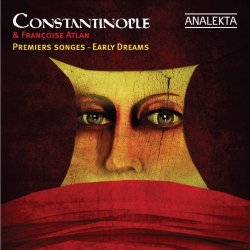
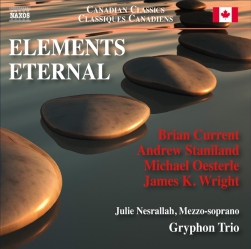
3
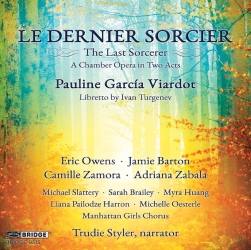
Narration for The Last Sorcerer (The Last Sorcerer, by Ivan Turgenev)
Narration: In a great forest, in a land far, far away
2:8
Copyright Ⓒ 2013 Davinci Finger. All rights reseved
Service Terms & Policy