


Max Butting
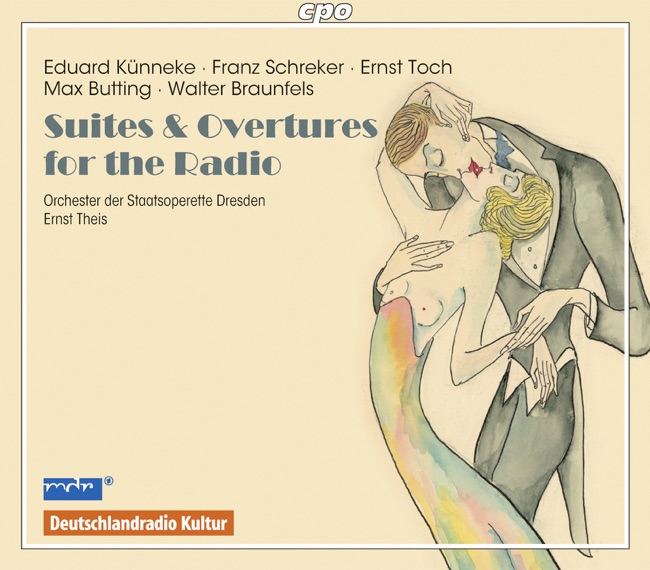
Artist Info
Role:ComposerCountry: GermanyBirth:1888 in Berlin, GermanyDeath:1976 in Berlin, GermanyMax Butting was a German composer who was born on June 28, 1888, in Berlin. He was the son of a music teacher and grew up in a musical family. Butting began his musical education at a young age, studying piano and composition with his father. He later studied at the Berlin Academy of Music, where he was a student of Engelbert Humperdinck. Butting's early compositions were influenced by the music of Richard Strauss and Gustav Mahler. However, he soon developed his own unique style, which was characterized by a blend of traditional tonality and modernist techniques. He was particularly interested in the use of polytonality and polyrhythms, which he used to create complex and intricate musical textures. In 1913, Butting joined the Berlin Philharmonic Orchestra as a violist. He remained with the orchestra for several years, but eventually left to focus on his career as a composer. In 1920, he became a professor of composition at the Berlin Academy of Music, where he taught until 1933. During the 1920s, Butting was a prominent figure in the Berlin music scene. He was a member of the Novembergruppe, a group of artists and intellectuals who were committed to promoting modernist art and culture. He also collaborated with other artists, including the choreographer Mary Wigman, on avant-garde productions that combined music, dance, and visual art. Butting's most famous work is his Symphony No. 2, which he composed in 1925. The symphony is a complex and challenging work that features intricate polyrhythms and polytonality. It was well-received by critics and established Butting as one of the leading composers of his generation. In addition to his symphonies, Butting composed a wide range of other works, including chamber music, choral music, and operas. His music was often experimental and avant-garde, and he was known for his use of unconventional instruments and techniques. For example, he used a typewriter as a percussion instrument in his 1927 work "Konzert für Schlagzeug und Klavier." Butting's career was interrupted by the rise of the Nazi party in Germany. He was dismissed from his position at the Berlin Academy of Music in 1933, and his music was banned by the Nazi regime. He continued to compose in secret, but his output declined significantly during this period. After World War II, Butting resumed his career as a composer and teacher. He taught at the Hochschule für Musik in Berlin from 1946 until his retirement in 1953. He continued to compose until his death in 1976, but his music never regained the prominence it had enjoyed before the war. Today, Butting is remembered as one of the most important composers of the early 20th century. His music was innovative and challenging, and he was a key figure in the development of modernist music in Germany. His work continues to be studied and performed by musicians and scholars around the world.More....
Copyright Ⓒ 2013 Davinci Finger. All rights reseved
Service Terms & Policy