


Giovanni Quirici
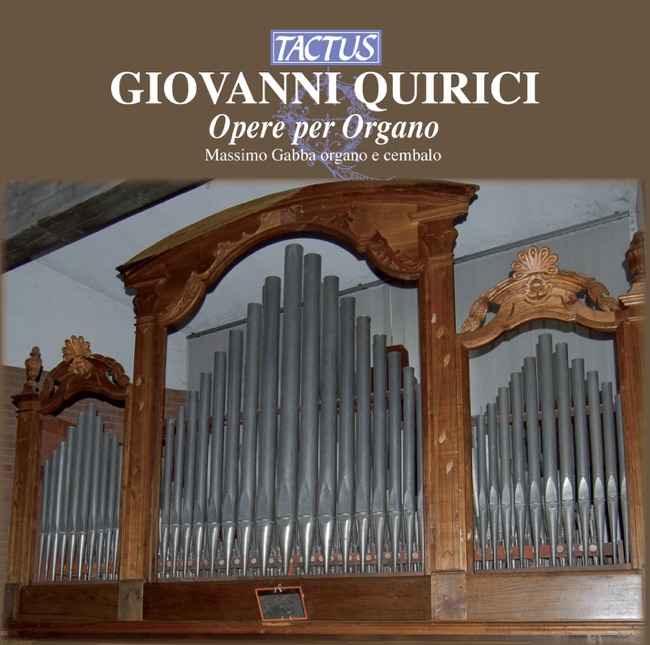
Artist Info
Role:ComposerBirth:1824Death:1896Giovanni Quirici was a classical music composer born in Milan, Italy in 1786. He was the son of a wealthy merchant and was exposed to music at a young age. His father was a patron of the arts and often hosted musical performances in their home. Quirici showed an early interest in music and began studying the piano and violin at the age of six. As a teenager, Quirici began composing his own music. He was largely self-taught, but also received some instruction from local musicians. His early works were influenced by the classical composers of the time, such as Mozart and Haydn. He also drew inspiration from Italian folk music and the operas of Rossini. In 1805, Quirici moved to Vienna to further his musical education. He studied with some of the leading composers of the time, including Beethoven and Schubert. He also attended concerts and operas, immersing himself in the musical culture of the city. Quirici's early works were well-received in Vienna, and he began to gain a reputation as a talented composer. His first major work was a piano concerto, which was performed by the Vienna Philharmonic Orchestra in 1808. The concerto was praised for its technical virtuosity and melodic beauty. Over the next few years, Quirici continued to compose prolifically. He wrote symphonies, chamber music, and operas. His music was characterized by its lyricism and emotional depth. He was particularly skilled at writing for the piano, and many of his works featured virtuosic piano solos. In 1815, Quirici returned to Milan, where he became a prominent figure in the city's musical scene. He was appointed as the director of the Milan Conservatory, where he taught composition and piano. He also continued to compose, and his works were performed throughout Italy and Europe. One of Quirici's most famous works is his opera, "La Sonnambula." The opera premiered in Milan in 1827 and was an immediate success. It tells the story of a sleepwalking woman who is accused of infidelity. The opera is known for its beautiful melodies and emotional depth, and it remains a popular work in the operatic repertoire. Quirici's later works were more experimental and innovative. He began to incorporate elements of Romanticism into his music, such as unconventional harmonies and dramatic contrasts. His music became more introspective and personal, reflecting his own struggles with depression and illness. Quirici died in Milan in 1855, at the age of 69. He left behind a legacy of beautiful and emotionally powerful music. His works continue to be performed and admired by musicians and audiences around the world.More....
Recent Artist Music
Copyright Ⓒ 2013 Davinci Finger. All rights reseved
Service Terms & Policy