


Roman Padlewski
Artist Info
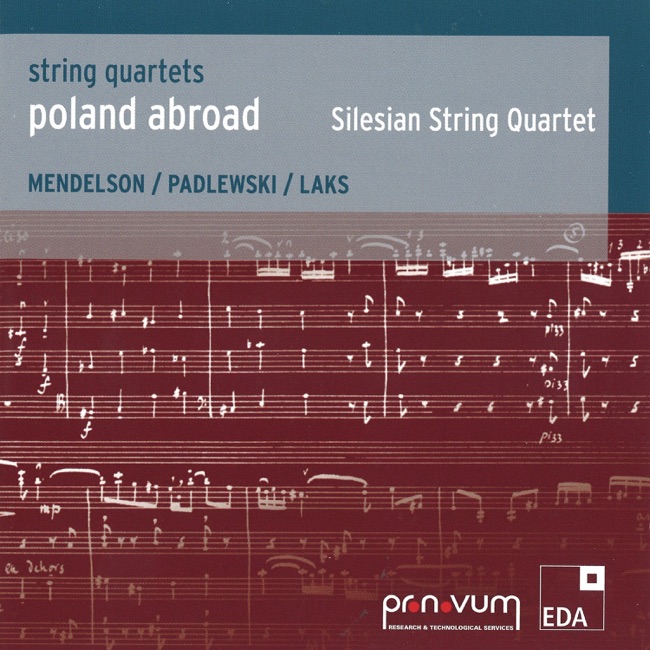
Role:ComposerBirth:1915Death:1944Roman Padlewski was a Polish composer born on January 1, 1891, in the city of Krakow. He was the youngest of four children in a family of musicians. His father, Józef Padlewski, was a renowned pianist and composer, and his mother, Maria, was a singer. Roman's siblings were also musically talented, with his brother, Władysław, becoming a pianist and composer, and his sisters, Maria and Zofia, becoming singers. Roman showed an early interest in music and began taking piano lessons from his father at the age of five. He quickly showed a natural talent for the instrument and began composing his own music at a young age. He also showed an interest in other instruments, including the violin and cello, and began studying them as well. In 1909, Roman enrolled at the Krakow Conservatory, where he studied composition with Władysław Żeleński and piano with Aleksander Michałowski. He graduated in 1913 with a diploma in composition and piano performance. After graduation, he continued his studies in Vienna, where he studied with Arnold Schoenberg and Alban Berg. During World War I, Roman served in the Polish Army as a musician, playing the piano and violin in military bands. After the war, he returned to Krakow and began working as a composer and pianist. He became involved in the city's vibrant cultural scene, collaborating with other artists and musicians. Roman's early works were influenced by the Romantic tradition, but he soon began experimenting with new forms and techniques. He was particularly interested in the music of the Second Viennese School, and his compositions began to incorporate elements of atonality and serialism. One of Roman's most significant works is his Piano Concerto No. 1, which he composed in 1921. The concerto is a virtuosic showcase for the piano, with complex rhythms and harmonies. It was premiered in Krakow in 1922, with Roman as the soloist. In 1924, Roman moved to Paris, where he became part of the city's thriving artistic community. He continued to compose and perform, and his music began to gain recognition in Europe. He also became involved in the Polish émigré community in Paris, collaborating with other Polish artists and musicians. During this time, Roman composed some of his most important works, including his String Quartet No. 1, which he composed in 1925. The quartet is a complex and challenging work, with intricate rhythms and harmonies. It was premiered in Paris in 1926 and was well-received by critics. In 1939, with the outbreak of World War II, Roman fled Paris and returned to Poland. He settled in Warsaw, where he continued to compose and perform despite the difficult conditions of the war. He also became involved in the city's underground resistance movement, using his music to raise morale and support for the resistance. One of Roman's most significant works from this period is his Symphony No. 2, which he composed in 1942. The symphony is a powerful and emotional work, reflecting the turmoil and suffering of the war. It was premiered in Warsaw in 1943, with Roman conducting. In 1944, with the Warsaw Uprising, Roman became even more involved in the resistance movement. He composed music for the resistance, including patriotic songs and marches. He also performed in secret concerts for the resistance fighters and civilians. After the war, Roman continued to compose and perform, but his health began to decline. He suffered from heart problems and was forced to limit his activities.More....
Recent Artist Music
Copyright Ⓒ 2013 Davinci Finger. All rights reseved
Service Terms & Policy