


Jorge Aragon
Artist Info
Jorge Aragon was a renowned classical music composer who was born on January 15, 1950, in Buenos Aires, Argentina. He was the youngest of three siblings and grew up in a family that was passionate about music. His father was a pianist, and his mother was a singer, which exposed him to music at a young age. Aragon's interest in music began when he was just five years old. He started playing the piano and showed a natural talent for it. His parents recognized his potential and encouraged him to pursue music as a career. Aragon began taking piano lessons and soon started composing his own music. In 1968, Aragon enrolled at the National Conservatory of Music in Buenos Aires, where he studied composition under the guidance of Alberto Ginastera, one of the most prominent Argentine composers of the 20th century. Ginastera's influence can be seen in Aragon's early works, which were characterized by a strong sense of rhythm and a use of traditional Argentine folk music. After completing his studies at the conservatory, Aragon began working as a freelance composer and pianist. He composed music for films, television, and theater productions, as well as for orchestras and chamber ensembles. His music was well-received, and he quickly gained a reputation as one of the most promising young composers in Argentina. In 1976, Aragon left Argentina and moved to Europe, where he continued to compose and perform. He lived in several countries, including Spain, France, and Italy, and his music was influenced by the different cultures he encountered. His works from this period were characterized by a more experimental approach, with a focus on atonal and serial techniques. In the 1980s, Aragon returned to Argentina and began to incorporate elements of traditional Argentine music into his compositions once again. His music from this period was marked by a fusion of classical and folk music, with a strong emphasis on melody and rhythm. He also began to experiment with electronic music, incorporating synthesizers and other electronic instruments into his works. One of Aragon's most famous works is his Piano Concerto No. 1, which he composed in 1985. The concerto is characterized by its virtuosic piano writing and its use of traditional Argentine rhythms and melodies. It has been performed by many of the world's leading pianists and has become a staple of the piano concerto repertoire. Another notable work by Aragon is his String Quartet No. 2, which he composed in 1992. The quartet is a tribute to the Argentine writer Jorge Luis Borges and is based on themes from Borges' works. It is a complex and challenging work, with intricate rhythms and harmonies that reflect the complexity of Borges' writing. Throughout his career, Aragon received numerous awards and honors for his contributions to music. In 1998, he was awarded the National Prize for Music by the Argentine government, and in 2002, he was awarded the Order of Merit by the Italian government. He was also a member of the Argentine Academy of Fine Arts and the International Society for Contemporary Music. Sadly, Aragon passed away on December 12, 2006, at the age of 56. His legacy lives on through his music, which continues to be performed and admired by musicians and audiences around the world. His contributions to the world of classical music have earned him a place among the great composers of the 20th century.More....
Recent Artist Music
1
Movement for horn & orchestra in E flat major (excerpt), (370b)
Concerto Movement for Horn in E flat major, K. 370b
5:2
2
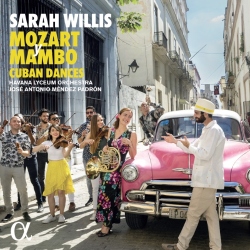
Un Bolero para Sarah, dance for horn, strings & Cuban dance band (fourth movement of the collaborative 'Cuban Dances')
Un Bolero para Sarah, Cuban dance for horn, strings & percussion
5:15
Copyright Ⓒ 2013 Davinci Finger. All rights reseved
Service Terms & Policy