


BBC Radiophonic Workshop
Released Album
Film
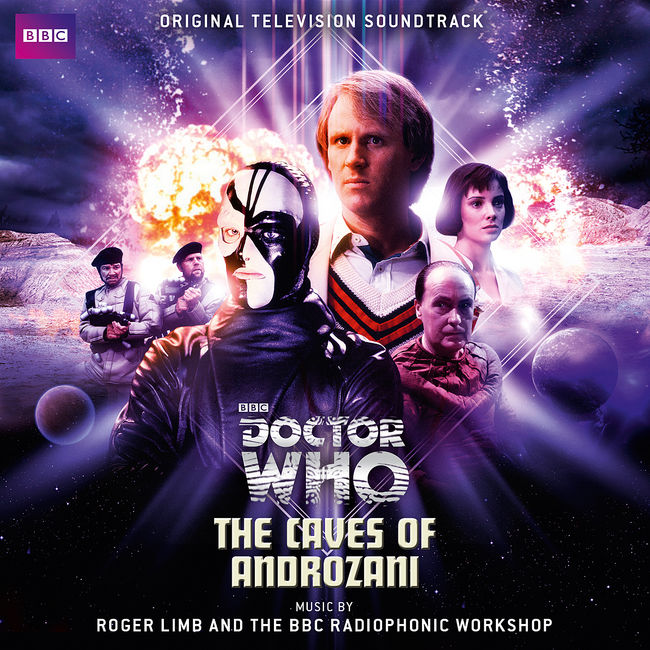
Artist Info
Role:Composer PerformerThe BBC Radiophonic Workshop was a pioneering electronic music studio that operated within the British Broadcasting Corporation from 1958 to 1998. The Workshop was founded by Desmond Briscoe and Daphne Oram, who were both employed by the BBC as sound engineers. They were tasked with creating sound effects and music for radio and television programs, and they quickly realized that traditional acoustic instruments were not always suitable for their needs. They began experimenting with electronic equipment, such as tape recorders, oscillators, and filters, to create new sounds and textures. The early years of the Workshop were marked by a spirit of innovation and experimentation. Briscoe and Oram were joined by other engineers and composers, including John Baker, Delia Derbyshire, and Brian Hodgson. They developed new techniques for manipulating sound, such as tape loops, reverse playback, and filtering. They also built their own electronic instruments, such as the Oramics machine, which allowed Oram to create music by drawing on a series of transparent sheets. One of the Workshop's most famous works from this period was the theme music for the television series Doctor Who. The theme was created by Delia Derbyshire, who used tape loops and filters to create a haunting, otherworldly sound. The theme became an iconic part of British popular culture, and it remains one of the Workshop's most enduring legacies. In the 1970s, the Workshop began to face new challenges. The rise of synthesizers and other electronic instruments meant that many of the techniques and equipment that the Workshop had pioneered were becoming more widely available. At the same time, the BBC was facing budget cuts, and the Workshop's funding was reduced. Many of the Workshop's original members left, and the focus of the studio shifted towards more commercial work, such as creating jingles and soundtracks for television commercials. Despite these challenges, the Workshop continued to produce innovative and influential work. In the 1980s, the Workshop created the sound effects and music for the television series The Hitchhiker's Guide to the Galaxy, which featured a mix of electronic and acoustic instruments. The Workshop also collaborated with musicians such as Peter Howell and Paddy Kingsland, who brought a more traditional musical sensibility to the studio's work. The Workshop's final years were marked by a renewed interest in its legacy. In 1997, the BBC released a compilation album of the Workshop's music, which helped to introduce a new generation of listeners to the studio's pioneering work. The Workshop was also the subject of a documentary film, The Alchemists of Sound, which explored the studio's history and influence. Today, the legacy of the BBC Radiophonic Workshop can be heard in a wide range of musical genres, from electronic dance music to avant-garde experimentalism. The Workshop's pioneering use of electronic equipment and techniques helped to pave the way for the development of electronic music as a distinct genre. Its influence can be heard in the work of artists such as Aphex Twin, Radiohead, and Björk, who have all cited the Workshop as an inspiration. In conclusion, the BBC Radiophonic Workshop was a pioneering electronic music studio that played a crucial role in the development of electronic music as a distinct genre.More....
Recent Artist Music
Copyright Ⓒ 2013 Davinci Finger. All rights reseved
Service Terms & Policy