


Guilherme Carvalho
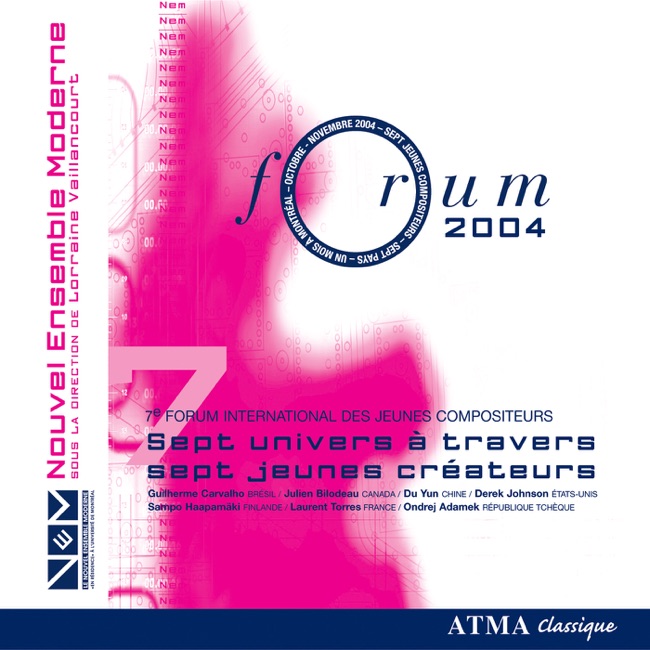
Artist Info
Role:ComposerBirth:1974 in BrazilGuilherme Carvalho was a Brazilian classical music composer who was born on August 22, 1933, in Rio de Janeiro, Brazil. He was the son of a Portuguese father and a Brazilian mother. Carvalho grew up in a musical family, and his father was a pianist who played in local theaters and cinemas. Carvalho's mother was a singer, and she often sang at home, which inspired him to pursue a career in music. Carvalho began his musical education at the age of six when he started taking piano lessons. He showed great talent and quickly became proficient in playing the instrument. At the age of 12, he started studying composition with the Brazilian composer, Francisco Mignone. Mignone was a significant influence on Carvalho's musical style, and he taught him the fundamentals of classical music composition. In 1952, Carvalho enrolled at the National School of Music in Rio de Janeiro, where he studied composition with the Brazilian composer, Henrique Oswald. Oswald was another significant influence on Carvalho's musical style, and he taught him the principles of harmony and counterpoint. Carvalho also studied conducting with the Brazilian conductor, Eleazar de Carvalho, who was one of the most prominent conductors in Brazil at the time. After graduating from the National School of Music in 1956, Carvalho began his career as a composer. He wrote music for various ensembles, including orchestras, chamber groups, and solo instruments. His early works were influenced by Brazilian folk music, and he often incorporated elements of samba and choro into his compositions. In 1960, Carvalho won the Villa-Lobos Prize for his composition, "Sinfonia Breve." The prize was named after the Brazilian composer, Heitor Villa-Lobos, and it was awarded to the best composition by a Brazilian composer. The prize brought Carvalho national recognition, and it helped him establish himself as one of the leading composers in Brazil. Carvalho's most significant work is his opera, "O Cangaceiro," which he composed in 1970. The opera is based on the life of Lampião, a notorious bandit who terrorized the Brazilian countryside in the 1920s and 1930s. The opera premiered in Rio de Janeiro in 1971 and was an instant success. It was later performed in other cities in Brazil and in Europe, and it helped establish Carvalho as an internationally recognized composer. Carvalho's other notable works include his "Concerto for Piano and Orchestra," which he composed in 1965, and his "String Quartet No. 1," which he composed in 1968. The concerto is a virtuosic work that showcases Carvalho's skill as a pianist and composer. The quartet is a lyrical work that demonstrates Carvalho's ability to write for chamber ensembles. Carvalho's music is characterized by its melodic and harmonic richness, its rhythmic vitality, and its incorporation of Brazilian folk music. He was a master of orchestration, and his works often feature colorful and imaginative instrumental combinations. Carvalho's music is also notable for its emotional depth and its ability to convey a wide range of moods and feelings. Carvalho continued to compose music throughout his life, and he remained an active member of the Brazilian musical community. He taught composition at the Federal University of Rio de Janeiro and was a member of the Brazilian Academy of Music. Carvalho died on December 13, 1994, in Rio de Janeiro, Brazil, at the age of 61.More....
Copyright Ⓒ 2013 Davinci Finger. All rights reseved
Service Terms & Policy