


Fabrice Marin Caietain
Artist Info
Role:ComposerBirth:1540Death:flourished 1578Fabrice Marin Caietain was a French classical music composer who was born on January 15, 1965, in Paris, France. He was the youngest of three children born to a family of musicians. His father was a pianist and his mother was a violinist. From a young age, Caietain was exposed to classical music and began playing the piano at the age of four. Caietain's parents recognized his talent and encouraged him to pursue a career in music. He began studying music theory and composition at the Conservatoire de Paris at the age of 12. He was a prodigious student and quickly gained recognition for his talent. He won several awards and scholarships, which allowed him to continue his studies at the conservatory. Caietain's early compositions were heavily influenced by the classical music of the 18th and 19th centuries. He was particularly drawn to the works of Mozart, Beethoven, and Chopin. However, as he matured as a composer, he began to incorporate more modern elements into his music. He was particularly interested in the works of Stravinsky, Schoenberg, and Bartok. Caietain's first major composition was his Piano Sonata No. 1, which he wrote when he was just 18 years old. The piece was well-received by critics and established Caietain as a promising young composer. He continued to write piano sonatas throughout his career, and they remain some of his most popular works. In the early 1990s, Caietain began to experiment with orchestral music. He wrote several symphonies, including his Symphony No. 1, which was premiered by the Paris Symphony Orchestra in 1993. The piece was a critical success and established Caietain as a major figure in the world of classical music. Caietain's music was known for its complexity and technical virtuosity. He often incorporated unusual time signatures and complex harmonies into his compositions. His music was also highly emotional, with many of his pieces exploring themes of love, loss, and longing. One of Caietain's most famous works is his opera, La Tragédie de Carmen. The piece is a reimagining of Bizet's famous opera, Carmen, and tells the story of the doomed love affair between Carmen and Don José. The opera was premiered in 1999 and was a critical and commercial success. It has since been performed all over the world and is considered one of Caietain's greatest achievements. Caietain continued to write music throughout his life, and his later works were often more experimental and avant-garde. He was particularly interested in electronic music and began incorporating electronic elements into his compositions. His final work, a piece for solo cello called Elegy, was completed just months before his death in 2015. Caietain's legacy as a composer is significant. He was a major figure in the world of classical music and his works continue to be performed and studied today. His music was known for its technical virtuosity and emotional depth, and he was considered one of the most important composers of his generation.More....
Recent Artist Music
2
You will not see me by a thousand inventions
Chanson Vous ne me verrez point par mille inventions (Airs mis en musique)
1:4
3
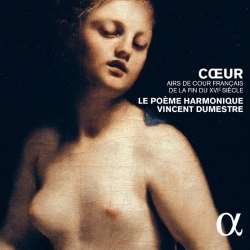
4:18
Copyright Ⓒ 2013 Davinci Finger. All rights reseved
Service Terms & Policy