


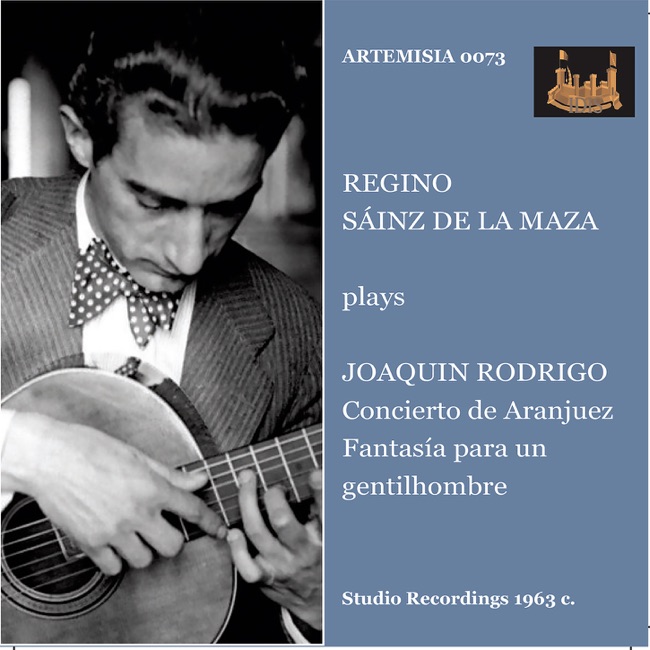
Regino Sainz de la Maza
Released Album
Chamber
-
 October 29, 2021
 -
 October 8, 2021
 -

-
 April 9, 2021
 -
 October 2, 2020
 -
 December 6, 2019
Concerto
-
 October 8, 2021
 -
 August 3, 2004
Artist Info
Role:ComposerBirth:1896Death:1981Period:ContemporaryModernGenre:ChamberRegino Sainz de la Maza was a Spanish classical music composer and guitarist born on September 7, 1896, in Burgos, Spain. He was the youngest of three brothers, all of whom were musicians. His father, Eduardo Sainz de la Maza, was a composer and music teacher, and his mother, Concepción García, was a pianist. Regino's brothers, Eduardo and Regino, were also guitarists and composers. Regino Sainz de la Maza began his musical education at a young age, studying piano and guitar with his mother and father. He showed a natural talent for the guitar and began performing publicly at the age of 12. He continued his studies at the Madrid Conservatory, where he studied guitar with Daniel Fortea and composition with Conrado del Campo. In 1920, Sainz de la Maza won first prize in the National Guitar Competition in Madrid, which launched his career as a performer and composer. He went on to perform throughout Spain and Europe, earning critical acclaim for his virtuosic guitar playing and innovative compositions. Sainz de la Maza's compositions were influenced by the traditional music of Spain, particularly the flamenco and Andalusian styles. He also drew inspiration from the works of other Spanish composers, such as Manuel de Falla and Joaquín Rodrigo. His compositions often featured intricate guitar solos and complex harmonies, showcasing his technical skill as a guitarist. One of Sainz de la Maza's most famous compositions is his Suite española, which was composed in 1928. The suite consists of five movements, each of which is based on a different Spanish dance form. The first movement, "Petenera," is a slow, mournful piece that features a haunting melody and intricate guitar work. The second movement, "Zapateado," is a lively dance that showcases Sainz de la Maza's virtuosic guitar playing. The third movement, "Soleares," is a slow, melancholy piece that features a beautiful melody and intricate harmonies. The fourth movement, "Guajira," is a lively dance that features a catchy melody and intricate guitar work. The final movement, "Fandango," is a fast, energetic dance that showcases Sainz de la Maza's technical skill as a guitarist. Another notable work by Sainz de la Maza is his Homenaje a Tárrega, which was composed in 1932. The piece is a tribute to Francisco Tárrega, a famous Spanish guitarist and composer who was a major influence on Sainz de la Maza's own playing and composing. The piece features a series of variations on a theme by Tárrega, showcasing Sainz de la Maza's technical skill and musical sensitivity. Sainz de la Maza's other compositions include numerous solo guitar works, such as his Sonata in D major and his Variaciones sobre un tema de Mozart. He also composed works for guitar and orchestra, such as his Concierto del Sur, which was commissioned by the Chilean government in 1953. In addition to his career as a composer and performer, Sainz de la Maza was also a respected music educator. He taught guitar at the Madrid Conservatory and the Barcelona Conservatory, and his students included some of the most prominent guitarists of the 20th century, such as Narciso Yepes and José Tomás. Regino Sainz de la Maza died on November 26, 1981, in Barcelona, Spain. He left behind a legacy as one of the most important Spanish composers and guitarists of the 20th century, whose innovative compositions and virtuosic playing continue to inspire musicians today.More....











Recommend Playlist










Copyright Ⓒ 2013 Davinci Finger. All rights reseved
Service Terms & Policy