


Abraham Wolf Binder
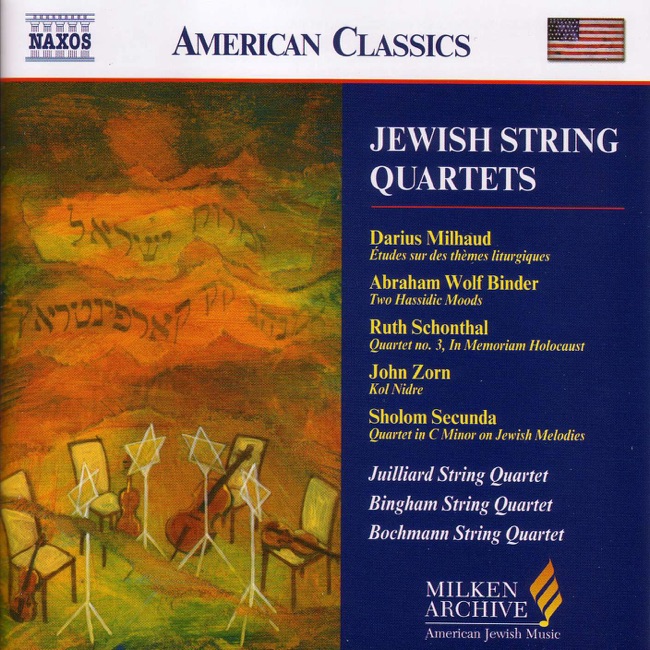
Artist Info
Role:ComposerBirth:1865Death:1967Period:ModernGenre:ChoralAbraham Wolf Binder was a classical music composer who was born on December 13, 1895, in the city of Lviv, which was then part of the Austro-Hungarian Empire. He was the youngest of six children in a Jewish family, and his father was a cantor in a local synagogue. From a young age, Binder showed a talent for music, and he began studying piano and composition at the Lviv Conservatory when he was just 12 years old. Binder's early compositions were heavily influenced by the Romantic style of the late 19th century, and he was particularly drawn to the music of composers like Chopin, Liszt, and Brahms. However, as he matured as a composer, Binder began to develop his own unique voice, blending elements of Romanticism with more modernist techniques. In 1914, Binder was drafted into the Austro-Hungarian army to fight in World War I. He served on the Eastern Front, where he was wounded and captured by Russian forces. While in captivity, Binder continued to compose music, and he even managed to smuggle some of his compositions out of the prison camp. After the war, Binder returned to Lviv and resumed his studies at the conservatory. He also began to establish himself as a composer, with his works being performed by local orchestras and chamber ensembles. In 1923, Binder moved to Vienna to study with the renowned composer Arnold Schoenberg, who was a pioneer of the modernist movement in classical music. Under Schoenberg's tutelage, Binder began to experiment with atonal and twelve-tone techniques, which were then at the forefront of contemporary classical music. However, Binder never fully embraced the strict serialism of Schoenberg's approach, and he continued to incorporate tonal elements into his compositions. Throughout the 1920s and 1930s, Binder's music was performed throughout Europe, and he became known for his innovative approach to harmony and form. However, with the rise of Nazi Germany in the 1930s, Binder's career was threatened. As a Jewish composer, he was no longer able to perform or have his music played in many parts of Europe. In 1939, Binder emigrated to the United States, where he settled in New York City. There, he continued to compose music and became involved in the city's vibrant classical music scene. He also taught composition at the Mannes School of Music and the New School for Social Research. Binder's music from this period reflects his experiences as a Jewish refugee in America. Many of his works are infused with a sense of longing and nostalgia for his homeland, as well as a deep sense of loss for the many friends and colleagues he left behind in Europe. One of Binder's most famous works from this period is his Piano Concerto No. 2, which was premiered by the New York Philharmonic in 1944. The concerto is a virtuosic showcase for the soloist, with complex rhythms and harmonies that reflect Binder's modernist sensibilities. However, it also contains moments of lyricism and beauty, particularly in the second movement, which features a hauntingly beautiful melody played by the solo piano. Binder continued to compose music until his death in 1966. His legacy as a composer is one of innovation and experimentation, as well as a deep commitment to the expressive power of music. Despite the challenges he faced as a Jewish composer in Europe and America, Binder remained true to his artistic vision, creating a body of work that continues to inspire and challenge musicians and audiences alike.More....
Recent Artist Music
Copyright Ⓒ 2013 Davinci Finger. All rights reseved
Service Terms & Policy