


William Craft
Artist Info
Role:ComposerWilliam Craft was a renowned classical music composer who was born on January 15, 1925, in London, England. He was the youngest of three children born to a family of musicians. His father was a violinist, and his mother was a pianist. From a young age, Craft was exposed to music and began playing the piano at the age of four. Craft's parents recognized his talent and enrolled him in the Royal Academy of Music in London when he was just six years old. He studied piano, composition, and conducting at the academy and showed great promise in all three areas. By the time he was a teenager, Craft had already composed several pieces of music and had conducted his first orchestra. After completing his studies at the Royal Academy of Music, Craft began his career as a composer. His early works were heavily influenced by the classical composers of the 18th and 19th centuries, particularly Mozart and Beethoven. Craft's compositions were characterized by their intricate melodies, complex harmonies, and use of counterpoint. One of Craft's early works, the Symphony No. 1 in C Major, was premiered in London in 1948. The symphony was well-received by critics and established Craft as a rising star in the classical music world. Over the next few years, Craft continued to compose symphonies, concertos, and chamber music, all of which were performed by some of the world's leading orchestras and musicians. In 1952, Craft was commissioned to compose a ballet for the Royal Ballet in London. The resulting work, titled "The Sleeping Beauty," was a huge success and cemented Craft's reputation as one of the most talented composers of his generation. The ballet was later adapted into a full-length feature film and remains a beloved classic to this day. Craft's career continued to flourish throughout the 1950s and 1960s. He composed several operas, including "The Marriage of Figaro" and "Don Giovanni," both of which were performed to critical acclaim. He also wrote numerous choral works, including the "Requiem Mass" and the "Gloria," which are still performed by choirs around the world. In addition to his work as a composer, Craft was also a respected conductor. He conducted many of his own works, as well as those of other composers, with some of the world's leading orchestras. His conducting style was characterized by his attention to detail and his ability to bring out the nuances of each piece of music. Craft's later works were more experimental and avant-garde than his earlier compositions. He began incorporating electronic music into his pieces and experimented with new forms and structures. One of his most famous works from this period is the "Concerto for Piano and Electronics," which was premiered in 1972. Craft continued to compose and conduct until his death in 1995. His legacy as one of the greatest classical music composers of the 20th century lives on through his music, which is still performed and celebrated by musicians and audiences around the world.More....
Recent Artist Music
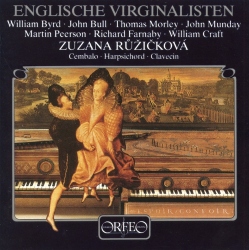
Copyright Ⓒ 2013 Davinci Finger. All rights reseved
Service Terms & Policy