


David Osbon
Released Album
Orchestral
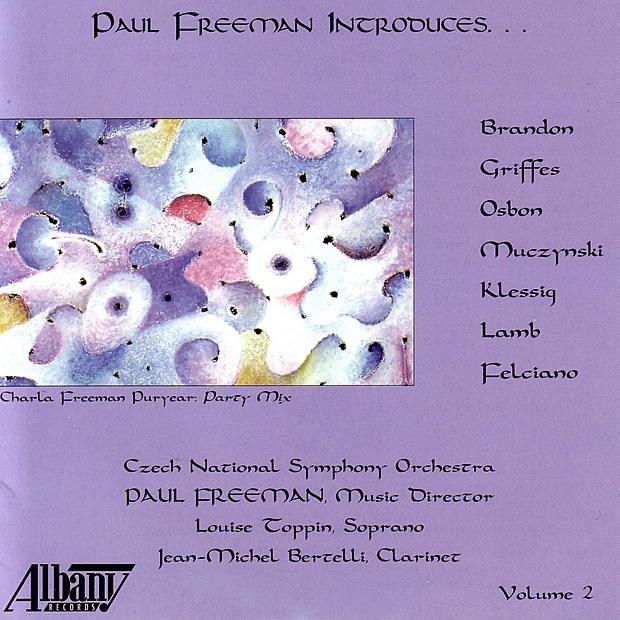
Chamber
-
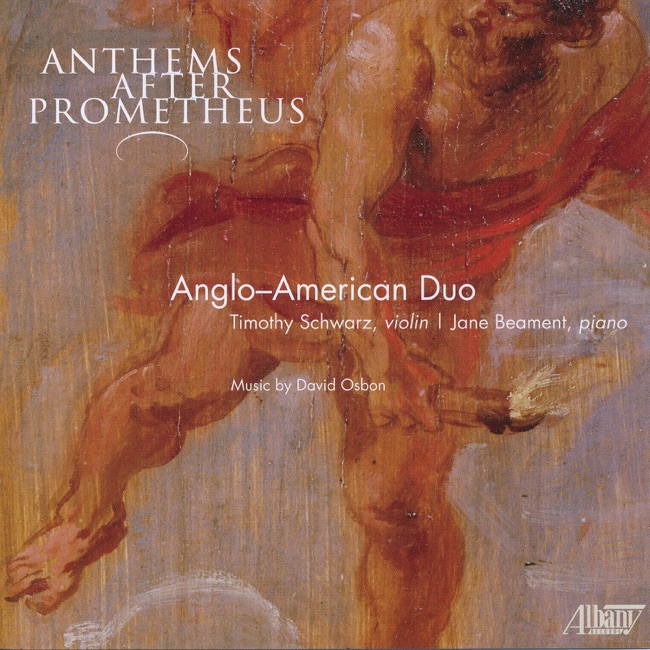 April 2, 2018
Artist Info
Role:ComposerBirth:1963Genre:OrchestralDavid Osbon was a classical music composer who was born on May 12, 1950, in London, England. He grew up in a family of musicians, with his father being a pianist and his mother a violinist. From a young age, Osbon showed a keen interest in music and began playing the piano at the age of five. He later learned to play the violin and the cello, and by the time he was a teenager, he had already composed several pieces of music. Osbon attended the Royal Academy of Music in London, where he studied composition under the tutelage of renowned composers such as Benjamin Britten and Michael Tippett. He also studied conducting and orchestration, which would later become important skills in his career as a composer. After graduating from the Royal Academy of Music, Osbon began his career as a composer, writing music for various ensembles and orchestras. His early works were heavily influenced by the classical music of the 18th and 19th centuries, particularly the works of Mozart, Beethoven, and Brahms. However, as he matured as a composer, Osbon began to develop his own unique style, which blended elements of classical music with modern techniques and harmonies. One of Osbon's early works was his Symphony No. 1, which he composed in 1975. The symphony was well-received by critics and audiences alike, and it established Osbon as a promising young composer. The symphony was notable for its use of complex harmonies and rhythms, as well as its lush orchestration. In the years that followed, Osbon continued to compose music for various ensembles and orchestras. He wrote several chamber music works, including string quartets and piano trios, as well as larger-scale works such as symphonies and concertos. His music was often characterized by its lyricism and emotional depth, as well as its technical complexity. One of Osbon's most famous works is his Piano Concerto No. 1, which he composed in 1982. The concerto was written for the renowned pianist Martha Argerich, who gave the premiere performance. The concerto is notable for its virtuosic piano writing, as well as its use of unconventional harmonies and rhythms. The concerto has since become a staple of the piano repertoire and is widely regarded as one of Osbon's greatest works. Another notable work by Osbon is his String Quartet No. 2, which he composed in 1990. The quartet is a deeply emotional work, characterized by its haunting melodies and intricate harmonies. The quartet has been praised for its technical brilliance and its ability to convey a wide range of emotions. Throughout his career, Osbon received numerous awards and honors for his contributions to classical music. He was awarded the Order of the British Empire in 1998 for his services to music, and he was also a fellow of the Royal Academy of Music. In addition, his music was performed by some of the world's leading orchestras and ensembles, including the London Symphony Orchestra, the Berlin Philharmonic, and the New York Philharmonic. David Osbon passed away on June 15, 2010, at the age of 60. His legacy as a composer lives on through his music, which continues to be performed and admired by musicians and audiences around the world. His contributions to classical music have earned him a place among the great composers of the 20th century, and his music will continue to inspire and move listeners for generations to come.More....
Recent Artist Music

Copyright Ⓒ 2013 Davinci Finger. All rights reseved
Service Terms & Policy