


Marcel Poot
Released Album
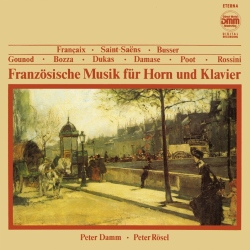
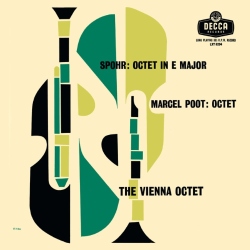
Chamber
-
-
 May 7, 2021
 -
-
 February 10, 2009
 -
 September 30, 2003
 -
 January 12, 1999
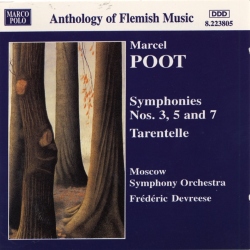
Orchestral
-
 December 17, 1992
Concerto
-
 August 10, 2010
 -
Artist Info
Role:ComposerBirth:May 7, 1901Death:June 12, 1988Period:ModernGenre:ChamberConcertoOrchestralSymphonyMarcel Poot was a Belgian composer who was born on May 7, 1901, in Vilvoorde, Belgium. He was the son of a music teacher and grew up in a musical family. His father, Gustave Poot, was a composer and conductor, and his mother, Marie-Louise Van den Bossche, was a pianist. Marcel Poot showed an early interest in music and began studying piano and composition at a young age. Poot studied at the Royal Conservatory of Brussels, where he was a student of Paul Gilson, a prominent Belgian composer. He also studied with other notable composers, including Joseph Jongen and Maurice Ravel. Poot's early works were influenced by the French impressionist style, but he later developed his own unique style that blended elements of impressionism, neoclassicism, and modernism. Poot's first major success came in 1929 when his Symphony No. 1 was premiered by the Brussels Philharmonic Orchestra. The symphony was well-received and established Poot as a leading composer in Belgium. He went on to compose several other symphonies, including Symphony No. 2, which was premiered in 1932, and Symphony No. 3, which was premiered in 1938. In addition to his symphonies, Poot composed a wide variety of other works, including chamber music, choral music, and operas. One of his most famous works is his Concerto for Two Pianos and Orchestra, which was premiered in 1930. The concerto is a virtuosic showcase for two pianists and features Poot's signature blend of neoclassical and modernist elements. Poot was also a prolific composer of choral music, and his works in this genre are still performed today. One of his most famous choral works is his Mass for Mixed Choir and Orchestra, which was premiered in 1935. The mass is a powerful and emotional work that showcases Poot's skill as a composer of sacred music. In addition to his work as a composer, Poot was also a respected music educator. He taught at the Royal Conservatory of Brussels for many years and was known for his dedication to his students. Many of his students went on to become successful composers and performers in their own right. Poot's career was interrupted by World War II, during which he was forced to flee Belgium and go into hiding. He continued to compose during this time, however, and his music continued to be performed in secret concerts. After the war, Poot returned to Belgium and resumed his career as a composer and educator. Poot's later works were more experimental and avant-garde than his earlier works. He continued to explore new musical ideas and techniques, and his music became more complex and challenging. Some of his later works include his Symphony No. 4, which was premiered in 1952, and his String Quartet No. 2, which was premiered in 1960. Poot's contributions to Belgian music were recognized with several awards and honors. He was awarded the Order of Leopold, one of Belgium's highest honors, in 1951. He was also awarded the Prix de Rome, a prestigious award for young composers, in 1929. Marcel Poot died on June 12, 1988, in Brussels, Belgium. He left behind a legacy of innovative and influential music that continues to be performed and studied today. His works are known for their unique blend of neoclassical and modernist elements, and his contributions to Belgian music have earned him a place among the country's most important composers.More....
Recent Artist Music
5
4:51
6
6:15
Copyright Ⓒ 2013 Davinci Finger. All rights reseved
Service Terms & Policy