


Miklós Pászti
Released Album
Choral
-
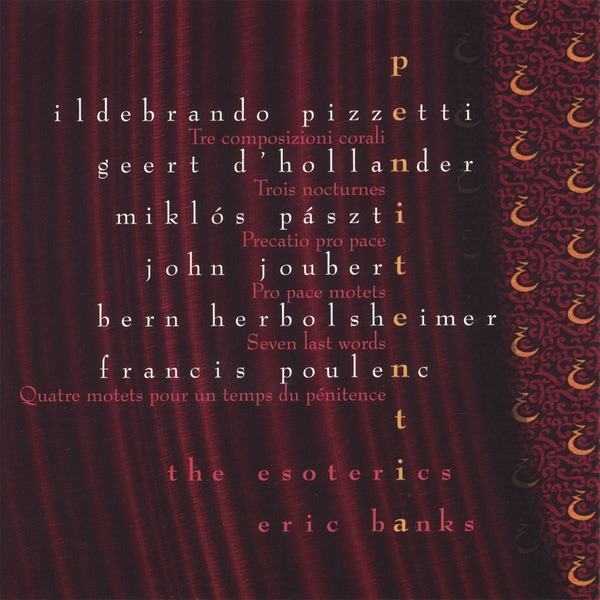 August 28, 2012
 -
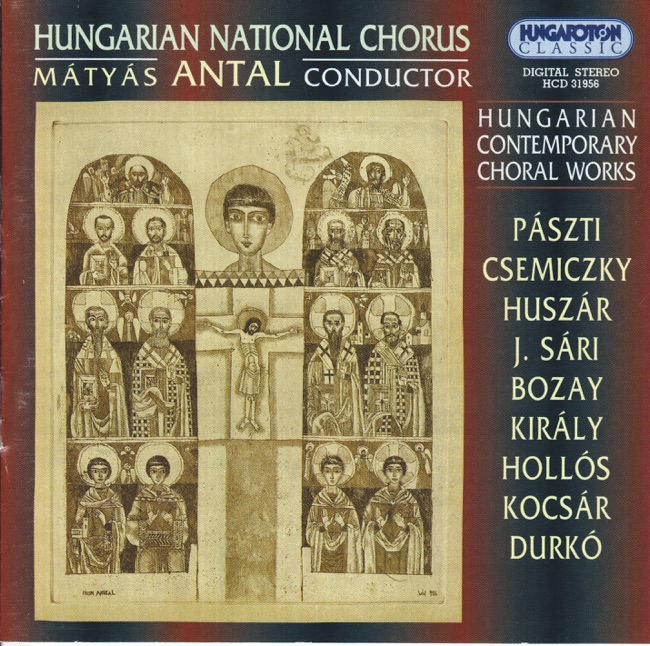 February 26, 2002
Artist Info
Role:ComposerGenre:ChoralMiklós Pászti was a Hungarian composer who was born on January 1, 1933, in Budapest, Hungary. He was the son of a music teacher and grew up in a musical family. His father was a violinist and his mother was a pianist. Pászti began playing the piano at a young age and showed a natural talent for music. Pászti studied at the Franz Liszt Academy of Music in Budapest, where he was trained in composition, piano, and conducting. He studied under some of the most prominent Hungarian composers of the time, including Zoltán Kodály and Béla Bartók. Pászti was deeply influenced by the folk music of Hungary, which he incorporated into his compositions. Pászti's early works were heavily influenced by the music of Bartók and other Hungarian composers. His first major composition was a piano concerto, which he wrote while still a student at the Franz Liszt Academy. The concerto was well-received and helped establish Pászti as a promising young composer. After completing his studies, Pászti worked as a composer and conductor in Hungary. He wrote a number of works for orchestra, including several symphonies and concertos. His music was characterized by its use of folk melodies and rhythms, as well as its complex harmonies and rhythms. In the 1960s, Pászti began to experiment with electronic music. He was one of the first composers in Hungary to work with electronic instruments, and his electronic works were highly innovative. He wrote a number of electronic pieces, including a ballet score and several film scores. Pászti's most famous work is his opera, "The Tragedy of Man." The opera is based on a play by Imre Madách and tells the story of Adam and Eve and their struggle to understand the meaning of life. The opera was first performed in 1963 and was an immediate success. It has since become one of the most popular operas in Hungary and has been performed around the world. In addition to his work as a composer, Pászti was also a respected conductor. He conducted many of his own works, as well as the works of other composers. He was known for his precise and expressive conducting style, and was highly regarded by his colleagues and audiences alike. Pászti continued to compose and conduct throughout his life. He wrote a number of works for chamber ensembles, as well as several choral works. He also continued to experiment with electronic music, and his later works often combined electronic and acoustic instruments. Pászti died on December 31, 2015, at the age of 82. He left behind a rich legacy of music that continues to be performed and admired by audiences around the world. His music is characterized by its innovative use of folk melodies and rhythms, as well as its complex harmonies and rhythms. Pászti was a true original, and his contributions to the world of classical music will be remembered for generations to come.More....
Recent Artist Music
Copyright Ⓒ 2013 Davinci Finger. All rights reseved
Service Terms & Policy