


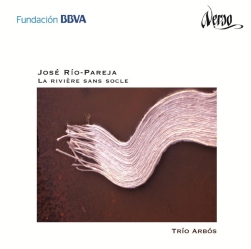
José Rio-Pareja
Released Album
Chamber
-
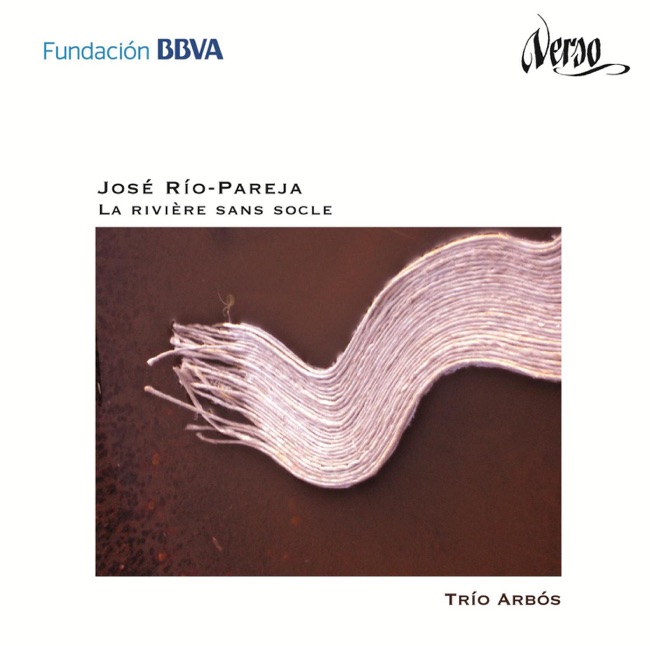 July 30, 2013
 -
 June 12, 2007
Artist Info
Role:ComposerBirth:1973 in Barcelona, SpainJosé Rio-Pareja was a Spanish composer born on January 1, 1928, in Madrid, Spain. He was the youngest of three children born to a family of musicians. His father was a violinist, and his mother was a pianist. From a young age, Rio-Pareja showed a great interest in music, and his parents encouraged him to pursue his passion. Rio-Pareja began his musical education at the age of six, studying piano with his mother. He later studied composition with Joaquín Rodrigo, one of Spain's most prominent composers. Rodrigo was impressed with Rio-Pareja's talent and encouraged him to pursue a career in music. In 1952, Rio-Pareja graduated from the Madrid Conservatory with a degree in composition. He then went on to study in Paris with Nadia Boulanger, one of the most influential composition teachers of the 20th century. Boulanger was known for her rigorous teaching methods and for her ability to bring out the best in her students. Rio-Pareja thrived under her tutelage and developed a unique style that blended traditional Spanish music with modernist techniques. Rio-Pareja's early works were heavily influenced by the music of his native Spain. His first major composition, the Suite Española, was written in 1954 and featured traditional Spanish melodies and rhythms. The suite was well-received and helped establish Rio-Pareja as a rising star in the Spanish music scene. In the 1960s, Rio-Pareja began to experiment with more avant-garde techniques. His compositions became more complex and abstract, incorporating elements of serialism and atonality. Despite this shift in style, Rio-Pareja never lost touch with his Spanish roots. His music continued to be infused with the rhythms and melodies of his homeland, even as he explored new and innovative techniques. One of Rio-Pareja's most famous works is his Concerto for Guitar and Orchestra, written in 1970. The concerto is a virtuosic showcase for the guitar, featuring intricate fingerwork and complex harmonies. The piece was written for the Spanish guitarist Narciso Yepes, who gave the premiere performance in Madrid in 1971. The concerto has since become a staple of the guitar repertoire and is considered one of Rio-Pareja's greatest achievements. Another notable work by Rio-Pareja is his Symphony No. 1, written in 1980. The symphony is a grand, sweeping work that showcases Rio-Pareja's mastery of orchestration and his ability to create powerful emotional landscapes. The piece was premiered by the Madrid Symphony Orchestra and was met with critical acclaim. Throughout his career, Rio-Pareja was recognized for his contributions to Spanish music. He was awarded numerous prizes and honors, including the National Music Prize in 1985. He was also a member of the Royal Academy of Fine Arts of San Fernando and the Royal Academy of Fine Arts of Santa Isabel de Hungría. Rio-Pareja continued to compose until his death in 1997. His legacy lives on through his music, which continues to be performed and admired by musicians and audiences around the world. His unique blend of traditional Spanish music and modernist techniques has inspired countless composers and has helped to shape the course of Spanish music in the 20th century.More....
Recent Artist Music
Copyright Ⓒ 2013 Davinci Finger. All rights reseved
Service Terms & Policy