


Aleksander Sternfeld-Dunn
Released Album
Chamber
-
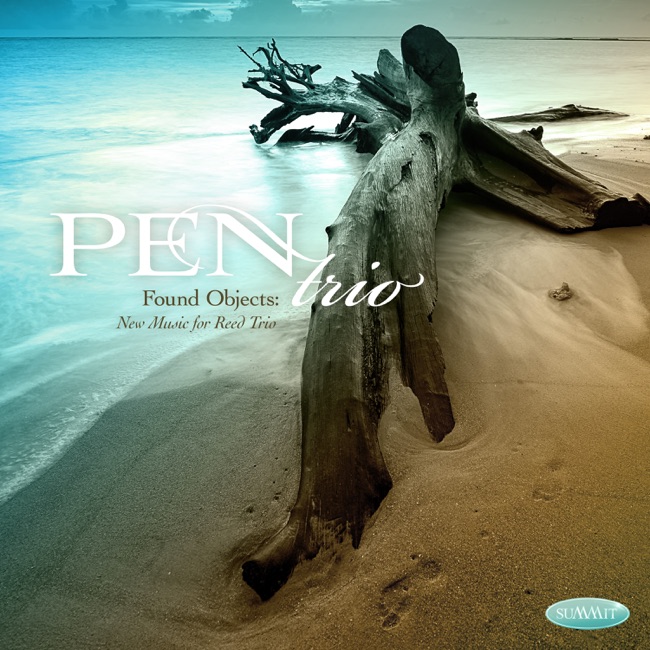 September 13, 2019
 -
 April 14, 2015
 -
 November 4, 2008
Artist Info
Role:Composer ConductorAleksander Sternfeld-Dunn was a classical music composer born on August 22, 1881, in Warsaw, Poland. He was the son of a prominent Jewish family, and his father was a successful businessman. Sternfeld-Dunn showed an early interest in music and began studying piano at the age of six. He later studied composition with the renowned Polish composer, Zygmunt Noskowski. In 1901, Sternfeld-Dunn moved to Berlin to continue his studies at the Hochschule für Musik. He studied composition with Max Bruch and piano with Ernst Rudorff. During this time, he also became interested in conducting and studied with Arthur Nikisch. In 1905, he completed his studies and began working as a conductor in Berlin. Sternfeld-Dunn's early compositions were heavily influenced by the Romantic style of the late 19th century. His first major work, the Symphony in D minor, was completed in 1906 and premiered in Berlin the following year. The symphony was well-received and established Sternfeld-Dunn as a promising young composer. In 1908, Sternfeld-Dunn moved to London, where he continued to work as a conductor and composer. He became involved in the British music scene and was a founding member of the Society of British Composers. During this time, he also began to incorporate elements of English folk music into his compositions. One of Sternfeld-Dunn's most famous works is his Piano Concerto No. 1, which was completed in 1912. The concerto is a virtuosic showcase for the soloist and features sweeping melodies and lush harmonies. It was premiered in London in 1913 and was an immediate success. During World War I, Sternfeld-Dunn served in the British Army as a musician. He composed several works during this time, including his Symphony No. 2, which was completed in 1917. The symphony is a powerful and emotional work that reflects the turmoil of the war years. After the war, Sternfeld-Dunn continued to compose and conduct. He became the conductor of the London Symphony Orchestra in 1920 and held the position for several years. During this time, he also composed several works for the orchestra, including his Symphony No. 3, which was completed in 1923. In the 1930s, Sternfeld-Dunn's music began to reflect the changing times. He became interested in the music of the Second Viennese School and began to incorporate elements of atonality and serialism into his compositions. His String Quartet No. 1, completed in 1935, is a prime example of this new style. During World War II, Sternfeld-Dunn continued to compose and conduct, despite the difficult circumstances. He composed several works during this time, including his Symphony No. 4, which was completed in 1943. The symphony is a powerful and emotional work that reflects the turmoil of the war years. After the war, Sternfeld-Dunn continued to compose and conduct. He became interested in electronic music and began to experiment with new sounds and textures. His final work, the Electronic Symphony, was completed in 1955 and was one of the first works of its kind. Aleksander Sternfeld-Dunn died on December 12, 1956, in London, England. He was a prolific composer who left behind a rich legacy of music. His works are characterized by their emotional depth, sweeping melodies, and lush harmonies. He was a master of orchestration and was able to create powerful and evocative soundscapes. Sternfeld-Dunn was a true innovator who pushed the boundaries of classical music and left an indelible mark on the genre.More....
Recent Artist Music

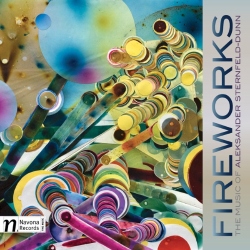
Copyright Ⓒ 2013 Davinci Finger. All rights reseved
Service Terms & Policy