


Jorge Peixinho
Released Album
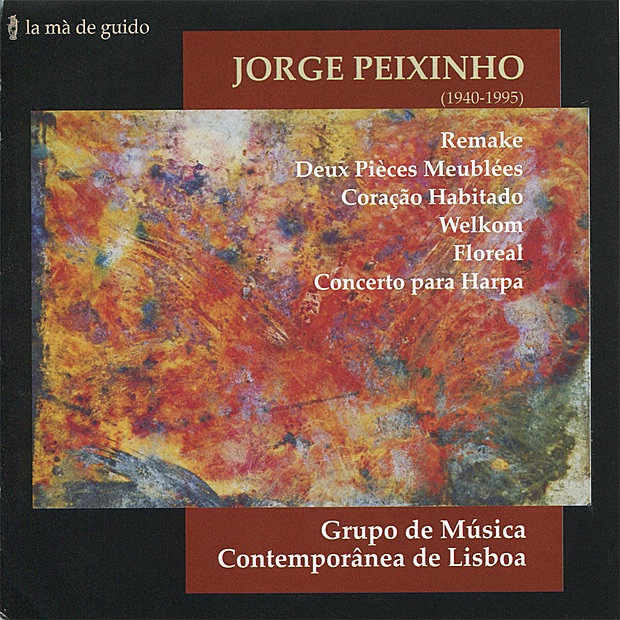
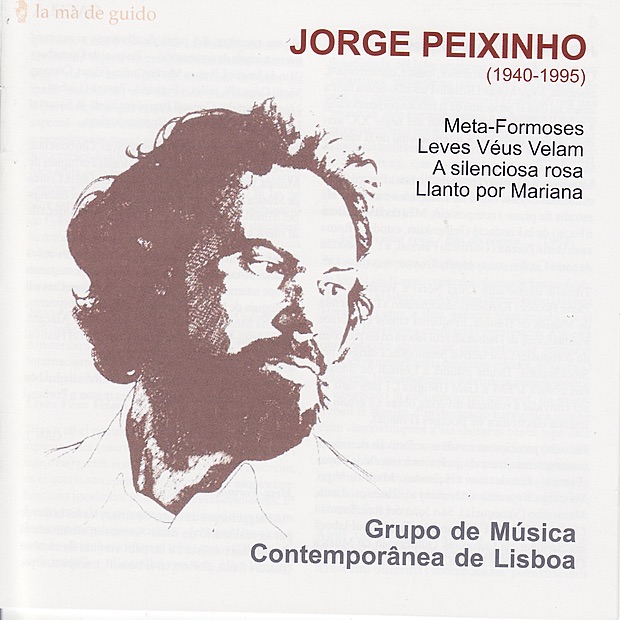
Chamber
Keyboard
-
 October 30, 2001
Artist Info
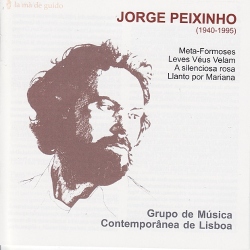
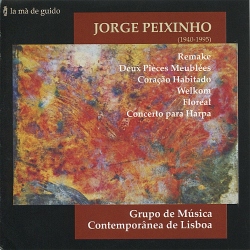
Role:ComposerBirth:1940Death:1995Jorge Peixinho was a Portuguese composer who was born on February 20, 1940, in Galveias, Portugal. He was the son of a music teacher and grew up in a musical environment. Peixinho began his musical studies at the age of six, learning to play the piano and the violin. He later studied composition at the National Conservatory of Lisbon, where he was a student of Fernando Lopes-Graça. Peixinho's early works were influenced by the music of his teacher, Lopes-Graça, who was a prominent figure in the Portuguese musical scene. However, Peixinho soon developed his own style, which was characterized by a strong interest in electronic music and a fascination with the avant-garde. In 1964, Peixinho won a scholarship to study at the Darmstadt International Summer Courses for New Music in Germany. This was a pivotal moment in his career, as he was exposed to the latest developments in contemporary music and met many of the leading composers of the time, including Karlheinz Stockhausen and Pierre Boulez. Peixinho's early works were mainly for chamber ensembles, but he soon began to experiment with electronic music. In 1966, he composed his first electronic work, "Música para 12 Instrumentos e 1 Eletrônico" (Music for 12 Instruments and 1 Electronic). This piece was a landmark in Portuguese music, as it was the first work to combine acoustic and electronic sounds. Peixinho continued to explore electronic music throughout his career, and his works in this genre are among his most important. In 1970, he composed "Elegia a Amílcar Cabral" (Elegy for Amílcar Cabral), a work for tape that was a tribute to the African revolutionary leader who had been assassinated the previous year. This piece was a powerful statement against colonialism and oppression, and it remains one of Peixinho's most significant works. Peixinho's music was often political in nature, and he was a vocal critic of the authoritarian regime that ruled Portugal from 1933 to 1974. In 1973, he composed "Missa Brevis," a work for choir and orchestra that was a protest against the regime's censorship of the arts. The piece was banned by the authorities, but it was eventually performed in 1974, after the fall of the dictatorship. Peixinho's later works were more introspective and focused on the exploration of sound and timbre. In 1983, he composed "Música para 16 Instrumentos" (Music for 16 Instruments), a work that was inspired by the paintings of Wassily Kandinsky. This piece was a departure from Peixinho's earlier political works and was a reflection of his interest in abstract art and the relationship between music and visual art. Peixinho's music was highly regarded by his peers, and he was a respected figure in the Portuguese musical scene. He was a founding member of the Portuguese Society of Contemporary Music and was instrumental in the establishment of the Lisbon Contemporary Music Group, which was dedicated to the performance of new music. Peixinho died on June 30, 1995, at the age of 55. His legacy as a composer and a champion of contemporary music in Portugal continues to this day. His works are performed regularly by ensembles and orchestras around the world, and he is remembered as one of the most important figures in Portuguese music of the 20th century.More....
Recent Artist Music
Copyright Ⓒ 2013 Davinci Finger. All rights reseved
Service Terms & Policy