


Joan Trimble
Released Album
Chamber
-
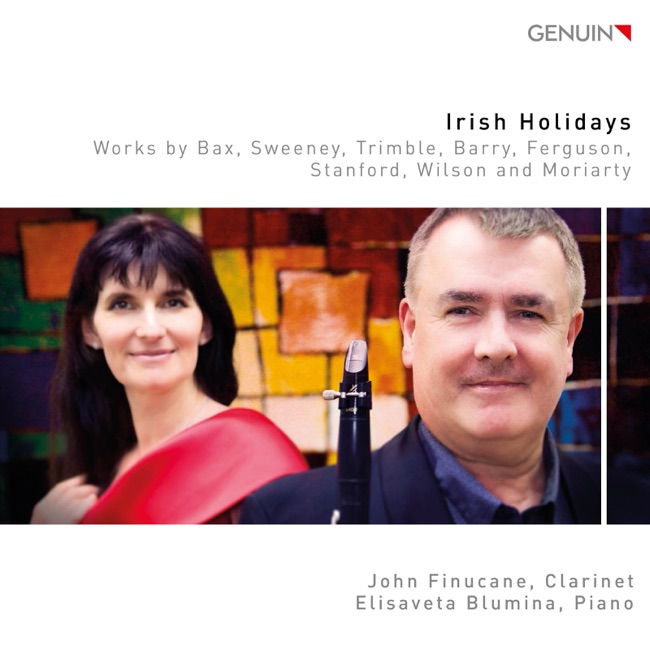 March 30, 2018
Keyboard
-
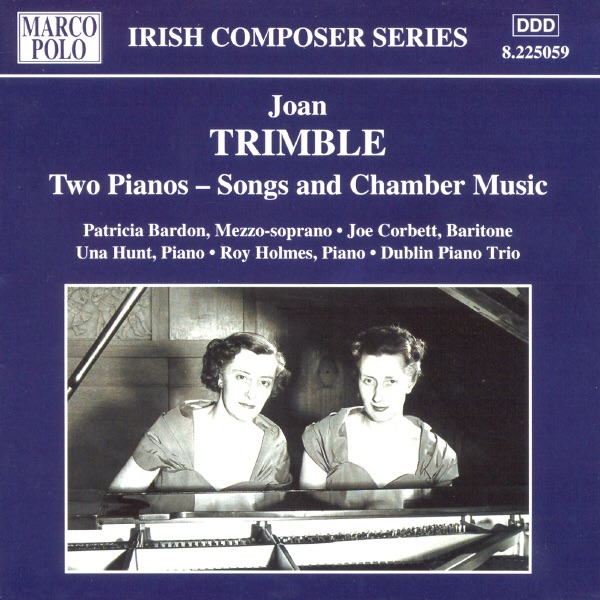 November 1, 1999
Artist Info
Role:ComposerPeriod:ModernGenre:KeyboardOrchestralJoan Trimble was a prominent classical music composer from Northern Ireland. She was born on September 16, 1915, in Enniskillen, County Fermanagh, to a family of musicians. Her father was a church organist, and her mother was a singer. Joan Trimble grew up in a musical environment and started playing the piano at a young age. She attended the Royal Irish Academy of Music in Dublin, where she studied piano, composition, and conducting. In 1935, Joan Trimble formed a piano duo with her sister Valerie Trimble, and they became known as the Trimble Sisters. They performed extensively throughout Ireland and the United Kingdom, and their performances were highly acclaimed. The Trimble Sisters also composed music together, and their works were performed by leading orchestras and ensembles. Joan Trimble's compositions were influenced by Irish folk music, and she often incorporated traditional Irish melodies and rhythms into her works. Her music was characterized by its lyrical melodies, rich harmonies, and colorful orchestration. She composed in a variety of genres, including orchestral works, chamber music, piano music, and songs. One of Joan Trimble's most famous works is her Suite for Strings, which was composed in 1942. The Suite for Strings is a four-movement work that is based on Irish folk tunes. The first movement, "The Coolin," is a slow and mournful melody that is played by the violins. The second movement, "The Gentle Maiden," is a lively and energetic dance that is played by the entire string section. The third movement, "The Lark in the Clear Air," is a beautiful and serene melody that is played by the cellos and violas. The final movement, "The Irish Washerwoman," is a fast and lively dance that is played by the entire string section. Another notable work by Joan Trimble is her Sonata for Flute and Piano, which was composed in 1949. The Sonata for Flute and Piano is a three-movement work that is characterized by its lyrical melodies and virtuosic flute writing. The first movement, "Allegro moderato," is a lively and energetic dance that is played by the flute and piano. The second movement, "Andante," is a beautiful and expressive melody that is played by the flute. The final movement, "Allegro vivace," is a fast and lively dance that is played by the flute and piano. Joan Trimble also composed a number of songs, many of which were based on Irish folk tunes. One of her most famous songs is "The Green Bough," which was composed in 1945. "The Green Bough" is a beautiful and haunting melody that is sung by a solo voice and piano. The lyrics are based on a traditional Irish poem, and the music captures the melancholy and longing of the poem. Joan Trimble's music was highly regarded during her lifetime, and she received numerous awards and honors for her work. In 1952, she was awarded the Harriet Cohen International Music Award for her Suite for Strings. In 1968, she was awarded the OBE (Order of the British Empire) for her services to music. She was also a Fellow of the Royal Irish Academy of Music. Joan Trimble continued to compose music throughout her life, and her works are still performed and recorded today. She died on August 6, 2000, at the age of 84. Her legacy as a composer and musician continues to inspire and influence musicians and audiences around the world.More....
Recent Artist Music
Copyright Ⓒ 2013 Davinci Finger. All rights reseved
Service Terms & Policy