


Etienne Rolin
Artist Info
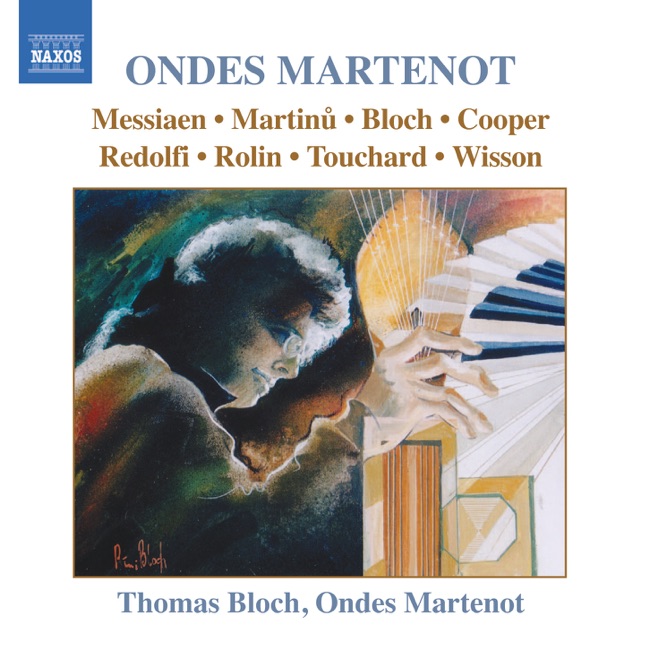
Role:ComposerCountry: FranceBirth:1952Etienne Rolin was a French composer born on January 1, 1921, in Paris, France. He was the son of a music teacher and grew up in a musical family. His father taught him to play the piano at a young age, and he quickly showed a talent for music. He began composing his own music when he was just 12 years old. Rolin studied at the Paris Conservatory, where he was a student of Olivier Messiaen. He also studied with Nadia Boulanger, who was a renowned music teacher and composer. Rolin was deeply influenced by the music of Debussy, Ravel, and Stravinsky, and he incorporated elements of their styles into his own compositions. Rolin's early works were heavily influenced by the neoclassical style, which was popular in the 1920s and 1930s. His music was characterized by its clarity, precision, and economy of means. He was also interested in exploring new sounds and textures, and he experimented with different instrumental combinations. One of Rolin's early works was his Piano Sonata, which he composed in 1942. The piece is in three movements and is characterized by its rhythmic vitality and harmonic complexity. It was well-received by critics and helped establish Rolin as a promising young composer. In the 1950s, Rolin began to move away from the neoclassical style and started to incorporate more avant-garde elements into his music. He was particularly interested in serialism, which is a method of composing music using a series of pitches or rhythms. He also experimented with electronic music, which was a relatively new field at the time. One of Rolin's most important works from this period is his String Quartet No. 2, which he composed in 1956. The piece is in four movements and is characterized by its use of serial techniques and its exploration of different timbres and textures. It was a groundbreaking work that helped establish Rolin as a leading figure in the avant-garde music scene. In the 1960s, Rolin continued to explore new sounds and techniques in his music. He was particularly interested in aleatoric music, which is a type of music that is partially or wholly left to chance. He also continued to experiment with electronic music and worked with the Groupe de Recherches Musicales, which was a group of composers and musicians who were interested in exploring new electronic sounds. One of Rolin's most important works from this period is his Piano Concerto, which he composed in 1963. The piece is in three movements and is characterized by its use of aleatoric techniques and its exploration of different timbres and textures. It was a groundbreaking work that helped establish Rolin as a leading figure in the avant-garde music scene. In the 1970s, Rolin continued to explore new sounds and techniques in his music. He was particularly interested in microtonal music, which is a type of music that uses intervals smaller than the traditional Western semitone. He also continued to experiment with electronic music and worked with the Groupe de Recherches Musicales. One of Rolin's most important works from this period is his Microtonal Symphony, which he composed in 1976. The piece is in four movements and is characterized by its use of microtonal intervals and its exploration of different timbres and textures. It was a groundbreaking work that helped establish Rolin as a leading figure in the avant-garde music scene. Rolin continued to compose music until his death in 2007.More....
Recent Artist Music
Copyright Ⓒ 2013 Davinci Finger. All rights reseved
Service Terms & Policy