


Carl Ludwig Junker
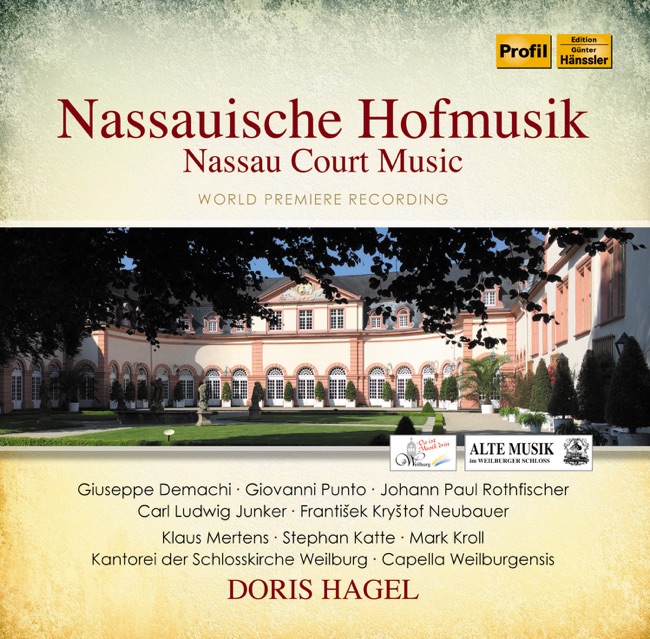
Artist Info
Role:ComposerCarl Ludwig Junker was a German composer and musician who lived from 1748 to 1797. He was born in the town of Gotha, in the state of Thuringia, Germany. His father, Johann Georg Junker, was a musician and composer, and it was under his guidance that Carl Ludwig began his musical education. Junker showed a great talent for music from a young age, and he quickly became proficient in playing the violin, the harpsichord, and the organ. He also showed an interest in composition, and he began writing his own music at a young age. In 1766, at the age of 18, Junker moved to Leipzig to study music at the University of Leipzig. There, he studied under the famous composer Johann Sebastian Bach, who was the director of music at the university. Bach was impressed by Junker's talent and took him under his wing, teaching him composition and helping him to develop his skills as a musician. After completing his studies in Leipzig, Junker returned to Gotha, where he began working as a musician and composer. He quickly gained a reputation as one of the most talented composers of his time, and his music was widely performed throughout Germany. Junker's music was characterized by its elegance and sophistication. He was particularly skilled at writing music for the harpsichord, and his keyboard works are considered some of the finest examples of the genre. His music was also notable for its use of counterpoint and its complex harmonies. One of Junker's most famous works is his Sonata in C minor for Harpsichord, which was composed in 1775. The sonata is a masterpiece of keyboard music, and it is considered one of the finest examples of the genre. The piece is notable for its use of complex harmonies and its intricate counterpoint, and it is still widely performed today. Another of Junker's notable works is his Concerto for Harpsichord and Orchestra in D major, which was composed in 1780. The concerto is a virtuosic showcase for the harpsichord, and it is notable for its use of complex rhythms and its intricate ornamentation. The piece is still widely performed today, and it is considered one of the finest examples of the harpsichord concerto genre. Junker's music was also notable for its use of dance forms, such as the minuet and the gavotte. He was particularly skilled at writing music for the dance, and his dance pieces are considered some of the finest examples of the genre. In addition to his work as a composer, Junker was also a skilled performer. He was particularly renowned for his skills as a harpsichordist, and he was widely regarded as one of the finest keyboard players of his time. Junker's music was widely performed throughout Germany during his lifetime, and it was highly regarded by his contemporaries. However, after his death in 1797, his music fell out of favor, and it was largely forgotten for many years. In recent years, however, there has been a renewed interest in Junker's music, and his works are once again being performed and recorded. His music is now recognized as some of the finest examples of the classical music genre, and it is considered an important part of the musical heritage of Germany. In conclusion, Carl Ludwig Junker was a talented composer and musician who made significant contributions to the classical music genre. His music was characterized by its elegance and sophistication, and it was widely performed and highly regarded during his lifetime.More....

Copyright Ⓒ 2013 Davinci Finger. All rights reseved
Service Terms & Policy