


Carolingian Chant
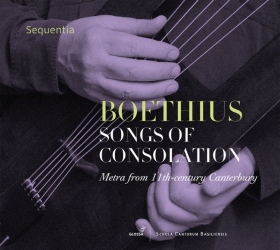
Released Album
Choral
-
 January 25, 2013
 -
 June 1, 2011
Artist Info
Role:ComposerGenre:ChoralCarolingian Chant, also known as Gregorian Chant, is a form of plainchant that emerged in the Carolingian Empire during the 8th and 9th centuries. This form of music was named after the Carolingian dynasty, which ruled over a vast territory that included modern-day France, Germany, and Italy. The origins of Carolingian Chant can be traced back to the early Christian Church, where music played an important role in religious ceremonies. The earliest forms of Christian music were simple chants that were sung by the congregation. However, as the Church grew in power and influence, the music became more complex and sophisticated. During the reign of Charlemagne, the first Holy Roman Emperor, a concerted effort was made to standardize the music used in the Church. Charlemagne was a great patron of the arts and he believed that music was an important tool for spreading the Christian faith. He commissioned a group of scholars to collect and codify the various chants used in the Church, and this led to the development of what is now known as Carolingian Chant. The composers of Carolingian Chant were mostly anonymous, and their works were passed down through oral tradition. However, some of the most famous chants were attributed to Pope Gregory I, who was believed to have compiled a collection of chants that became the basis for the Gregorian Chant. One of the most notable features of Carolingian Chant is its simplicity. The music is based on a single melody line, with no harmony or accompaniment. The chants are sung in Latin, and the lyrics are often taken from the Bible or other religious texts. Despite its simplicity, Carolingian Chant is a highly expressive form of music. The melodies are often hauntingly beautiful, and they have a powerful emotional impact on listeners. The music is also highly flexible, and it can be adapted to suit a wide range of liturgical occasions. Carolingian Chant reached its peak during the Middle Ages, when it was widely used in the Church throughout Europe. The music was an important part of religious ceremonies, and it was also used in secular contexts, such as courtly entertainment. Some of the most famous works of Carolingian Chant include the Kyrie, Gloria, and Sanctus. These chants are still used in the Catholic Church today, and they continue to inspire composers and musicians around the world. In conclusion, Carolingian Chant is a form of plainchant that emerged in the Carolingian Empire during the 8th and 9th centuries. The music was developed by a group of scholars commissioned by Charlemagne, and it became an important part of religious ceremonies throughout Europe. Despite its simplicity, Carolingian Chant is a highly expressive form of music that continues to inspire composers and musicians today.More....
Copyright Ⓒ 2013 Davinci Finger. All rights reseved
Service Terms & Policy