


Doina Rotaru
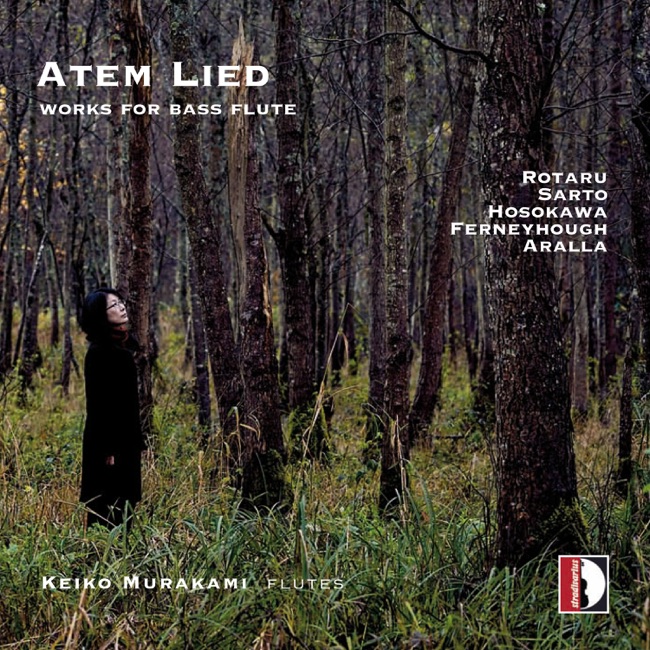
Artist Info
Role:ComposerDoina Rotaru is a Romanian composer of contemporary classical music. She was born on December 1, 1951, in Bucharest, Romania. Her parents were both musicians, and her father was a composer. From a young age, Rotaru was exposed to music and began studying piano and composition at the age of six. Rotaru attended the National University of Music in Bucharest, where she studied composition with Tiberiu Olah and Aurel Stroe. She graduated in 1975 with a degree in composition. After graduation, she continued her studies at the Gheorghe Dima Music Academy in Cluj-Napoca, Romania, where she earned a doctorate in composition in 1995. Rotaru's early works were influenced by the avant-garde movement, and she was known for her use of unconventional techniques and sounds. Her music often featured extended techniques for traditional instruments, as well as electronic and computer-generated sounds. She was also interested in exploring the relationship between music and other art forms, such as literature and visual art. One of Rotaru's early works, "Metamorphoses," was written in 1976 and was inspired by the poetry of Ovid. The piece features a solo violin and a small ensemble and uses extended techniques such as glissandi and harmonics to create a haunting, otherworldly sound. In the 1980s, Rotaru began to incorporate more traditional elements into her music, such as tonality and melody. Her works from this period often featured folk elements, reflecting her interest in Romanian folk music. One of her most well-known works from this period is "Concerto for Violin and Orchestra," which was written in 1985. The piece features a solo violin and a large orchestra and is notable for its use of folk melodies and rhythms. In the 1990s, Rotaru began to experiment with new forms and structures in her music. She was particularly interested in exploring the relationship between music and time, and many of her works from this period feature complex rhythmic structures and unusual time signatures. One of her most notable works from this period is "Time and Eternity," which was written in 1997. The piece features a large orchestra and is structured around a series of rhythmic cycles that gradually shift and evolve over time. In addition to her work as a composer, Rotaru has also been active as a teacher and mentor. She has taught composition at the National University of Music in Bucharest since 1975 and has mentored many young composers who have gone on to successful careers in music. Rotaru's music has been performed and recorded by many leading orchestras and ensembles around the world, including the London Symphony Orchestra, the Berlin Philharmonic, and the New York Philharmonic. She has received numerous awards and honors for her work, including the Romanian Academy Award for Music in 1995 and the George Enescu Prize in 2001. In conclusion, Doina Rotaru is a highly respected composer of contemporary classical music. Her work is characterized by its innovative use of sound and form, as well as its exploration of the relationship between music and other art forms. Her music has been performed and recorded by many leading orchestras and ensembles around the world, and she has received numerous awards and honors for her contributions to the field of music.More....

Copyright Ⓒ 2013 Davinci Finger. All rights reseved
Service Terms & Policy