


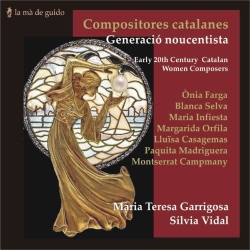
Paquita Madriguera
Released Album
Chamber
-
 November 11, 2017
 -
 November 18, 2016
 -
 November 10, 2015
 -
 July 24, 2015
 -
 April 13, 2011
Keyboard
-
 August 30, 2019
Vocal
Artist Info
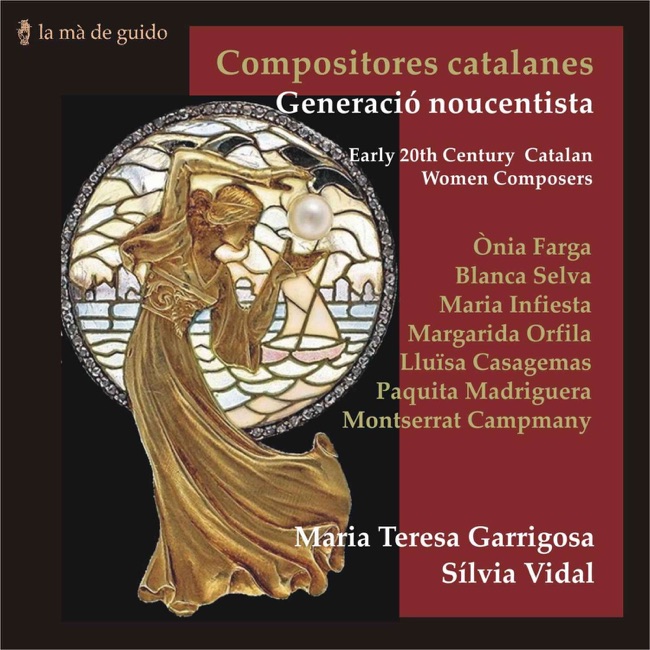
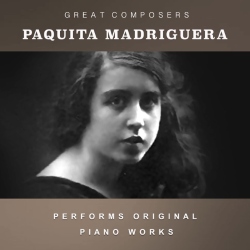
Role:ComposerCountry: SpainBirth:1900 in Barcelona, SpainDeath:before 1970 in South AmericaPeriod:ModernGenre:ChamberKeyboardPaquita Madriguera was a Spanish composer and pianist who was born on May 1, 1909, in Madrid, Spain. She was the daughter of a well-known Spanish composer, Joaquín Rodrigo, who was also a pianist and conductor. Her mother, Victoria Kamhi, was a Turkish-Jewish pianist who had studied in Paris. Paquita grew up in a musical family and began playing the piano at a young age. Paquita's parents recognized her musical talent early on and encouraged her to pursue a career in music. She began studying piano with her mother and later with the renowned Spanish pianist, José Cubiles. She also studied composition with her father, who was a professor of music at the Madrid Conservatory. In 1927, Paquita made her debut as a pianist at the Teatro Real in Madrid, performing her father's piano concerto. She continued to perform as a soloist and chamber musician throughout Spain and Europe, earning critical acclaim for her virtuosity and musicality. In addition to her performing career, Paquita was also a prolific composer. She wrote music for piano, chamber ensembles, orchestra, and voice. Her music was influenced by Spanish folk music and the works of her father, as well as by the French Impressionists and the Russian Romantics. One of Paquita's most famous works is her Piano Concerto in G Major, which she composed in 1933. The concerto is a virtuosic showcase for the soloist, with sweeping melodies and intricate passagework. It has become a staple of the piano repertoire and is often performed by pianists around the world. Another notable work by Paquita is her Suite Andaluza for piano, which she composed in 1935. The suite is a collection of five pieces inspired by the music and culture of Andalusia, the southern region of Spain. The pieces are full of rhythmic energy and colorful harmonies, evoking the sights and sounds of the region. Paquita also wrote several works for chamber ensembles, including her String Quartet No. 1, which she composed in 1941. The quartet is a lyrical and expressive work, with rich harmonies and intricate counterpoint. It has been praised for its emotional depth and technical sophistication. Throughout her career, Paquita was a champion of Spanish music and culture. She often incorporated Spanish folk melodies and rhythms into her compositions, and she was a vocal advocate for the preservation and promotion of traditional Spanish music. Paquita's career was cut short by the outbreak of the Spanish Civil War in 1936. She and her family were forced to flee Madrid and seek refuge in Valencia. During the war, Paquita continued to perform and compose, but her opportunities were limited by the political and social upheaval of the time. After the war, Paquita returned to Madrid and resumed her career as a pianist and composer. She continued to write music until her death in 1965, at the age of 56. Her legacy as a composer and performer has endured, and her music continues to be performed and celebrated by musicians and audiences around the world. In conclusion, Paquita Madriguera was a talented and influential composer and pianist who made significant contributions to the world of classical music. Her music was characterized by its Spanish influences, technical virtuosity, and emotional depth. Despite the challenges she faced during her career, she remained committed to her art and to the promotion of Spanish music and culture. Her legacy continues to inspire and influence musicians and audiences today.More....
Recent Artist Music
4
1:40

11
6:25
Copyright Ⓒ 2013 Davinci Finger. All rights reseved
Service Terms & Policy