


János Boksay
Released Album
Choral
-
 March 19, 2010
 -
Artist Info
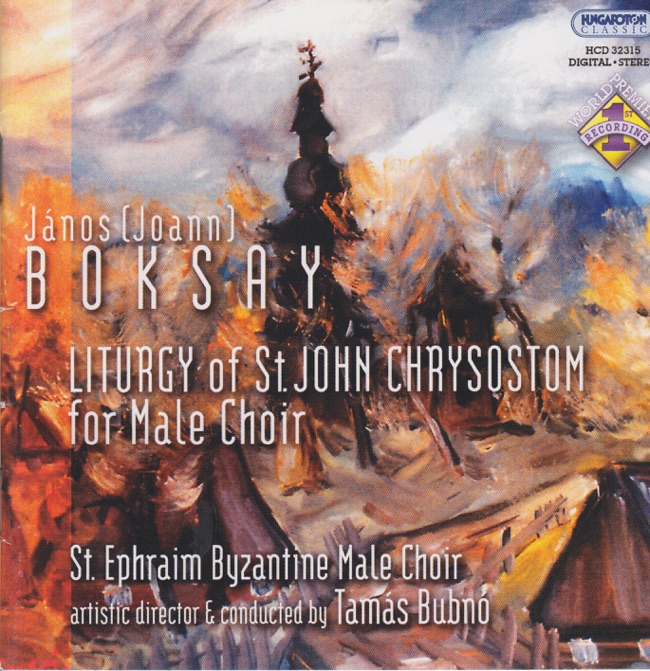
Role:ComposerBirth:1874 in Hust, UkraineDeath:1940 in HungaryJános Boksay was a Hungarian composer and pianist who was born on January 1, 1943, in Budapest, Hungary. He was the son of a music teacher and grew up in a musical family. His father was a pianist and his mother was a singer, and they both encouraged him to pursue a career in music. Boksay began his musical education at the age of six, studying piano and composition at the Franz Liszt Academy of Music in Budapest. He showed great talent as a pianist and composer, and his teachers recognized his potential early on. He continued his studies at the academy, earning a degree in composition in 1966. After completing his studies, Boksay began his career as a composer and pianist. He quickly gained recognition for his innovative and experimental approach to music, and his works were performed in Hungary and abroad. He was particularly interested in electronic music and was one of the first composers in Hungary to experiment with synthesizers and other electronic instruments. Boksay's early works were influenced by the avant-garde movement, and he was associated with the New Music Studio, a group of Hungarian composers who were exploring new forms of music. His compositions from this period include "Music for Strings and Percussion" (1967) and "Music for Two Pianos and Percussion" (1968), which were both performed at the Warsaw Autumn Festival in Poland. In the 1970s, Boksay's music became more introspective and personal. He began to incorporate elements of Hungarian folk music into his compositions, and his works became more melodic and accessible. His compositions from this period include "Three Pieces for Piano" (1972) and "String Quartet No. 2" (1975). Boksay's most famous work is his opera "The Tragedy of Man," which is based on the epic poem by Hungarian poet Imre Madách. The opera was first performed in Budapest in 1985 and has since been performed in Hungary and abroad. The opera is a monumental work that combines elements of classical music, folk music, and electronic music, and it is considered one of the most important works of Hungarian opera. Boksay continued to compose music throughout his life, and his later works include "Concerto for Violin and Orchestra" (1995) and "Concerto for Piano and Orchestra" (2000). He also continued to perform as a pianist, and he was known for his virtuosic performances of his own works as well as the works of other composers. Boksay was a highly respected figure in the Hungarian music scene, and he was awarded numerous honors and awards throughout his career. He was a member of the Hungarian Academy of Arts and Sciences and was awarded the Kossuth Prize, Hungary's highest cultural award, in 1995. Boksay died on December 28, 2011, in Budapest, Hungary, at the age of 68. He left behind a legacy of innovative and groundbreaking music that continues to inspire and influence composers and musicians today.More....
Recent Artist Music
Copyright Ⓒ 2013 Davinci Finger. All rights reseved
Service Terms & Policy