


William Bland
Released Album
Chamber
-
 October 23, 2007
 -
 April 1, 1998
 -
 September 11, 1993
 -
 September 11, 1993
Keyboard
-

-
 June 17, 2008
 -
Miscellaneous
-
 2000
2000 -
 October 1, 1996
Artist Info
Role:ComposerBirth:1947Period:ContemporaryModernGenre:ChamberKeyboardOrchestralVocalWilliam Bland was a British composer who lived from 1861 to 1925. He was born in London, England, and showed an early interest in music. His parents were both amateur musicians, and they encouraged his musical pursuits from a young age. Bland began taking piano lessons at the age of six, and by the time he was a teenager, he was already composing his own music. Bland's early musical education was largely self-directed. He studied the works of the great composers of the past, including Bach, Mozart, and Beethoven, and he also attended concerts and operas whenever he could. In 1879, he enrolled at the Royal Academy of Music in London, where he studied composition with Charles Villiers Stanford and piano with Oscar Beringer. Bland's early compositions were heavily influenced by the Romantic composers of the 19th century, particularly Brahms and Wagner. His first major work, a piano concerto, was completed in 1882, and it was well-received by audiences and critics alike. Bland continued to compose throughout his time at the Royal Academy of Music, and he graduated with honors in 1884. After leaving the Royal Academy of Music, Bland began to establish himself as a composer and performer. He gave piano recitals throughout England, and his compositions were performed by some of the leading orchestras and chamber ensembles of the day. In 1890, he was appointed as the conductor of the newly-formed London Symphony Orchestra, a position he held for several years. Bland's compositions during this period were marked by a growing interest in the music of the past. He began to incorporate elements of Baroque and Classical music into his works, and he also experimented with new forms and structures. One of his most famous works from this period is his Symphony No. 1, which was completed in 1895. The symphony is notable for its use of counterpoint and its complex harmonic language. In the early 1900s, Bland's music began to take on a more nationalistic character. He was inspired by the folk music of England and Scotland, and he began to incorporate these elements into his compositions. His Symphony No. 2, completed in 1903, is a prime example of this style. The symphony features Scottish folk melodies and rhythms, and it has been described as one of the first examples of British symphonic music. Bland's later works were marked by a return to the more traditional forms and structures of the past. He composed several operas, including The Tempest (1913) and The Merry Wives of Windsor (1916), both of which were well-received by audiences. He also wrote a number of chamber works, including string quartets and sonatas for various instruments. Despite his success as a composer, Bland was never a household name. He was overshadowed by his contemporaries, such as Elgar and Vaughan Williams, and his music was often dismissed as old-fashioned. However, in recent years, there has been a renewed interest in Bland's music, and his works are now being performed and recorded more frequently. In conclusion, William Bland was a British composer who lived from 1861 to 1925. He was a self-taught musician who studied at the Royal Academy of Music in London, and he went on to establish himself as a composer and performer. His early compositions were heavily influenced by the Romantic composers of the 19th century, but he later began to incorporate elements of Baroque and Classical music into his works.More....
Recent Artist Music
1

8:19


7
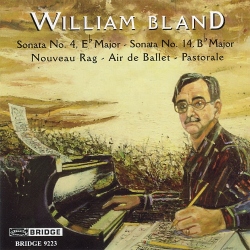
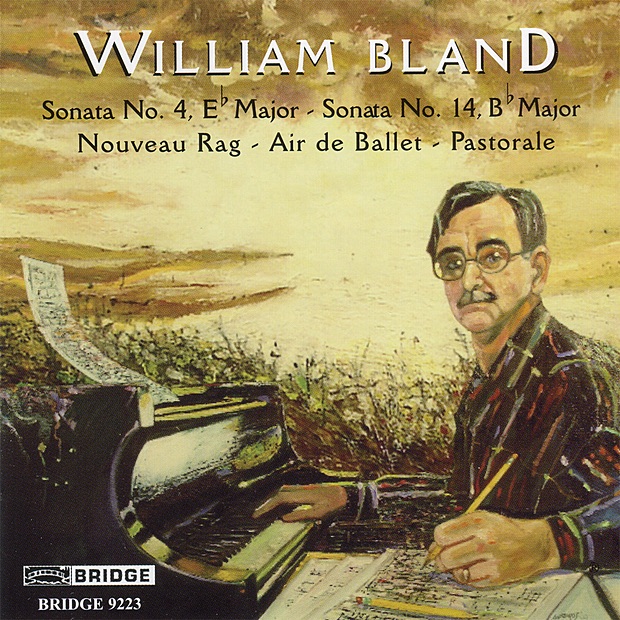
Piano sonata No. 4 in E flat major "4 Goodbye Concert Rags"
1. "Goodbye-vrations" Rag - Slowly
6:42
9

Variations on a Theme by Carl Nielsen ('Underlige Aftenlufte')
Variations on a Theme by Carl Nielsen "Underlige Aftenlufte"
15:7
Copyright Ⓒ 2013 Davinci Finger. All rights reseved
Service Terms & Policy