


Fredrick Kaufman
Released Album
Keyboard
-
 February 3, 2023
 -
 September 14, 2018
Chamber
-
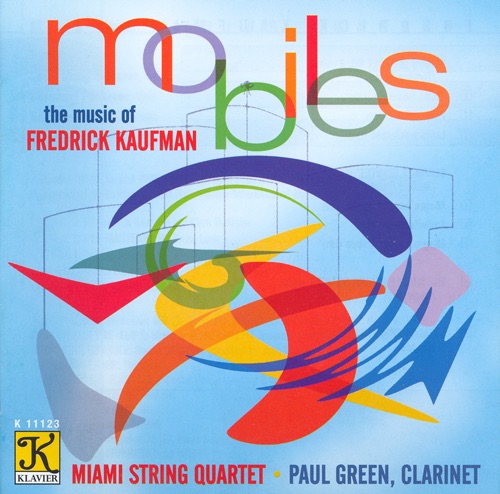 January 1, 2001
Artist Info
Role:ComposerBirth:1936Period:ContemporaryGenre:ChamberConcertoFrederick Kaufman was a renowned classical music composer who was born on May 12, 1925, in Vienna, Austria. He was the youngest of three children born to a family of musicians. His father was a violinist, and his mother was a pianist. From a young age, Kaufman showed a keen interest in music and began playing the piano at the age of four. Kaufman's family fled Austria in 1938 due to the rise of the Nazi regime. They settled in the United States, where Kaufman continued his musical education. He studied composition at the Juilliard School in New York City and later earned a master's degree in music from Columbia University. Kaufman's early works were heavily influenced by the music of his homeland, Austria. His first major composition, "Viennese Rhapsody," was written in 1950 and premiered by the New York Philharmonic. The piece was well-received and established Kaufman as a promising young composer. Throughout the 1950s and 1960s, Kaufman continued to compose works that blended traditional European classical music with modern American influences. His compositions were often characterized by their complex harmonies and intricate rhythms. Some of his most notable works from this period include "Symphony No. 1," "Concerto for Piano and Orchestra," and "String Quartet No. 2." In the 1970s, Kaufman's music took a more experimental turn. He began incorporating electronic instruments and avant-garde techniques into his compositions. This period of his career was marked by works such as "Electronic Symphony," "Concerto for Synthesizer and Orchestra," and "Music for Prepared Piano." Despite his experimentation with new sounds and techniques, Kaufman remained committed to the traditional forms of classical music. He continued to compose symphonies, concertos, and chamber music throughout his career. His later works, such as "Symphony No. 5" and "String Quartet No. 6," were praised for their emotional depth and technical mastery. Kaufman's contributions to classical music were recognized with numerous awards and honors. He was a recipient of the Guggenheim Fellowship, the National Endowment for the Arts grant, and the American Academy of Arts and Letters award. In 1995, he was inducted into the American Classical Music Hall of Fame. Kaufman continued to compose music until his death on December 3, 2005, at the age of 80. His legacy as a composer and innovator in classical music lives on through his extensive body of work and the many musicians who continue to perform and study his music.More....
Recent Artist Music


Copyright Ⓒ 2013 Davinci Finger. All rights reseved
Service Terms & Policy